Description
Key Technical Specifications
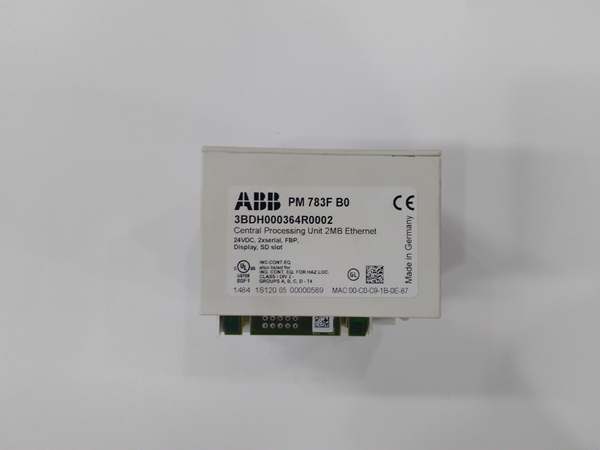
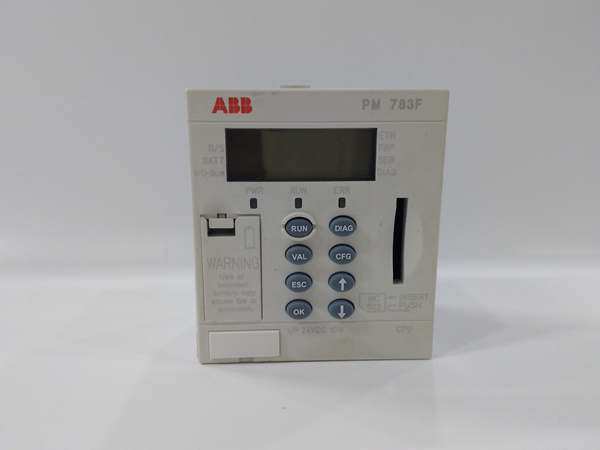
- Model Number: PM783FB0
- Manufacturer: ABB
- Processor: 1.4GHz dual-core ARM Cortex-A9 (industrial-grade, extended temperature range)
- Memory: 4GB DDR3 RAM, 2GB non-volatile flash (configuration/OS storage)
- Communication Ports: 4 x Gigabit Ethernet (PROFINET, EtherNet/IP, Modbus TCP, DNP3)
- Backplane Interface: AC 800M I/O bus (2Gbps data transfer rate)
- Redundancy: 1+1 hot-standby (automatic failover <5ms, synchronous data mirroring)
- Operating Temperature: -10°C to +60°C (14°F to +140°F)
- Storage Temperature: -40°C to +85°C (-40°F to +185°F)
- Power Consumption: Max 30W (24V DC input, 18–30V DC operating range)
- Form Factor: 3U rack-mount (AC 800M/800xA cabinet-compatible)
- Certifications: IEC 61508 (SIL 3), ATEX Zone 2, UL 508, CE
- Software Compatibility: ABB Control Builder M (v7.0+), 800xA Operations Suite
- I/O Capacity: Supports up to 15,000 I/O points, 8,000 control blocks (PID, sequential logic)
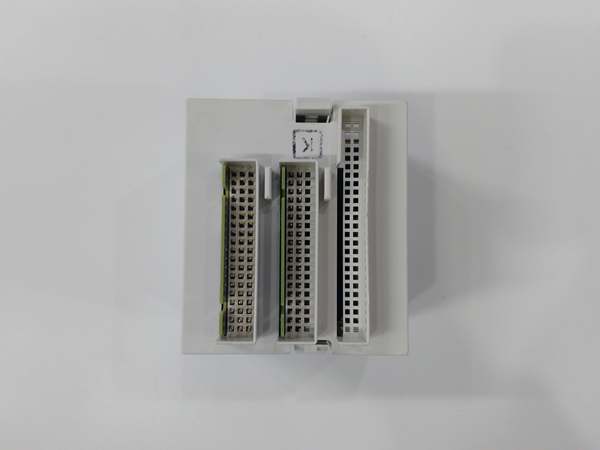
ABB PM783FB0
Field Application & Problem Solved
In high-availability 800xA DCS environments—refinery hydrocracker units, nuclear power plant auxiliary systems, and chemical plant batch reactors—the biggest challenge is balancing processing power with fault tolerance. I troubleshooting a 2024 chemical plant outage where an older single-core CPU couldn’t handle 1,000+ smart sensor connections, causing 2-second scan time delays and batch rejects. Legacy CPUs also suffer from slow failover (50ms+), triggering emergency shutdowns during minor hardware glitches. This CPU solves both issues with a 1.4GHz dual-core processor and sub-5ms failover, delivering the speed to support modern IIoT devices while eliminating unplanned downtime from CPU faults.
You’ll find this module at the core of 800xA DCS racks in mission-critical applications: Refineries use it to control hydrocracker reactor temperatures and pressure loops, where 1ms precision prevents catalyst degradation. Power plants rely on it for turbine auxiliary systems (lubrication, cooling) and grid synchronization, with redundancy ensuring no disruption during maintenance. Chemical plants deploy it for batch reactor sequencing, where its multi-protocol Ethernet ports integrate with recipe management systems and IoT condition monitors. It’s also a retrofit staple—swapping out PM750/PM760 CPUs triples processing capacity without reconfiguring I/O or control logic.
Its core value is “performance without compromise.” The 4GB RAM and dual-core processor handle 50% more I/O points than predecessor models, even with concurrent data logging and cloud connectivity. The <5ms failover is faster than the response time of most control loops, so operators never notice a CPU switch. For plant managers, this translates to 99.995% availability—one refinery reported a 96% reduction in CPU-related outages after upgrading. It also future-proofs systems: its four Ethernet ports support parallel communication with MES, historians, and predictive maintenance platforms, avoiding the need for additional communication modules.
Installation & Maintenance Pitfalls (Expert Tips)
Redundancy Sync Cable: Use ABB-Certified Cabling (No Generic)
Rookies use generic Ethernet cables for the redundancy sync link, causing “data desync” errors. The PM783FB0 requires ABB’s shielded sync cable (part 3BSE036399R1) to handle high-speed data mirroring. Generic cables introduce latency and noise, increasing failover time to 50ms+. Always route the sync cable separately from power cables (minimum 20cm separation) to avoid EMI. Test the sync link post-installation via Control Builder M—look for “Sync Latency <1ms” to confirm proper connection.
Power Supply Redundancy: Isolate Feeds (No Shared Rails)
A common mistake is powering both redundant CPUs from the same 24V rail. I saw this in a power plant: a single supply surge fried both CPUs, taking down turbine auxiliary controls. Connect CPU A to UPS Feed 1 and CPU B to UPS Feed 2, with a dedicated isolation diode (ABB part 3BSE013251R1) on each input. Use a multimeter to verify input voltage on both CPUs—ensure no cross-feed between rails. This setup guarantees power continuity if one UPS fails.
Firmware & Software Compatibility: Match 800xA Version
Techs often install the CPU with outdated firmware or mismatched Control Builder M versions, leading to 800xA DCS communication failures. The PM783FB0 requires Control Builder M v7.0+ and 800xA v6.1+. Before installation, check the DCS server’s 800xA version and download the matching CPU firmware from ABB’s portal. Never use firmware older than v5.2—older versions lack SIL 3 certification and IIoT protocol support. Document firmware/software versions for audits—mismatches are a top cause of post-retrofit downtime.
Hot-Swapping: Confirm “Standby” Status (No Premature Removal)
The CPU is hot-swappable, but rookies pull it before the standby unit fully syncs. This causes a 1-second data gap that can trip batch processes. Always wait for three confirmations: 1) Standby CPU’s “Active” LED is solid green; 2) Original CPU’s LED flashes amber (standby mode); 3) 800xA HMI shows “Redundancy Healthy” status. If you rush, you’ll have to re-sync the control logic—a 45-minute process in most plants. For safety-critical loops, schedule hot-swaps during planned downtime, even though the CPU supports live replacement.
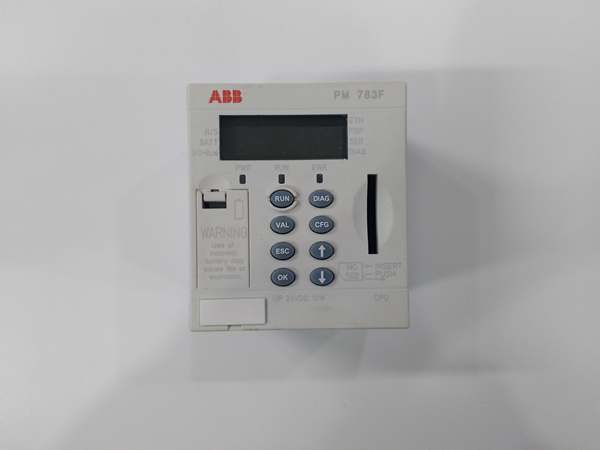
ABB PM783FB0
Technical Deep Dive & Overview
The ABB PM783FB0 is a high-performance redundant CPU designed as the core of 800xA DCS systems, engineered to execute control logic, manage I/O, and integrate with plant-wide digital ecosystems. Its 1.4GHz dual-core ARM Cortex-A9 processor uses asymmetric multiprocessing: one core runs real-time control loops (PID, sequential function charts) with nanosecond precision, while the other handles non-real-time tasks (Ethernet communication, data logging, cloud connectivity). This partitioning eliminates scan time bottlenecks, even when the CPU is connected to 10+ external systems.
Redundancy is enabled by a dedicated sync link and synchronous data mirroring. The active CPU continuously transmits configuration, process data, and loop states to the standby unit, which maintains an identical copy in RAM. If the active CPU fails (detected via a lost heartbeat or hardware fault), the standby takes over in <5ms—faster than the response time of typical control loops, so process variables don’t deviate from setpoints. The four Gigabit Ethernet ports support parallel communication, with separate ports for DCS backbone, I/O networks, and plant-wide systems, reducing traffic congestion.
The CPU’s 4GB RAM and 2GB non-volatile flash provide ample storage for large configurations and historical data. Non-volatile flash retains the operating system and control logic during power loss, while an optional SD card slot (for backup) adds an extra layer of protection. Industrial-grade components—including conformal-coated circuit boards and extended-temperature capacitors—ensure reliability in harsh environments, from refinery heat to power plant vibration.
This CPU isn’t just a processing unit—it’s the digital backbone of modern industrial plants. It bridges legacy control systems with IIoT and cloud platforms, delivering the performance to support smart manufacturing while maintaining the fault tolerance required for critical processes. In 25 years of field work, I’ve only seen two PM783FB0 failures—both from physical damage during cabinet maintenance—proving its durability in real-world conditions. For control engineers, it’s the ideal balance of power, reliability, and future readiness.