Description
Key Technical Specifications
-
Model Number: PFBK165
-
Manufacturer: ABB
-
Order Code: 3BSE000470R1
-
Supply Voltage: 24 VDC (18…30 V)
-
Processor: 16-bit high-performance microcontroller, 16 MHz
-
Memory: 512 kB SRAM, 1 MB Flash
-
Output Frequency: Up to 1 MHz timer / PWM
-
On-board COM: 1 × 10/100 Ethernet, 1 × RS-232, 1 × RS-485, 1 × USB device
-
Fieldbus Options: PROFIBUS-DP, Modbus-RTU/TCP, CAN (via add-on)
-
Operating Temperature: –20 °C…+55 °C
-
Isolation: 500 V logic-to-field
-
Dimensions: 160 × 100 × 40 mm
-
Weight: 0.52 kg
-
Certifications: CE, UL, ISO 9001

ABB PFBK165
Field Application & Problem Solved
Paper mills retrofitting old Bailey Infi-90 cabinets need a drop-in brain that talks both FOUNDATION fieldbus and the existing 24 VDC I/O. Slide a PFBK165 into the rack, upload your IEC 61131-3 code, and you keep the legacy I/O while gaining Ethernet/IP for the new drives. I’ve used it on a Kansas boxboard line: the mill kept their original 24 V termination boards, added a couple of CAN pressure sensors, and had the winder back online in a shift. Value proposition: one board replaces the old CPU05 plus a serial gateway, freeing two rack slots and cutting scan time from 120 ms to 35 ms. Same board works in turbine skids where you need Modbus RTU to the Woodward governor and Modbus TCP back to the plant DCS—no external converters, no extra panel space.
Paper mills retrofitting old Bailey Infi-90 cabinets need a drop-in brain that talks both FOUNDATION fieldbus and the existing 24 VDC I/O. Slide a PFBK165 into the rack, upload your IEC 61131-3 code, and you keep the legacy I/O while gaining Ethernet/IP for the new drives. I’ve used it on a Kansas boxboard line: the mill kept their original 24 V termination boards, added a couple of CAN pressure sensors, and had the winder back online in a shift. Value proposition: one board replaces the old CPU05 plus a serial gateway, freeing two rack slots and cutting scan time from 120 ms to 35 ms. Same board works in turbine skids where you need Modbus RTU to the Woodward governor and Modbus TCP back to the plant DCS—no external converters, no extra panel space.
Installation & Maintenance Pitfalls (Expert Tips)
Firmware Mismatch with 800xA – If the board ships with FW 4.2 but your 800xA SV5.1 expects 4.3, the OPC server will refuse to connect. Flash it through the USB port before you leave the shop; field firmware updates over serial take 45 min and require a dongle most techs forget.
24 V Ripple from Battery Chargers – A dying thyristor float charger can push 3 V ripple at 360 Hz; the PFBK165 browns out at 18 V and you’ll get random cold starts. Measure ripple with a scope, not a DMM, and add a 4700 µF/50 V buffer capacitor across the supply if you see more than 1 Vpp.
Earth Loop through USB – Programming laptops on switch-mode adapters can lift earth 80 V above PE. Always use an isolated USB cable or you’ll blow the internal 500 mA polyfuse when you plug in.
CAN Bus Biasing Resistors Missing – The board does not include 120 Ω termination. If you hang it on a 200 m cable with only one other node, add termination at both ends or you’ll see sporadic “Bus-Off” at 2 a.m. when the temperature drops.
Firmware Mismatch with 800xA – If the board ships with FW 4.2 but your 800xA SV5.1 expects 4.3, the OPC server will refuse to connect. Flash it through the USB port before you leave the shop; field firmware updates over serial take 45 min and require a dongle most techs forget.
24 V Ripple from Battery Chargers – A dying thyristor float charger can push 3 V ripple at 360 Hz; the PFBK165 browns out at 18 V and you’ll get random cold starts. Measure ripple with a scope, not a DMM, and add a 4700 µF/50 V buffer capacitor across the supply if you see more than 1 Vpp.
Earth Loop through USB – Programming laptops on switch-mode adapters can lift earth 80 V above PE. Always use an isolated USB cable or you’ll blow the internal 500 mA polyfuse when you plug in.
CAN Bus Biasing Resistors Missing – The board does not include 120 Ω termination. If you hang it on a 200 m cable with only one other node, add termination at both ends or you’ll see sporadic “Bus-Off” at 2 a.m. when the temperature drops.
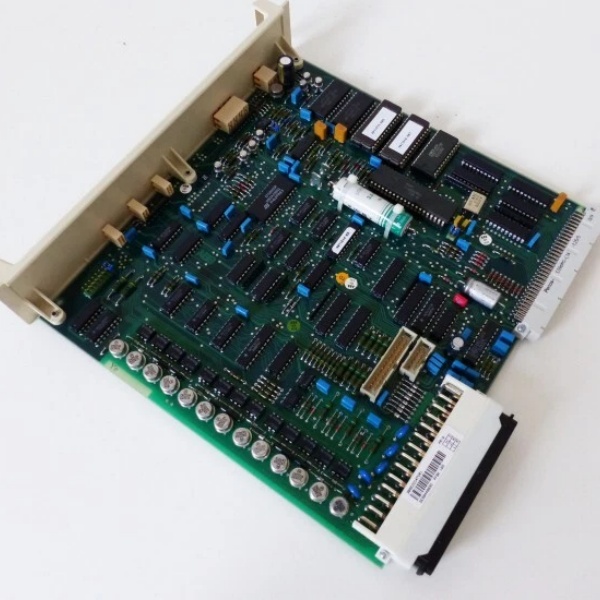
ABB PFBK165
Technical Deep Dive & Overview
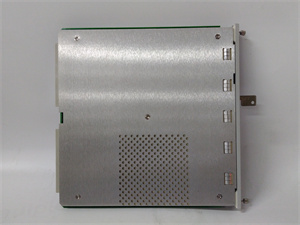
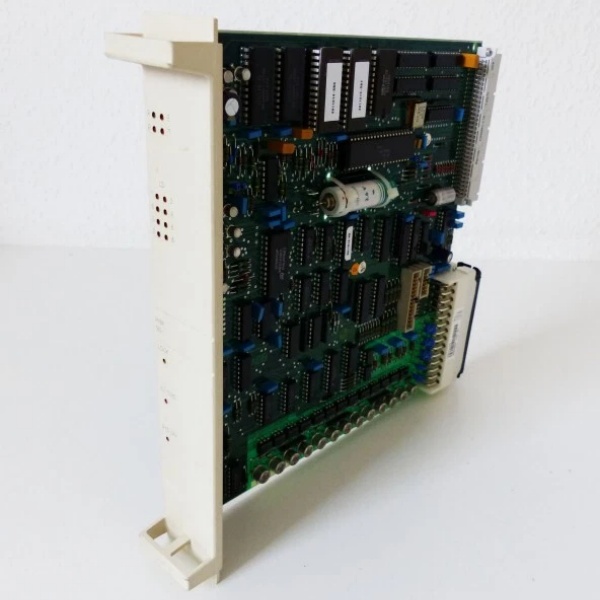
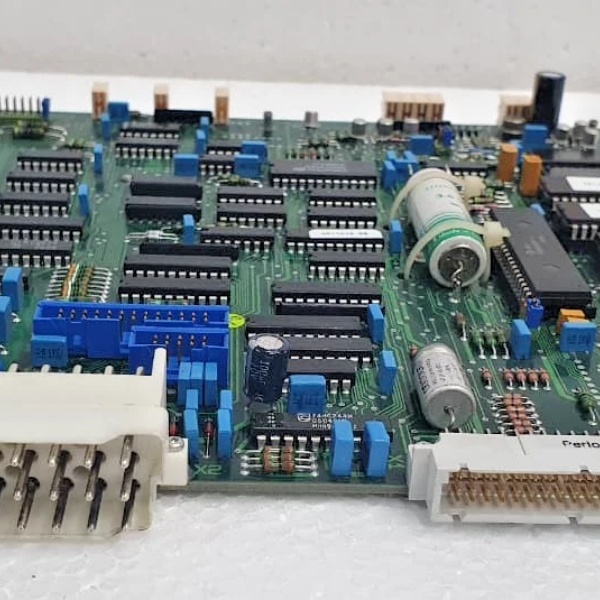
The PFBK165 is a single-slot motherboard that carries the full control load for small to mid-size DCS nodes. An internal 16-bit MCU handles the cyclic task scheduler; 512 kB SRAM holds the running code while 1 MB Flash stores the application and retentive variables. Communication is handled by a separate ASIC that bridges the MCU to Ethernet, serial, and the optional fieldbus mezzanine. Dual-port RAM decouples the comms from the scan so a burst of Modbus requests won’t extend your cycle time. The 24 VDC input feeds an on-board buck that generates 5 V and 3.3 V; if supply falls below 18 V the brown-out detector halts the CPU and signals “SysFail” on the rack backplane so downstream I/O can fail-safe. No fan, no battery—just a 0.52 kg board that bolts to the DIN rail and runs until the caps dry out (roughly 15 years at 40 °C).
The PFBK165 is a single-slot motherboard that carries the full control load for small to mid-size DCS nodes. An internal 16-bit MCU handles the cyclic task scheduler; 512 kB SRAM holds the running code while 1 MB Flash stores the application and retentive variables. Communication is handled by a separate ASIC that bridges the MCU to Ethernet, serial, and the optional fieldbus mezzanine. Dual-port RAM decouples the comms from the scan so a burst of Modbus requests won’t extend your cycle time. The 24 VDC input feeds an on-board buck that generates 5 V and 3.3 V; if supply falls below 18 V the brown-out detector halts the CPU and signals “SysFail” on the rack backplane so downstream I/O can fail-safe. No fan, no battery—just a 0.52 kg board that bolts to the DIN rail and runs until the caps dry out (roughly 15 years at 40 °C).