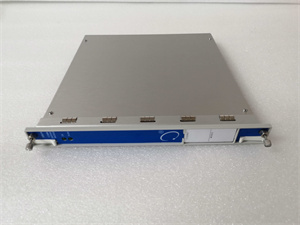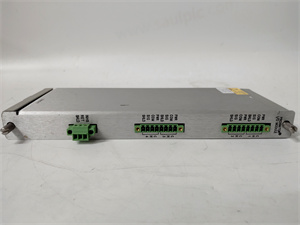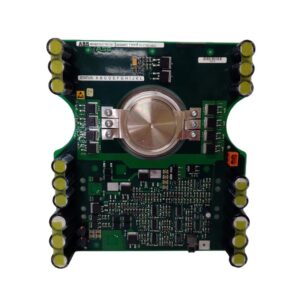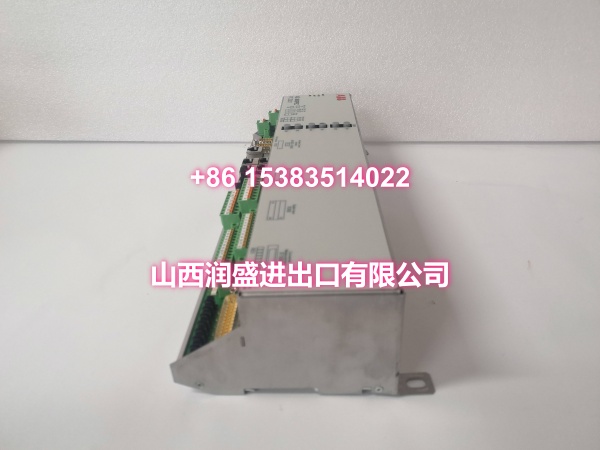
Description
Product Core Brief
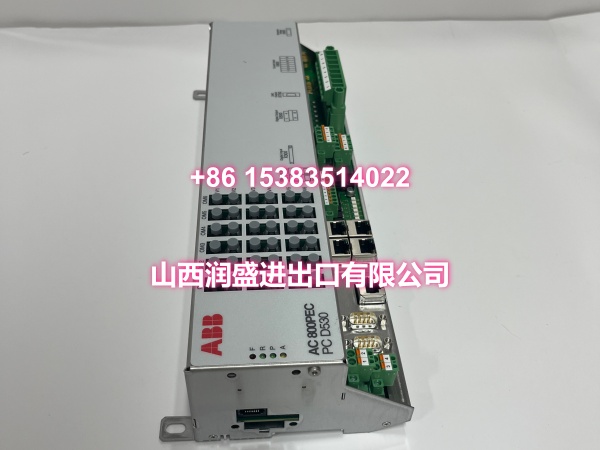
- Model: VLM70 3BHE034262R0001
- Brand: ABB
- Series: PCS6000 full-power converter system
- Core Function: Voltage Limiting Module (VLM) for DC-link overvoltage protection, braking resistor control, and DC-link discharge during converter shutdown.
- Product Type: PCS6000 voltage limiting module
- Key Specs: IGCT stack-based protection | DC-link overvoltage clamping | Braking resistor switching | DC-link discharge function | Compatible with PCS6000 3-level VSI-NPC converter
- Condition: New Original / New Surplus
Key Technical Specifications
- Order code: 3BHE034262R0001
- Product designation: VLM70 voltage limiting module for PCS6000 converter
- System compatibility: ABB PCS6000 full-power converter (3-level, 4-quadrant, VSI-NPC topology)
- Core technology: IGCT (Integrated Gate-Commutated Thyristor) stack
- Primary function: DC-link overvoltage protection — closes current path through braking resistor when DC-link voltage exceeds threshold
- Secondary function: DC-link discharge during converter shutdown
- Related module: Works alongside NCM (Neutralpoint Connection Module) for earth-fault handling and backup DC-link discharge
- Typical converter ratings: 3.3 kV / 4.16 kV / 6.6 kV / 6.9 kV systems, up to 12 MW per unit
- Control platform: ABB AC 800PEC
- Typical applications: Wind turbine full-power converters, STATCOM, SFC, energy storage, industrial drives
- Mounting: Converter cabinet plug-in module
Product Introduction
The VLM70 3BHE034262R0001 is a Voltage Limiting Module designed for the ABB PCS6000 full-power converter system. Unlike a general I/O or controller card, the VLM is a power-protection module that sits in the DC-link circuit and uses an IGCT stack to handle high-energy switching events.
Its main job is straightforward but critical: when the DC-link voltage exceeds a preset limit — such as during grid disturbances, generator overspeed, or sudden load rejection — the VLM triggers the braking resistor to dissipate excess energy. It also discharges the DC-link safely during converter shutdown. In wind turbine and STATCOM applications, this module is a key line of defense against overvoltage trips and component damage.
QA & Testing SOP
This is a power-level protection module, not a passive component. Every unit undergoes controlled inspection before dispatch:
- Visual and anti-counterfeit inspection: Verify order code 3BHE034262R0001, label consistency, IGCT stack condition, busbar connections, and mounting hardware. Check for burn marks, rework, or mismatched serials.
- ESD-safe handling: Anti-static bag, grounded mat, and insulated tray. The IGCT gate drive and associated electronics are sensitive to static discharge.
- Insulation and continuity check: Measure insulation resistance between power terminals and chassis. Verify busbar continuity and braking resistor circuit path.
- Gate drive verification: Confirm gate drive board presence, connector integrity, and power supply rail health. Full functional testing requires the PCS6000 cabinet and control system.
- Documentation match: Cross-check against the PCS6000 cabinet drawing and BOM to confirm VLM70 is the correct variant for the specific converter configuration.
Installation Pitfalls & Guide
❗ This is not a plug-and-play I/O module. The VLM handles DC-link power currents. Incorrect installation can cause catastrophic damage to the converter, braking resistor, or DC-link capacitors.
❗ Verify braking resistor compatibility. The VLM switches current through the braking resistor. A mismatched resistor (wrong resistance, power rating, or wiring) can cause VLM failure or ineffective overvoltage protection.
❗ Check DC-link polarity and busbar torque. Loose or reversed DC connections can cause arcing, overheating, or immediate module failure on energization.
❗ Coordinate with NCM settings. The NCM and VLM work together on DC-link discharge and earth-fault handling. If both modules are replaced or serviced, verify their interaction matches the cabinet configuration.
❗ Confirm firmware and protection thresholds. The VLM trip level and timing are managed by the AC 800PEC controller. A hardware swap without verifying the control configuration may leave the protection inactive or misconfigured.
Replacement steps:
- Pre-install: Back up converter configuration, record protection settings, tag all DC and gate-drive cables, and confirm the braking resistor circuit is isolated.
- Removal: Fully discharge the DC-link, verify zero voltage, disconnect gate-drive and power connections, then remove the module.
- Install: Seat the replacement, torque busbar connections to specification, reconnect gate-drive wiring, and verify braking resistor circuit integrity.
- Commissioning: Energize control power first, verify gate-drive status, check VLM trip thresholds in the AC 800PEC configuration, and perform a controlled DC-link charge/discharge test before full operation.
Technical FAQ
Is this module compatible with my PCS6000 converter? If your cabinet BOM specifies VLM70 3BHE034262R0001, it is the correct order code. Still verify the converter voltage level, braking resistor specification, and AC 800PEC configuration before commissioning.
Can this replace other VLM variants? Not automatically. Different VLM variants may have different IGCT ratings, gate-drive interfaces, or mechanical layouts. Substitution requires a cross-check against the PCS6000 cabinet drawing and BOM.
What is the difference between VLM and NCM? The VLM handles DC-link overvoltage protection and discharge via the braking resistor. The NCM connects the DC-link neutral point to earth through an RC network for dv/dt limiting and earth-fault handling. They are complementary but not interchangeable.
Do you offer price flexibility? Yes. Pricing depends on condition, quantity, and urgency. New original stock and tested surplus units are quoted separately.
What warranty is included? Typical coverage is 12 months from delivery for functional defects, excluding damage from incorrect installation, mismatched system configuration, or operation outside specified parameters. Final terms are confirmed on the quotation.