Description
Key Technical Specifications
- Model Number: 3BHE022291R0101 PCD230A
- Manufacturer: ABB Industrial Automation Division
- Input Voltage: 100-240VAC ±10% (50/60Hz) or 120-300VDC (dual-input compatible)
- Output Voltage: 24VDC ±0.5% (regulated); +5VDC (backplane logic power, 2A)
- Output Current: 10A continuous (24VDC); 15A peak (1 minute)
- Redundancy Support: N+1 parallel operation (up to 3 modules per rack)
- Efficiency: ≥92% at full load (230VAC input)
- Operating Temperature: -25°C to +65°C (-13°F to +149°F); derate 3% per 5°C above 55°C
- Isolation Rating: 1kV AC (input to output); 500V AC (output to chassis)
- Protection Features: Overcurrent, overvoltage, undervoltage lockout, overtemperature, short-circuit protection
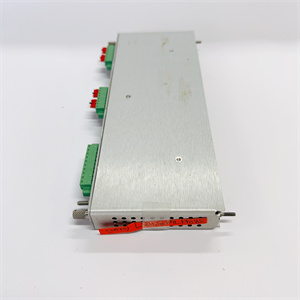
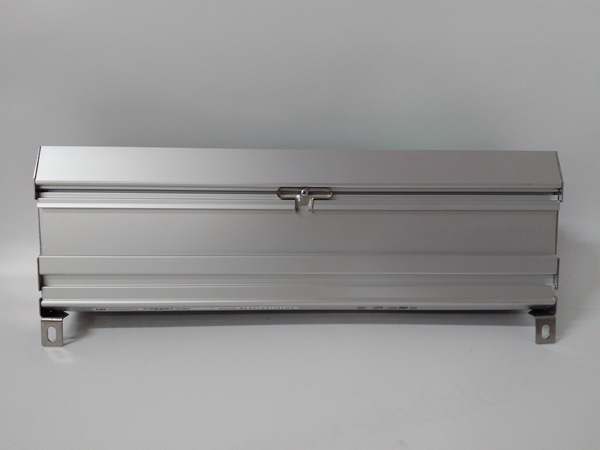
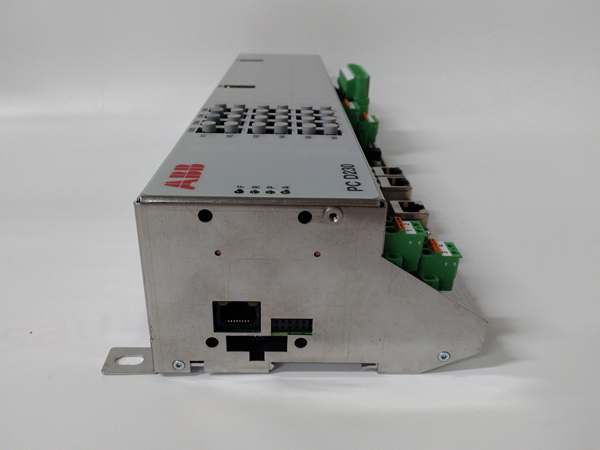
- Mounting Type: Rack-mount (S800 I/O rack, 2U height), plug-in module with mechanical latch
- Certifications: CE, UL 508, IEC 61131-2, RoHS 2.0, ATEX Zone 2
- Compatibility: ABB S800 I/O racks (IM801/IM810), AC800M DCS, S800 I/O modules (DSAI146, DSDI110A, etc.)
- Diagnostic Capability: LED status indicators (power OK, fault, redundancy active), dry-contact fault output
- Weight: 2.8kg (6.2lbs)
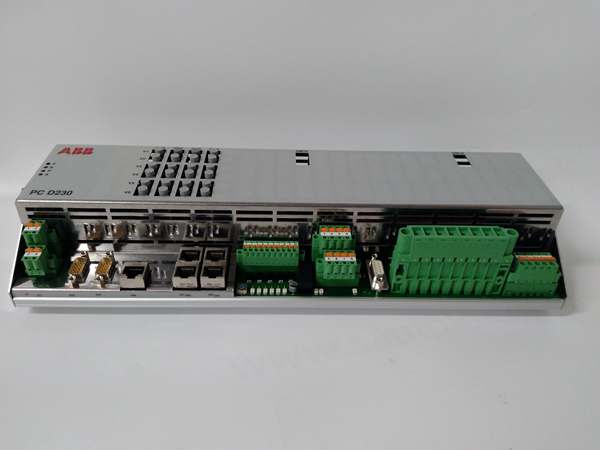
ABB 3BHE022291R0101 PCD230A
Field Application & Problem Solved
In industrial DCS environments—refinery process racks, power plant boiler control systems, chemical reactor I/O panels—reliable power for I/O modules is non-negotiable. Generic power supplies fail to integrate with S800 I/O racks, lack redundancy (critical for 24/7 operations), and can’t withstand harsh industrial conditions (voltage spikes, extreme temperatures). A Texas refinery lost $150k in a 4-hour outage when a generic power supply failed, taking down an entire S800 I/O rack controlling crude oil distillation sensors. Legacy non-redundant supplies also force unplanned downtime: a Pennsylvania chemical plant spent $22k annually on emergency maintenance after single-point power failures.
You’ll find this power supply in S800 I/O racks across: refinery alkylation units, coal plant steam flow control panels, and pharmaceutical batch reactor I/O cabinets. Its core value is ABB-native integration + N+1 redundancy + rugged regulation. Unlike generics, it’s calibrated to S800 backplane power requirements, eliminating voltage ripple that corrupts analog signals. For an Alaskan natural gas plant, the PCD230A’s -25°C operating range and redundant design prevented winter downtime—something single-module generic supplies couldn’t do, reducing annual outages by 90%.
Installation & Maintenance Pitfalls (Expert Tips)
- Redundancy Wiring: Cross-Connect Redundancy Pins: Rookies forget to connect the redundancy communication pins between modules, disabling failover. A Michigan paper mill’s I/O rack lost power during a module failure until cross-connect cables were installed. Use ABB’s dedicated redundancy cable (1SFL500003R0001) to link modules—this enables automatic load sharing and failover.
- Input Voltage Matching: Don’t Mix AC/DC Inputs: The PCD230A supports AC or DC input, but mixing types across redundant modules causes fault conditions. A Florida food processing plant’s power supplies tripped until both modules were wired to 230VAC. Verify input type consistency before commissioning—label wires clearly to avoid cross-wiring.
- Terminal Torque: 2.5Nm for Power Connections: Loose input/output terminals cause voltage drops and overheating. A Louisiana refinery’s PCD230A failed after 6 months due to loose AC input lugs. Use a torque wrench to apply 2.5Nm to copper terminals—apply anti-oxidant paste in humid environments to prevent corrosion.
- Thermal Management: Avoid Blocking Ventilation: Rookies stack cables or tools around the module, blocking airflow and triggering overtemperature shutdowns. An Ohio steel mill’s power supplies tripped weekly during summer until ventilation slots were cleared. Maintain 15mm of clearance around the module and ensure cabinet fans are operational.
- Failover Testing: Simulate Module Faults Post-Installation: Rookies assume redundancy works without testing, missing wiring or configuration errors. A North Carolina power plant’s redundant supply failed to switch over during a maintenance test—use a temporary load bank to simulate a module fault and verify failover within 10ms.
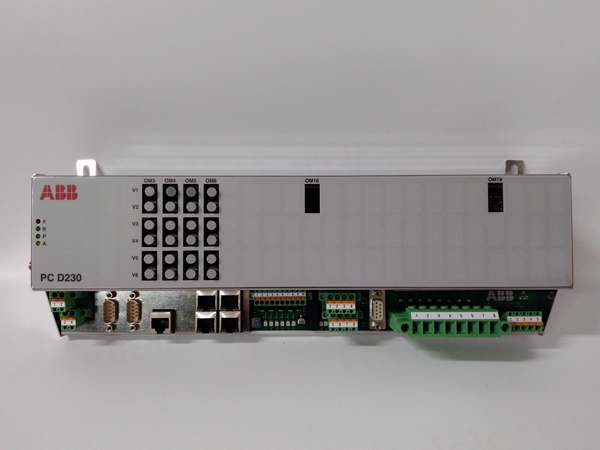
ABB 3BHE022291R0101 PCD230A
Technical Deep Dive & Overview
The ABB 3BHE022291R0101 PCD230A is a redundant switch-mode power supply engineered to deliver stable, uninterrupted power to ABB’s S800 I/O racks. At its core, a high-efficiency SMPS converts AC/DC input to regulated 24VDC for I/O modules and +5VDC for backplane logic. The module’s redundancy control circuitry enables parallel operation of up to 3 units, with automatic load sharing (each module carries ~33% of the load in a 3-module setup) and sub-10ms failover if one module faults.
Unlike generic power supplies, the PCD230A features ABB’s proprietary backplane interface, ensuring seamless integration with S800 I/O racks—no external adapters or custom wiring needed. Its rugged design includes surge protection (up to 2kV) for input voltage spikes, a conformal-coated PCB to resist dust and humidity, and 1kV AC isolation to block electrical interference from industrial equipment. The module’s overcurrent/overvoltage protection limits damage to connected I/O modules during fault conditions.
What sets it apart is its reliability-focused design: ABB’s thermal management system distributes heat evenly across the module, extending operating life to 100,000 hours (MTBF). The diagnostic LED indicators and dry-contact fault output enable real-time monitoring via the AC800M DCS, allowing technicians to address issues before they cause downtime. For facilities relying on S800 I/O racks, this power supply isn’t just a component—it’s a critical enabler of 24/7 operation, ensuring industrial processes remain powered and controlled even during individual module failures.