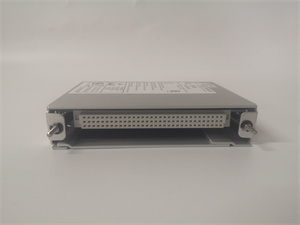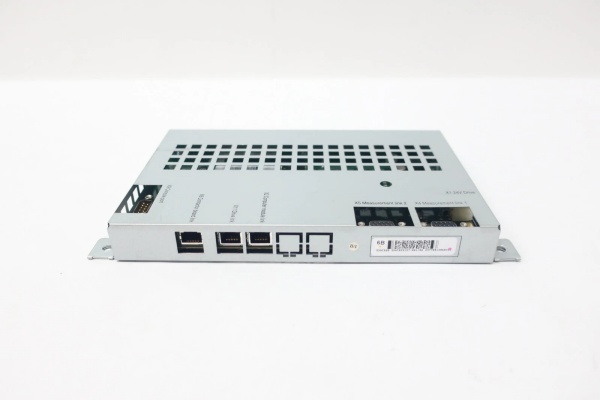
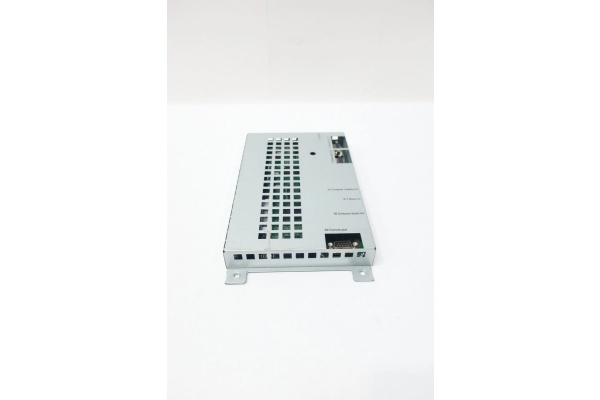
Description
Key Technical Specifications
| Parameter Name | Parameter Value |
|---|---|
| Model Number | ABB DSQC668 3HAC028179-001 |
| Manufacturer | ABB Robotics |
| Safety Inputs | 8 channels, 24VDC (sink/source configurable), dual-channel redundant detection |
| Safety Outputs | 8 channels, 24VDC, 2A per channel, 8A per module max load |
| Safety Certification | SIL 3 (IEC 61508), PL e (ISO 13849-1) |
| Communication Interface | IRC5 controller backplane (proprietary safety bus) |
| Power Supply | 24VDC ±10% (derived from IRC5 controller internal power; 0.5A max current draw) |
| Operating Temperature | 0°C to +60°C (32°F to 140°F) |
| Storage Temperature | -40°C to +85°C (-40°F to +185°F) |
| Protection Rating | IP20 (rack-mounted, controller cabinet internal use only) |
| Dimensions | 100mm × 150mm × 50mm (W×H×D) |
| Weight | ~0.8kg |
| Certifications | CE, UL, CSA, RoHS |
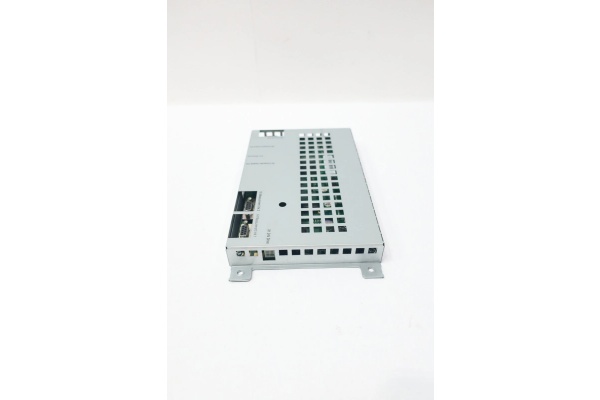
ABB DSQC668 3HAC028179-001
Field Application & Problem Solved
In industrial robot applications—especially automotive assembly, welding, and heavy material handling—the biggest risk is uncontrolled robot motion caused by failed safety circuits, which can lead to equipment damage, product defects, or even human injury. Legacy non-certified safety modules lack dual-channel redundancy, so a single point of failure can disable safety interlocks (e.g., emergency stops, safety gates). A European automotive plant once experienced a robot arm collision that damaged a $50k welding fixture, caused by a faulty single-channel safety module that failed to detect a tripped safety gate.
The DSQC668 solves this with its SIL 3/PL e certified dual-channel safety architecture, designed specifically for ABB IRC5 robot controllers. It monitors critical safety devices: emergency stop buttons, safety gate interlocks, light curtains, and area scanners, and triggers a Category 3 safety stop within milliseconds if a hazard is detected. You’ll find it in automotive body shops controlling welding robot safety zones, in logistics hubs managing palletizing robot access gates, and in electronics factories safeguarding collaborative robot workcells. Its core value is 100% integration with the IRC5 controller—safety status is displayed in RobotStudio software, enabling real-time diagnostics and eliminating the need for standalone safety PLCs. At the automotive plant, retrofitting robots with DSQC668 modules eliminated safety-related collisions and reduced downtime from safety circuit faults by 90%.
Another critical value is its compact design— it fits directly into the IRC5 controller’s internal rack, saving cabinet space and avoiding the cost and complexity of external safety enclosures.
Installation & Maintenance Pitfalls (Expert Tips)
- Safety Circuit Wiring Must Follow Dual-Channel Redundancy Rules: Rookies wire safety inputs (e.g., emergency stop) to a single channel, violating SIL 3 requirements and rendering the safety function ineffective. The DSQC668’s 8 inputs are designed for dual-channel redundancy—each safety device must connect to two separate input channels (e.g., E-stop to DI1 and DI5). Verify wiring against ABB’s safety circuit diagrams before powering on; this prevents safety certification failures and ensures compliance with ISO 13849-1.
- Output Load Sizing Prevents Module Damage: The DSQC668’s safety outputs are rated for 2A per channel and 8A per module—rookies connect 3A safety relay coils directly to the module, causing transistor burnout. For loads exceeding 2A, use an external safety-rated contactor or relay; the DSQC668 output triggers the low-power relay coil (<2A). A logistics plant fried 4 output channels by connecting high-current safety gate solenoids directly—adding contactors extended module life to 10+ years.
- RobotStudio Configuration Is Mandatory for Safety Function Activation: Technicians install the module but skip configuring safety logic in RobotStudio, leaving the safety circuits in a non-functional state. The DSQC668 requires safety logic programming (e.g., safety stop triggers, interlock sequences) via RobotStudio’s Safety Configuration Tool. Test all safety functions (e-stop, gate interlock, light curtain) after configuration to ensure they trigger a Category 3 stop—never rely on hardware alone.
- Avoid EMI Interference Between Safety and Power Cables: Safety signal wires routed parallel to robot motor power cables pick up EMI, causing false safety stops. Run DSQC668 safety I/O wires in separate conduit or cable trays, at least 30cm away from 480V motor leads. Use twisted-pair shielded cable for safety inputs, and ground the shield at the module end only to eliminate ground loops. A welding plant’s robots had frequent false safety stops until safety wires were rerouted away from welding transformer power lines.

ABB DSQC668 3HAC028179-001
Technical Deep Dive & Overview
The ABB DSQC668 3HAC028179-001 is a dual-channel safety I/O module engineered exclusively for ABB IRC5 robot controllers, built to meet the most stringent industrial safety standards (SIL 3/PL e). At its core, a redundant microprocessor architecture processes safety input signals—each input is monitored by two independent processors, ensuring that a single processor failure cannot disable the safety function. If a discrepancy is detected between the two processors, the module immediately triggers a safety stop (SS1 or SS2, configurable via RobotStudio) to halt robot motion.
The module’s 8 safety outputs use force-guided relays (per ISO 13849-1) to prevent dangerous failure modes—contacts cannot weld closed, and a relay failure will always default to a safe state (output off). This is a critical advantage over non-force-guided relays, which can fail in the energized state and allow unsafe robot motion.
Unlike generic safety modules, the DSQC668 integrates directly with the IRC5 controller’s backplane, communicating via ABB’s proprietary safety bus. This eliminates the need for external communication gateways and ensures low-latency safety signal transmission (<10ms). RobotStudio software provides full diagnostic capabilities—technicians can monitor input/output status, log safety events, and test safety functions without physically accessing the module.
Built with industrial-grade components and conformal-coated circuit boards to resist dust and oil mist in factory environments, the DSQC668 is rated for 15+ years of operation in harsh manufacturing settings. It is the gold standard for safety circuit control in ABB robot systems, ensuring compliance with global safety regulations and protecting both personnel and equipment from avoidable accidents.