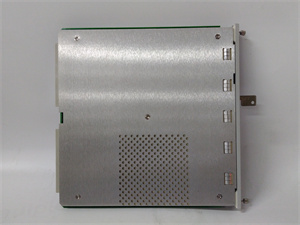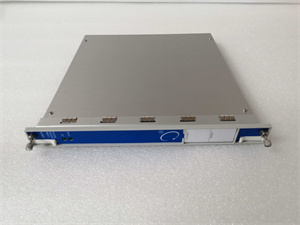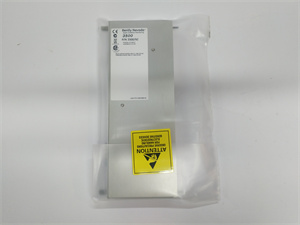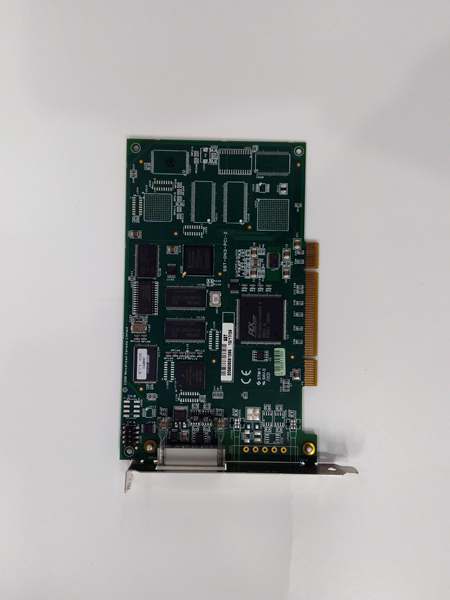
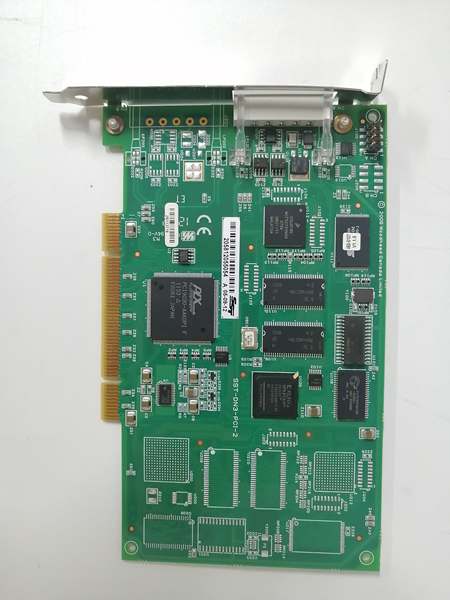
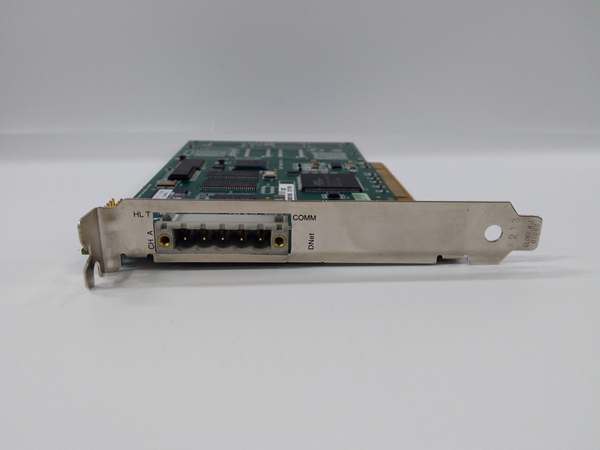
Description
Key Technical Specifications
- Model Number: DSQC658 3HAC025779-001
- Manufacturer: ABB
- Device Type: Industrial Robot Servo Drive Module
- Compatible Controllers: ABB IRC5 Standard, Compact, and Panel-Mount Controllers
- Axis Support: 4 independent servo axes (configurable via RobotStudio software)
- Input Voltage: 400V AC three-phase (±10% tolerance), 50/60Hz
- Output Current: 12A rms per axis (continuous), 24A peak per axis
- Control Interface: IRC5 High-Speed Backplane Bus (1ms motion data refresh)
- Operating Temperature: 0°C to +45°C (32°F to +113°F)
- Storage Temperature: -25°C to +65°C (-13°F to +149°F)
- Isolation: 2kV AC (power stage to control circuits, axis-to-axis)
- Protection Features: Over-current, over-voltage, under-voltage, over-temperature, short-circuit, motor phase loss protection
- Dimensions (W x H x D): 160mm x 210mm x 95mm
- Weight: Approx. 3.2kg
- Compliance: IEC 61800-5-1, EN 61010-1, CE, UL
- Status Indicators: Power (PWR), Axis Activity (1–4), Global Fault (RED), Warning (AMBER)
- Cooling Method: Forced air cooling (replaceable 24V DC fan)
- Mounting: Rack-mount (IRC5 controller chassis-compatible, tool-less installation)
- Motor Feedback Support: Resolver, incremental encoder, absolute encoder (Hiperface)

ABB DSQC658 3HAC025779-001
Field Application & Problem Solved
In industrial robotics—automotive assembly, electronics manufacturing, and metal fabrication—the critical challenge is delivering precise, synchronized multi-axis motion while minimizing downtime from drive failures. Legacy robot drives often suffer from poor integration with controllers, vague fault reporting, or inability to handle dynamic loads (e.g., rapid direction changes during pick-and-place tasks). This module solves that by combining tight IRC5 controller integration with robust 4-axis control and real-time diagnostics, eliminating the latency and compatibility issues of standalone drives.
You’ll typically find this module in ABB IRC5 controllers powering mid-range robots like the IRB 1410, IRB 2600, and IRB 4400. It’s a workhorse in automotive plants, controlling robot arms for spot welding, component assembly, and paint spraying. In electronics factories, it enables micron-level precision for circuit board placement and semiconductor handling. It’s also critical in material handling workflows—robots that load/unload CNC machines or palletize products—where repeatability (±0.05mm) directly impacts production quality and throughput.
Its core value is seamless coordination and reliability. The IRC5 backplane integration ensures motion commands are transmitted without delay, enabling smooth, coordinated movement across all 4 axes (e.g., robot arm articulation + end effector rotation). The built-in diagnostics are a field technician’s lifesaver: instead of troubleshooting generic “motion faults,” they get specific alerts (e.g., “Axis 3 over-temperature” or “Motor phase loss on Axis 1”) via the IRC5 HMI. For plant operators, this translates to faster fault resolution, fewer production halts, and consistent robot performance—critical in high-volume manufacturing where downtime costs $8k–$15k per hour.
Installation & Maintenance Pitfalls (Expert Tips)
Backplane Connector Seating: No Force Required
Rookies often jam the module into the IRC5 chassis, misaligning the backplane connector. Bent pins or partial seating cause intermittent communication drops, axis desyncs, or complete drive shutdowns. Slide the module along the chassis guide rails until it aligns with the backplane—listen for a distinct “click” to confirm full engagement. Never use tools to hammer or pry the module into place; damaged backplane pins cost hundreds to repair and take hours to replace.
Fan Maintenance: Dust Kills Cooling Efficiency
The integrated fan is the module’s only cooling source, but technicians frequently ignore it during routine checks. Dust buildup in the fan grille or filter blocks airflow, pushing internal temperatures past the 45°C threshold and triggering over-temperature faults. Clean the fan filter monthly (bi-weekly in dusty environments like welding cells) with compressed air. Replace the fan every 18–24 months—even if it’s still running—wear and tear reduces airflow over time. Running the module with a degraded fan cuts its lifespan by 60% or more.
Motor Parameter Calibration: Don’t Skip It
After installing or replacing the module, rookies skip loading the robot’s motor parameters via RobotStudio. Mismatched current limits, encoder types, or feedback gains cause erratic motion, reduced repeatability, or motor damage. Use the controller’s backup to restore motor-specific settings (e.g., torque limits, encoder resolution) for each axis. Run a “joint calibration” and “singularity check” to verify alignment—this step prevents costly motor failures and production defects from misconfigured motion control.
Power Supply Balance: Unbalanced Phases = Premature Failure
The module requires balanced 400V AC three-phase power, but technicians often ignore phase voltage checks. Unbalanced phases (more than ±10% difference between phases) cause excessive current draw on one axis, overheating the power stage. Use a phase meter to verify voltage balance before powering up. If unbalanced, address the issue at the source (e.g., faulty transformer, loose wiring) — running the module with unbalanced power voids the warranty and leads to early failure.

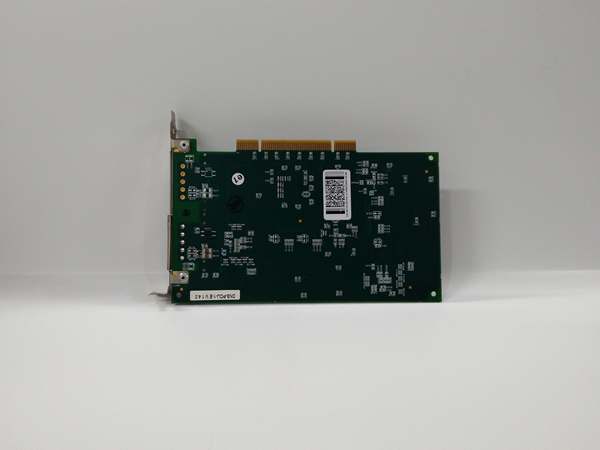
ABB DSQC658 3HAC025779-001
Technical Deep Dive & Overview
The ABB DSQC658 3HAC025779-001 is a purpose-engineered servo drive module designed exclusively for ABB’s IRC5 robot controllers, serving as the critical link between the controller’s motion logic and the robot’s servo motors. It’s part of ABB’s proven DSQC series, optimized for the rigors of industrial automation where precision and reliability are non-negotiable.
At its core, the module uses an IGBT-based power stage to convert 400V AC input into variable-voltage, variable-frequency power for each servo axis. Each axis features independent current, speed, and position control loops, enabling precise coordination of multi-axis motion—essential for tasks like robot arm articulation, linear traversal, or end effector manipulation. The IRC5 backplane bus facilitates high-speed communication (1ms update rate) between the controller and drive, ensuring instant response to motion commands and eliminating latency that would compromise precision.
The module’s diagnostic engine continuously monitors operational parameters: axis current, voltage, temperature, motor feedback, and fan health. If a fault is detected (e.g., short-circuit in a motor winding, phase loss, or over-temperature), the drive shuts down the affected axis within microseconds and transmits a detailed fault code to the IRC5 controller. This proactive protection prevents cascading damage to the motor or controller, while the front-panel LEDs provide on-site technicians with quick visual status updates.
Ruggedness is built for factory floors: the module’s enclosure resists dust and minor moisture, while the 0°C to +45°C operating range handles the heat generated by nearby equipment or enclosed controller cabinets. The tool-less rack-mount design simplifies installation and replacement, reducing downtime during maintenance. Integration with the IRC5 controller is plug-and-play—no external wiring is needed for motion control, as all signals pass through the backplane.
Overall, this module is a cornerstone of ABB’s robot control ecosystem. It delivers the precise, synchronized motion required for industrial automation while simplifying maintenance and troubleshooting. Its tight integration with the IRC5 controller eliminates compatibility headaches, making it a trusted choice for manufacturers relying on consistent robot performance to meet production targets.