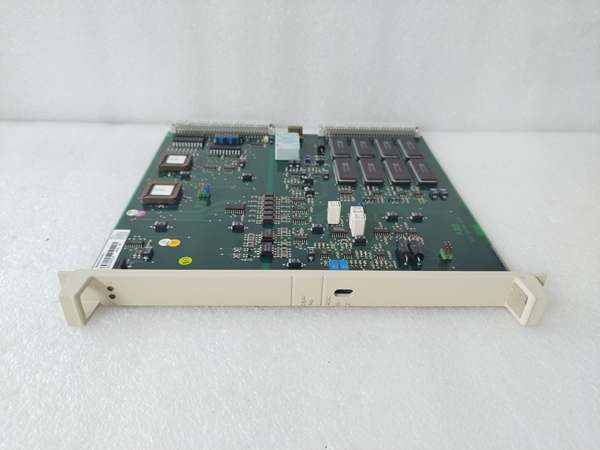
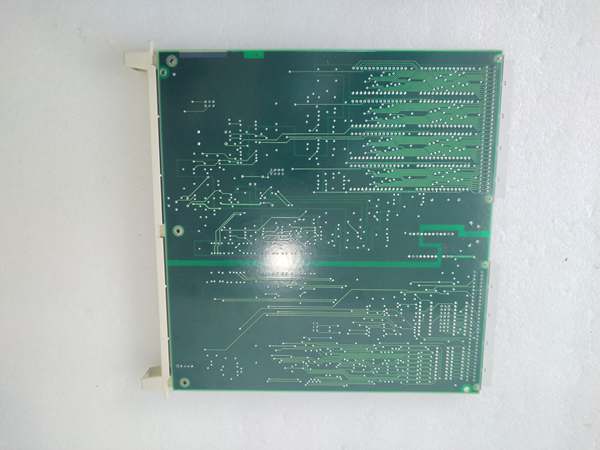
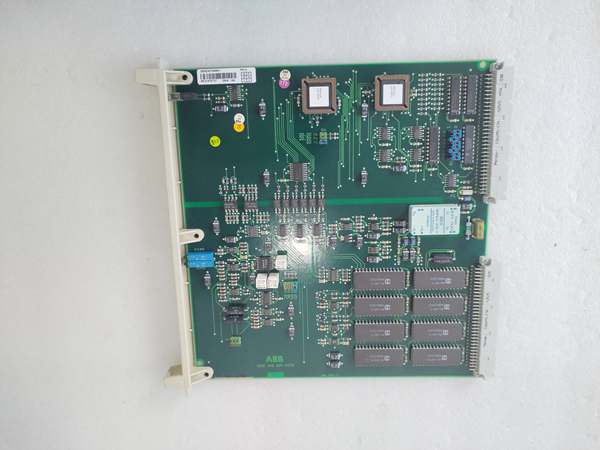
Description
Key Technical Specifications
- Model Number: DSAI146
- Manufacturer: ABB Industrial Automation Division
- Channel Count: 8 fully isolated analog input channels
- Input Signal Type: 4-20mA DC (2-wire/4-wire transmitters compatible)
- Measurement Accuracy: ±0.075% of full scale (FS) at reference conditions (25°C)
- HART Support: HART 7 (bidirectional communication, remote configuration)
- Operating Voltage: 24VDC ±10% (from S800 I/O rack backplane); 0.12A typical current draw
- Isolation Rating: 500V AC (channel-to-channel); 1kV AC (input circuits to backplane)
- Operating Temperature: -25°C to +65°C (-13°F to +149°F)
- Signal Conversion: 16-bit ADC resolution, 10Hz sampling rate per channel
- Mounting Type: Rack-mount (S800 I/O rack, 2U height), plug-in module
- Certifications: CE, UL 508, ATEX Zone 2, RoHS 2.0, IEC 61131-2, HART 7 compliant
- Compatibility: ABB AC800M DCS, S800 I/O racks (IM801/IM810), Control Builder M software, third-party HART transmitters
- Diagnostic Capability: HART-based fault detection (open circuit, short circuit, overrange/underrange), drift monitoring, channel status feedback

ABB DSAI146
Field Application & Problem Solved
In industrial process measurement—refinery flow meters, power plant boiler pressure transmitters, chemical reactor level sensors—generic analog input modules fail to deliver consistent accuracy in harsh conditions, suffer from compatibility issues with ABB AC800M DCS, and lack actionable diagnostics. A Texas refinery lost $130k in a 3-hour outage when a generic module gave false low-flow readings, triggering an unnecessary shutdown of a crude oil pipeline. Legacy modules also require frequent recalibration: a Pennsylvania chemical plant spent $22k annually adjusting off-brand units that drifted by ±0.5°C within 6 months—critical for processes requiring tight control (±0.1%).
You’ll find this module in S800 I/O racks across: refinery distillation units (monitoring temperature and pressure), coal plant steam flow systems, and pharmaceutical batch reactors (tracking ingredient levels). Its core value is ABB-native integration + lab-grade accuracy + HART diagnostics. The direct S800/AC800M compatibility eliminates signal conversion errors, while HART 7 support allows remote configuration and fault troubleshooting—no need to access the physical module in tight, hazardous control cabinets. For an Alaskan natural gas plant, the -25°C operating range ensured reliable readings in remote wellhead panels, unlike generic modules that froze in sub-zero temperatures.
Installation & Maintenance Pitfalls (Expert Tips)
- Wiring Polarity: Match Transmitter Leads Exactly: Rookies reverse positive/negative wires on 4-20mA circuits, causing no signal or transmitter damage. A Michigan paper mill’s flow sensors showed “0mA” until wiring was corrected—follow ABB’s color code (red=positive, black=negative) and use a multimeter to verify current flow.
- Shielded Cable is Mandatory for Noise Immunity: Unshielded wiring picks up interference from VFDs and motors, leading to signal drift. A Florida food processing plant’s temperature readings fluctuated by ±3% until shielded cable was installed. Ground the shield at the DCS end only—daisy-chaining grounds creates noise loops that corrupt data.
- Overloading Channels: Don’t Exceed 20mA per Channel: Rookies connect multiple transmitters to a single channel to save slots, frying the module’s ADC. An Ohio steel mill’s DSAI146 failed after 2 months when three 4-20mA transmitters were wired in parallel. Each channel is rated for one transmitter—use additional modules or a signal splitter if more inputs are needed.
- Calibration: Verify Annually (Not Just When Faults Occur): Process vibration and temperature cycles cause slow drift, but rookies skip calibration until readings are visibly wrong. A Louisiana refinery’s reactor pressure drifted by 0.3% over a year, leading to subpar product quality. Use ABB’s Field Communicator or Control Builder M to calibrate against a NIST-traceable standard—document results for regulatory compliance.
- HART Configuration: Sync Variables with DCS Tags: Rookies ignore HART diagnostic data, missing early warnings of transmitter failure. A North Carolina power plant missed a pressure transmitter’s drift alert until HART variables (e.g., “Sensor Drift”) were mapped to 800xA HMI tags. Ensure critical HART parameters are integrated during commissioning to enable predictive maintenance.
ABB DSAI146
Technical Deep Dive & Overview
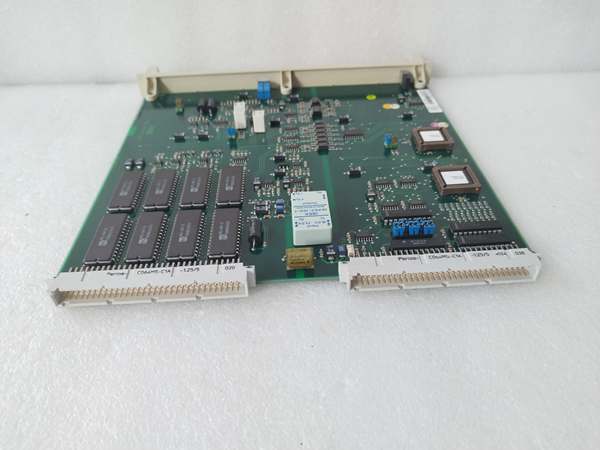
The ABB DSAI146 is a dedicated analog input module engineered to convert 4-20mA process signals into digital data for ABB’s AC800M DCS. At its core, a 16-bit analog-to-digital converter (ADC) samples each channel at 10Hz, ensuring real-time tracking of fast-changing processes. The module provides constant current excitation (24VDC) for 2-wire HART transmitters, while channel-to-channel isolation (500V AC) blocks electrical interference from industrial noise sources—common in refineries and power plants.
Unlike generic modules, the DSAI146 natively supports HART 7, enabling bidirectional communication with smart transmitters. Technicians can remotely adjust transmitter ranges, read diagnostic data, and troubleshoot faults without interrupting the process or accessing the physical module. The module plugs directly into S800 I/O racks, communicating with the AC800M CPU via the rack’s interface module—no external gateways or custom drivers required.
What sets it apart is its rugged design: a conformal-coated PCB resists dust and humidity, and the wide operating temperature range (-25°C to +65°C) makes it suitable for unconditioned control cabinets in harsh environments. For facilities where process accuracy and reliability directly impact safety, efficiency, and product quality, the DSAI146 isn’t just a measurement module—it’s a robust, diagnostic-rich solution that keeps industrial processes within critical limits while integrating seamlessly with ABB’s control ecosystem.