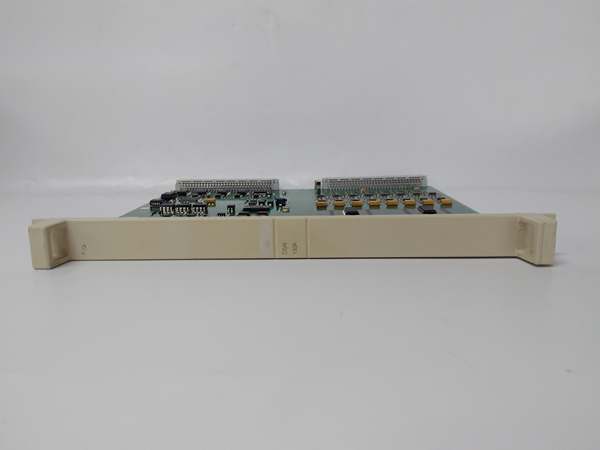
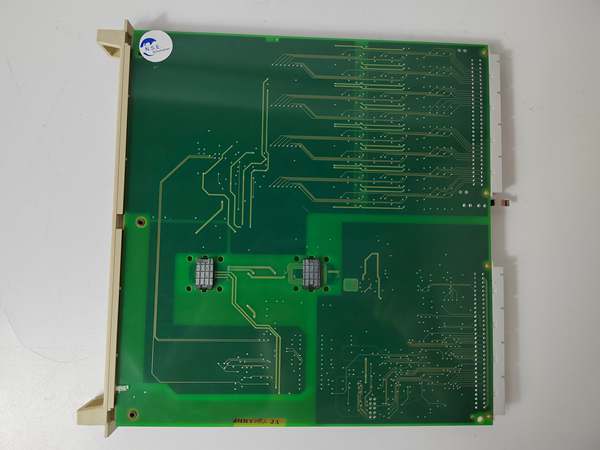
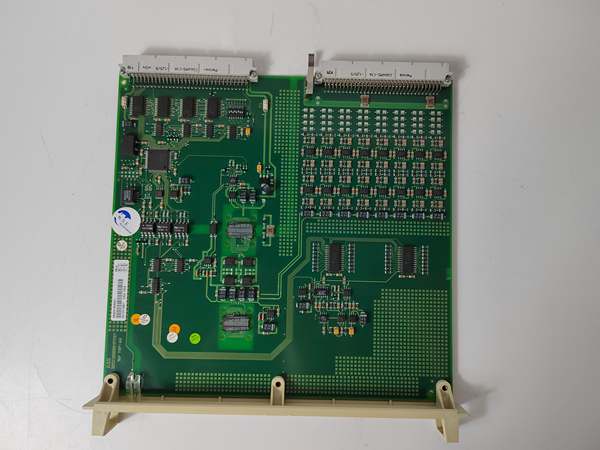
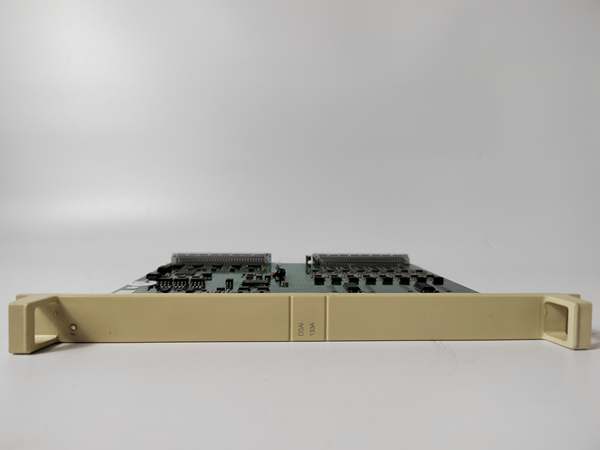
Description
Key Technical Specifications
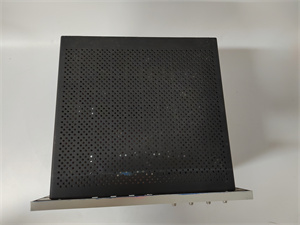
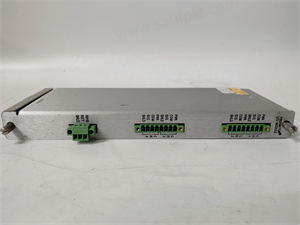
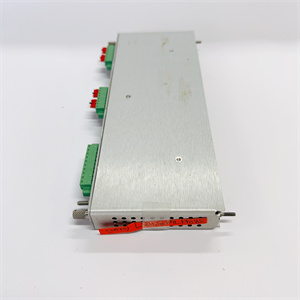
- Model Number: ABB DSAI133A 3BSE018290R1
- Manufacturer: ABB
- Input Type: Universal (4-20mA current, 0-10V DC/±10V DC voltage, software-selectable)
- Number of Input Channels: 8 (individually isolated)
- Input Current Range: 4-20mA (2-wire/4-wire, loop-powered compatible)
- Input Voltage Range: 0-10V DC, ±10V DC (±10% tolerance)
- Measurement Accuracy: ±0.1% of full scale (current/voltage)
- Operating Temperature: -25°C to 70°C (-13°F to 158°F)
- Storage Temperature: -40°C to 85°C (-40°F to 185°F)
- Isolation: 500V AC (channel-to-channel, channel-to-backplane, 1-minute withstand)
- Response Time: ≤15ms (90% step response)
- Power Supply: 24V DC ±10% (21.6V DC to 26.4V DC), from AC 800M backplane
- Power Consumption: 1.2W (standby), 2.4W (full load)
- Mounting: AC 800M I/O rack (compatible with PM850/PM860/PM861/PM865 CPUs)
- Connector Type: 4 x spring-cage terminal blocks (2 channels per block)
- Protection Features: Short-circuit protection (per channel), ESD protection (±15kV air)
- Compatibility: ABB AC 800M controllers (firmware ≥3.1)

ABB DSAI133A 3BSE018290R1
Field Application & Problem Solved
In industrial process control—batch manufacturing, water treatment, and HVAC systems—monitoring multiple continuous variables requires analog input modules that balance density, flexibility, and reliability. The challenge? Many 8-channel modules lack individual channel isolation, causing cross-talk from nearby motors or fault propagation if one sensor shorts. Low-precision modules introduce measurement errors that disrupt process stability, while single-type input modules force users to install multiple units for mixed current/voltage sensors. Third-party modules often fail to sync with the AC 800M backplane, leading to delayed data that compromises closed-loop control. The ABB DSAI133A solves these pain points with 8-channel density, universal input compatibility, individual isolation, and high precision.
You’ll typically find this module in applications like monitoring temperature and pressure in chemical batch reactors, measuring flow rates and liquid levels in water treatment plants, or tracking air pressure and humidity in industrial HVAC systems. It’s a workhorse in mid-scale process control, where its 8-channel design reduces rack space compared to 4-channel modules. In food processing facilities, it monitors oven temperatures and mixer speeds via mixed current/voltage sensors, relying on isolation to withstand noise from processing equipment. It also excels in retrofits, upgrading older AC 800M systems to handle more analog sensors without cabinet redesign.
Its core value is efficiency and reliability for multi-variable sensing. The 8-channel density maximizes I/O per rack slot, while universal inputs eliminate the need for specialized modules. Individual channel isolation prevents fault spread and noise interference, ensuring accurate data for control logic. For operators, this means simplified system design, reduced installation costs, and consistent process control—critical in applications where variable deviations lead to product waste or equipment damage.
Installation & Maintenance Pitfalls (Expert Tips)
- Input Range Mismatch (Software vs. Sensor): Rookies often configure channels for 4-20mA but connect 0-10V sensors, resulting in no data or distorted readings. This is especially common in mixed-sensor setups. After wiring, use Control Builder M to confirm each channel’s input type matches the sensor’s output. Test with a signal generator: simulate 4mA/20mA (current) or 0V/10V (voltage) to verify the module registers the full range.
- Loop Power Overload (Too Many 2-Wire Transmitters): The module provides loop power for 2-wire 4-20mA transmitters, but rookies often connect more than 8 transmitters (one per channel) or daisy-chain devices. This exceeds the module’s power capacity, causing voltage drops and sensor failures. Connect only one 2-wire transmitter per channel, and use external power for 4-wire sensors. Check total loop current with a multimeter to ensure it doesn’t exceed 25mA per channel.
- Poor Wiring Practices (Noise = Fluctuating Readings): Analog signals are sensitive to electromagnetic interference, but rookies often run sensor wires parallel to high-voltage power cables or use unshielded wire. This induces noise, leading to erratic readings (e.g., fluctuating pressure values). Use shielded twisted-pair (STP) cable for all analog wiring, route it at least 30cm away from power cables, and ground the shield at the module end only (single-point grounding).
- Terminal Block Channel Mix-Up (Incorrect Wiring = No Signal): The module uses 4 terminal blocks (2 channels each), but rookies often mix up channel-to-block mapping (e.g., wiring channel 5 to block 1 instead of block 3). This results in no sensor signal, as the PLC expects data from a different terminal. Reference ABB’s wiring diagram: blocks 1-4 correspond to channels 1-2, 3-4, 5-6, 7-8. Label wires with channel numbers and verify against the diagram before powering on.
ABB DSAI133A 3BSE018290R1
Technical Deep Dive & Overview
The ABB DSAI133A 3BSE018290R1 is an 8-channel universal analog input module engineered for mid-scale process sensing in ABB’s AC 800M control systems. Its core design centers on high-precision analog-to-digital (A/D) conversion—16-bit resolution with ±0.1% full-scale accuracy—ensuring reliable measurement of low-level sensor signals. Each channel is individually isolated with 500V AC rating, achieved via optocouplers that block electromagnetic interference (EMI) and prevent ground loops.
The module’s universal input circuitry supports both current (4-20mA) and voltage (0-10V/±10V) signals, with software-selectable ranges to match common industrial sensors (transmitters, transducers, signal conditioners). For 2-wire 4-20mA transmitters, the module provides regulated 24V DC loop power (max 25mA per channel), simplifying wiring and reducing the need for external power supplies. Built-in low-pass filters suppress high-frequency noise, with filter cutoff adjustable via software to match process speed.
Communication with the AC 800M CPU occurs via the rack’s high-speed backplane bus (100Mbps), enabling real-time data transfer. The module’s internal microcontroller caches converted digital values and updates the CPU at 15ms intervals, balancing responsiveness with backplane bandwidth efficiency. Configuration settings (input range, loop power, filtering) are stored in non-volatile memory, retaining data during power loss or module replacement.
Built for industrial ruggedness, the DSAI133A withstands vibration (up to 5g at 10-2000Hz) and temperature extremes (-25°C to 70°C). The spring-cage terminal blocks simplify tool-less wiring, reducing installation time and human error. Its compact 1-slot design maximizes I/O density in AC 800M racks, while compliance with IEC 61131-2 ensures compatibility with global industrial standards.
As an OEM module, it integrates seamlessly with ABB’s Control Builder M software, supporting drag-and-drop I/O mapping and calibration. Its focus on density, flexibility, and reliability makes it a critical component in mid-scale analog sensing applications where accurate, consistent data is essential for process control and efficiency.