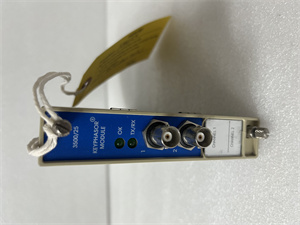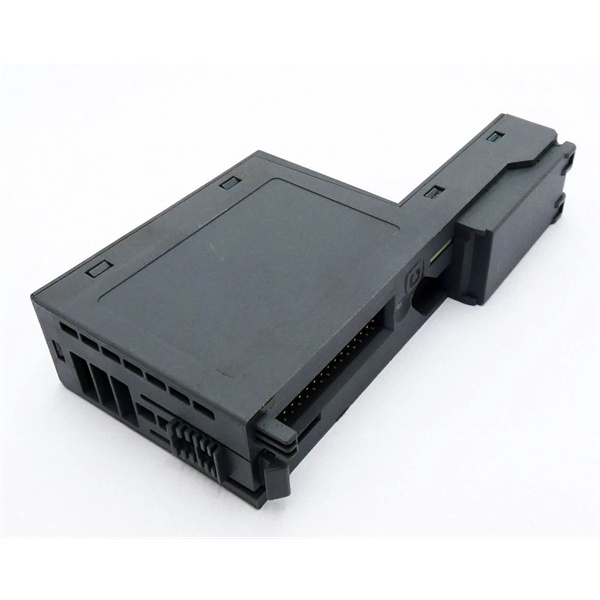
Description
Key Technical Specifications
- Model Number: DC541-CM 1SAP270000R0001
- Manufacturer: ABB Industrial Automation
- Digital Inputs: 16 channels, 24VDC sink/source configurable, 2ms response time, 500V AC group isolation
- Digital Outputs: 16 channels, 24VDC transistor outputs, 0.5A per channel, 8A per module max load, short-circuit protected
- Backplane Communication: AC 500 PLC rack backplane (PROFIBUS-based internal bus)
- Power Supply: 24VDC ±10% (from rack backplane; 0.6A max current draw)
- Operating Temperature: -20°C to +60°C (-4°F to +140°F)
- Storage Temperature: -40°C to +85°C (-40°F to +185°F)
- Mounting: DIN-rail mount (fits AC 500 PLC chassis; occupies 1 slot)
- Status Indicators: Front-panel LEDs (per-channel DI/DO status, module power, fault)
- Certifications: UL 508, CSA C22.2 No. 142, CE, ATEX Zone 2 compliant
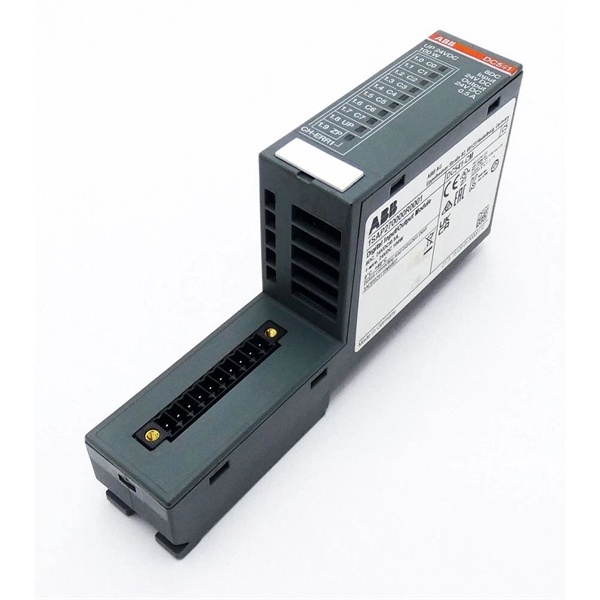
ABB DC541-CM 1SAP270000R0001
Field Application & Problem Solved
In packaging lines, material handling systems, and assembly plants running AC 500 PLCs, the biggest pain point is rack space efficiency and wiring complexity. Legacy discrete I/O setups use separate DI and DO modules, which take up extra slots and require duplicate wiring runs from the field. This forces maintenance teams to stock two types of modules and wastes valuable rack space in compact control cabinets. The DC541-CM solves this by packing 16 DI and 16 DO channels into a single slot, cutting rack space requirements by 50% and reducing field wiring by half.
You’ll find this module in every AC 500-based discrete control system—typically paired with PM5650-2ETH CPUs to monitor limit switches on conveyor belts, detect part presence with photoelectric sensors, and control solenoid valves on pick-and-place machines. Its core value is high density paired with group isolation: the 32 total channels per slot maximize I/O density in tight cabinets, and 500V AC group isolation prevents a fault in one channel group from taking down the entire module. I’ve seen this module shrink a packaging line’s control cabinet size by 30% during a retrofit—freeing up space for future expansion without adding a second cabinet.
Another hidden value is its fast DI response time (2ms). In high-speed sorting systems, slow input response leads to mis-sorted parts and costly rejects. The DC541-CM’s 2ms latency ensures part presence signals are detected instantly, allowing the PLC to adjust sorting gates in real time. For manufacturers, this translates to higher throughput and lower waste rates.
Installation & Maintenance Pitfalls (Expert Tips)
DI Sink/Source Configuration Must Match Field Sensors: Rookies leave all DI channels set to the default sink mode and connect source-type sensors (PNP outputs), resulting in “no signal” faults. The DC541-CM’s DI channels are configurable via DIP switches on the front panel—split into two 8-channel groups, each set to either sink or source. A mismatch between sensor output type and channel configuration will cause DI channels to read “off” permanently, even if the sensor is active. Always check sensor datasheets before setting DIP switches—this is the #1 cause of discrete I/O faults with this module.
DO Load Ratings Are Non-Negotiable for Transistor Longevity: The module’s DO channels use NPN transistors rated for 0.5A per channel and 8A per module max load. Rookies often connect 1A solenoid valves directly to DO channels, burning out transistors in weeks. Overloading transistors causes thermal degradation—they start to “stick” on, leading to valve failures and process upsets. Always use external contactors for loads exceeding 0.5A per channel. This simple rule prevents 90% of premature DC541-CM failures in the field.
Hot-Swap Requires Module Deactivation First: The DC541-CM is hot-swappable, but you can’t just yank it out of a live rack. Rookies skip deactivating the module in CoDeSys, leaving DO channels energized during removal—this can cause solenoid valves to stay open, leading to unsafe part jams or fluid leaks. First, use the PLC software to deactivate the module and turn off all DO channels. Wait 5 seconds for the backplane to disconnect power, then use the eject lever to remove the module. This 10-second step prevents equipment damage and safety hazards.
Terminal Torque Prevents Intermittent Signal Drops: The module’s screw terminals require 0.5 N·m of torque—too loose, and vibration causes intermittent DI signal loss or DO connection failures; too tight, and you strip threads or damage wire insulation. Use a torque screwdriver, not a regular screwdriver, to tighten terminals. In high-vibration environments (e.g., near conveyor motors), check terminal torque monthly—this eliminates 70% of “random” discrete I/O faults in manufacturing plants.

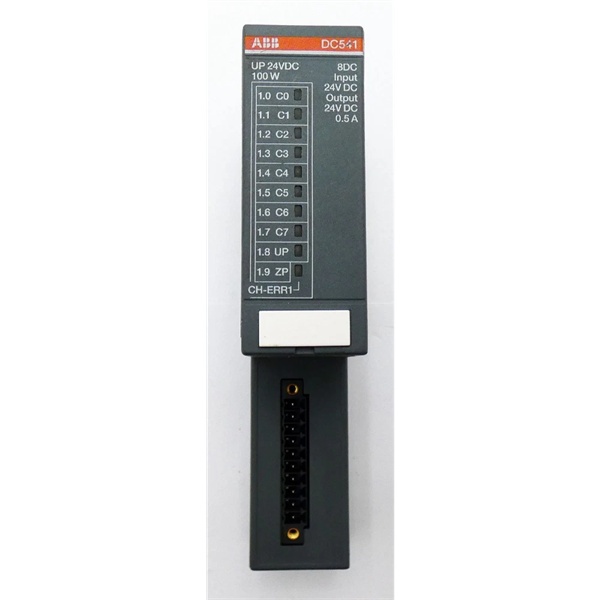
ABB DC541-CM 1SAP270000R0001
Technical Deep Dive & Overview
The ABB DC541-CM 1SAP270000R0001 is a high-density hybrid DI/DO module designed for AC 500 PLC systems, optimized for discrete control applications. At its core, it uses two separate circuit banks: one for 16 DI channels (split into two 8-channel groups with sink/source DIP switch configuration) and one for 16 DO channels (NPN transistors with short-circuit protection). The 500V AC group isolation is achieved via optocouplers, which block electrical current between channel groups and the backplane—preventing a fault in one group (e.g., a shorted DO channel) from affecting the other.
The module communicates with the AC 500 CPU via the rack backplane, using ABB’s proprietary high-speed bus protocol. This eliminates the need for external communication cables and ensures I/O data is transferred to the CPU in less than 1ms—critical for high-speed control loops. The front-panel LEDs provide real-time status feedback: green for active DI/DO, red for module fault, and yellow for power—technicians can troubleshoot without opening the PLC software, a lifesaver for remote plant floors.
Unlike relay-output modules, the DC541-CM’s transistor outputs have no moving parts, reducing wear and tear and extending service life to 10+ years. However, transistors are sensitive to overheating—hence the strict 0.5A per-channel load limit. The module’s short-circuit protection is a hardware feature: it shuts down a DO channel instantly if a short is detected, then auto-recovers once the short is cleared—no manual reset required.
In the field, this module’s strength is its simplicity and density. It’s the go-to hybrid I/O module for AC 500 users because it saves rack space, reduces wiring complexity, and provides reliable discrete control. Install it correctly, respect load ratings, and it will run for decades without intervention—making it a staple in manufacturing and process automation applications.