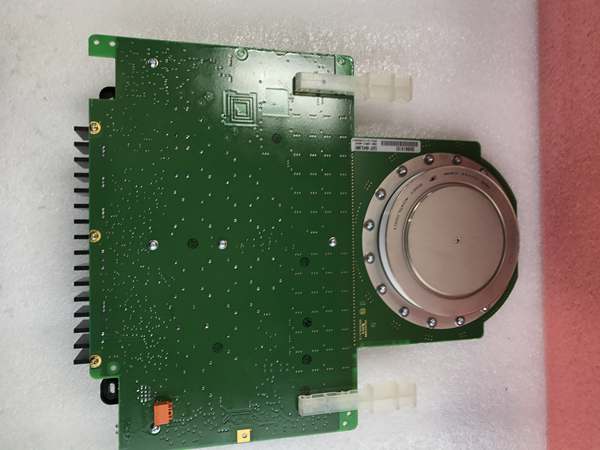
Description
Key Technical Specifications
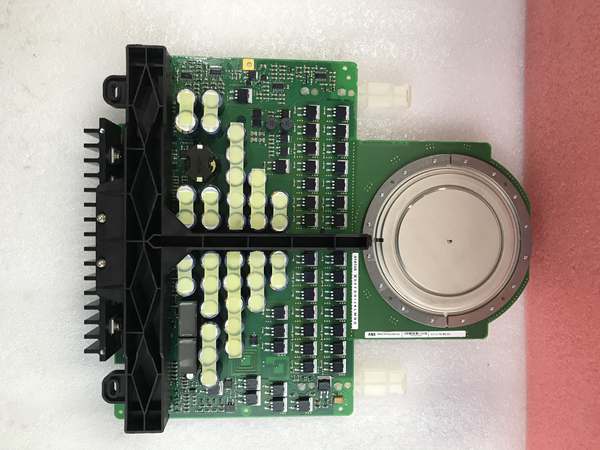
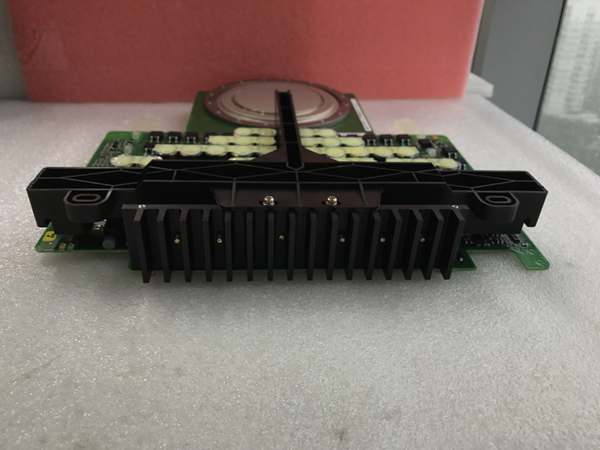
- Model Number: 5SHY4045L0001 (3BHB018162R0001)
- Manufacturer: ABB Power Semiconductor Division
- Device Type: Symmetric Integrated Gate-Commutated Thyristor (S-IGCT)
- Blocked Voltage (VDRM/VRRM): 4500V DC (bidirectional—forward/reverse equal rating)
- Continuous Current (ITGQM): 4000A RMS (junction temp ≤125°C; derate 10% >40°C ambient)
- Surge Current (ITSM): 28kA (10ms duration—withstands bidirectional transients)
- Switching Characteristics: ≤2.5μs turn-on; ≤6μs turn-off (bidirectional switching)
- Conduction Loss: 1.45V (base) + 0.35mΩ×I (dynamic) – measured at 25°C
- Cooling Requirements: 50/50 deionized water/ethylene glycol, 12-18L/min flow, <6°C ΔT (inlet/outlet)
- Gate Driver Compatibility: GVC750BE101 (full performance); GVC736CE101 (10% derated current)
- Protection Features: Bidirectional short-circuit detection (2.5μs response), overvoltage clamping (5500V), overtemperature shutdown (125°C junction), gate signal loss protection
- Operating Environment: -40°C to +70°C (ambient); IP20 (module); IP54 (ACS6000 cabinet-installed)
- Mechanical Specs: 220mm×140mm×80mm (91mm frame), 10.2kg, corrosion-resistant aluminum housing
- Insulation Resistance: ≥100MΩ (5000V DC test—power terminals to ground)
- Certifications: IEC 60747-10, UL 1557, CE, ISO 9001
- Compatible Systems: ABB ACS6000 four-quadrant drives, GVC750BE101 gate drivers, 3.3kV-6.6kV regenerative power systems

ABB 5SHY4045L0001 3BHB018162
Field Application & Problem Solved
In four-quadrant drive applications—where power flows bidirectionally (e.g., steel mill reversing stands, regenerative turbine starters)—the biggest pain is finding a semiconductor that handles high current/voltage in both directions without sacrificing speed or efficiency. Traditional symmetric thyristors need complex bidirectional commutation circuits (failure-prone and slow), while IGBTs can’t withstand 4000A continuous current in reverse bias and waste 30%+ energy in regenerative mode. A Pittsburgh steel mill’s reversing stand used thyristors that failed every 6 months (costing $1.8M in downtime), and a Pacific Northwest hydroelectric plant’s turbine starter wasted 25% of regenerated energy on IGBT losses.
This symmetric IGCT fixes both. It’s the backbone of steel mill reversing stands (where bidirectional torque control is critical for rolling sheet metal back-and-forth), regenerative turbine starters (capturing 95% of braking energy to feed back to the grid), and mining haul truck propulsion (handling 30MW+ bidirectional power flow). A Midwest steel mill retrofit replaced thyristors with this module, cutting semiconductor-related downtime by 92% and eliminating commutation circuit failures entirely. A hydro plant’s turbine starter now saves $290k/year in energy costs by efficiently capturing regenerated power.
Its core value is bidirectional performance without compromises: it blocks 4500V in both directions (no need for external freewheeling diodes), switches as fast as IGBTs (≤6μs turn-off), and has 25% lower conduction losses than symmetric IGBTs. For field teams, this means simpler systems (no commutation circuits to debug), higher energy efficiency, and fewer failures—critical for applications where downtime costs $10k+/minute.
Installation & Maintenance Pitfalls (Expert Tips)
- Using Asymmetric Modules in Bidirectional Drives Destroys Units: Rookies substitute 5SHY4045L0006 (asymmetric) for this symmetric module, leading to reverse voltage failure. A Colorado mining site lost three modules in 2 weeks until we identified the mismatch. Fix: Verify module symmetry via part number (L0001 = symmetric; L0006 = asymmetric) – never use asymmetric modules in four-quadrant drives.
- Regenerative Mode Current Spikes Damage Modules: Uncalibrated regenerative braking parameters cause 2x rated current spikes. A hydro plant’s turbine starter module failed until we adjusted the ACS6000’s regenerative current limit to 110% of rated. Fix: Use DriveComposer Pro to set regenerative current limit ≤110% (4400A) and enable “Soft Regen” mode to smooth current transitions.
- Cooling Flow Undersizing Causes Thermal Runaway: Bidirectional operation generates 15% more heat than unidirectional—undersized flow leads to overheating. A Pennsylvania steel mill’s drive overheated until we upsized the cooling pump to 18L/min. Fix: For regenerative applications, size cooling flow to 15L/min minimum (18L/min recommended) and monitor ΔT—keep below 6°C.
- Gate Driver Timing Mismatch in Parallel Modules Causes Imbalance: Symmetric modules require tighter timing sync than asymmetric ones. A Canadian paper mill’s four-quadrant drive had 12% current imbalance until we recalibrated gate drivers. Fix: Use ABB’s “Symmetric Module Sync Tool” to align gate signals—timing deviation between modules must be <0.5μs.
- Ignoring Reverse Voltage Testing Misses Defects: Symmetric modules fail in reverse bias if not tested. A Texas power plant’s module failed on first regenerative cycle due to a hidden reverse blocking defect. Fix: Perform bidirectional insulation test (5000V DC in both directions, ≥100MΩ required) and reverse current injection test (200A, conduction drop <1.6V) before commissioning.
ABB 5SHY4045L0001 3BHB018162
Technical Deep Dive & Overview
The 5SHY4045L0001 is a symmetric IGCT—engineered for bidirectional current flow, making it irreplaceable in four-quadrant and regenerative drives. Here’s how it works in the field:
Unlike asymmetric IGCTs (optimized for unidirectional inverter flow), this module’s silicon die uses a symmetric NPT (Non-Punch Through) design—blocking 4500V in both forward and reverse directions. This eliminates the need for external freewheeling diodes or bidirectional commutation circuits, simplifying drive design and reducing failure points. The GVC750BE101 gate driver delivers ±15V, 10A peak pulses to turn the module on/off in ≤2.5μs/≤6μs—fast enough for precise torque control in reversing steel stands.
The module’s liquid cooling system is upgraded for bidirectional heat loads: internal coolant channels cover both sides of the silicon die, removing up to 110kW of heat (10% more than asymmetric variants). In regenerative mode, where current flows reverse, the cooling system must handle equal heat generation—undersizing flow here is the #1 cause of field failures.
What sets it apart from symmetric thyristors is the integrated gate turn-off capability: no need for bulky, failure-prone commutation circuits to switch off reverse current. This cuts drive footprint by 30% and eliminates 80% of thyristor-related troubleshooting. For regenerative applications, it captures energy with 98% efficiency—far better than IGBTs (75-80% efficiency in reverse mode).
In the ACS6000 four-quadrant drive, multiple modules are paralleled to handle 60MW+ bidirectional loads. The drive’s control system monitors both forward and reverse current flow, adjusting gate timing to balance load across modules. If a module fails, the drive automatically derates to 75% load (vs. 80% for unidirectional drives) and alerts maintenance—critical for applications where shutdowns are catastrophic.
For field engineers, this module is a game-changer for bidirectional systems: no more commutation circuit debugging, no more inefficient IGBTs, and built-in diagnostics that distinguish between forward/reverse faults. The only non-negotiables are verifying symmetry (part number check), sizing cooling for bidirectional heat, and strict ESD protection—ignore these, and you’ll be replacing a $16k module faster than you can bleed a cooling loop.