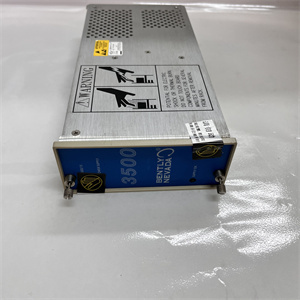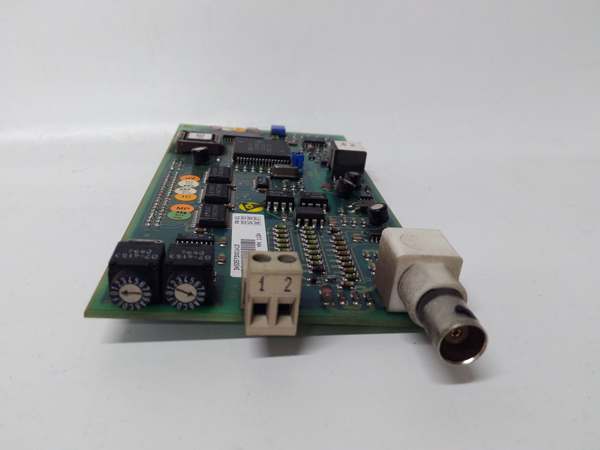
Description
Key Technical Specifications
- Model Number: 3ASD573001A13
- Manufacturer: ABB
- Protocol Support: RS-485, Modbus RTU, CANopen (configurable by variant)
- Communication Channels: 4 or 16 (software-selectable, application-dependent)
- Data Rate: Up to 1 Mbps (RS-485), auto-baud detection compatible
- Power Supply: 12V DC (fixed) or 12–48V DC (wide-range); select variants support 85–264V AC
- Operating Temperature: -25°C to +70°C (-13°F to +158°F)
- Storage Temperature: -40°C to +85°C (-40°F to +185°F)
- Isolation: 2kV AC (channel-to-channel, channel-to-power supply)
- Dimensions (W x H x D): 160mm x 120mm x 20mm (standard variant)
- Weight: 0.08kg–0.2kg (varies by power supply variant)
- Mounting: DIN rail (35mm) or panel-mount (compact form factor)
- Protection Features: ESD protection (±15kV), surge protection, short-circuit tolerance
- Compliance: CE, UL, CSA industrial safety standards
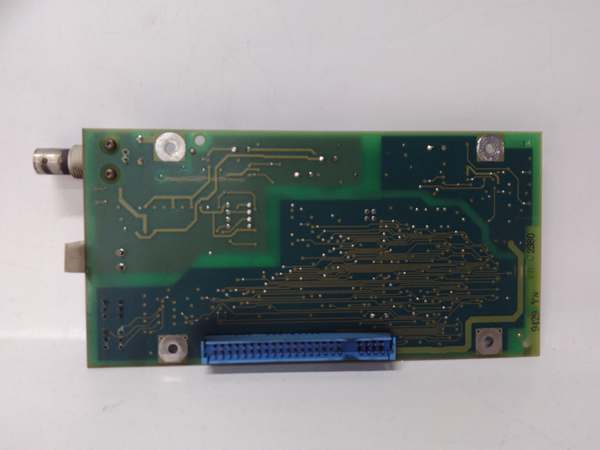
ABB 3ASD573001A13
Field Application & Problem Solved
In harsh industrial environments—refineries, power plants, and paper mills—the biggest communication challenge is reliable data transfer between distributed devices (sensors, controllers, actuators) amid electromagnetic interference (EMI), voltage fluctuations, and physical vibration. Legacy communication modules often fail under these conditions, suffer from protocol incompatibility, or lack the flexibility to connect multiple device types, leading to data dropouts, misaligned system states, and unplanned downtime. This module solves that by combining ruggedized design with multi-protocol support, bridging the gap between diverse industrial hardware and central control systems.
You’ll typically find this module in distributed control systems (DCS) linking PLCs to pressure transmitters in refinery catalytic crackers, or connecting temperature sensors to SCADA systems in pulp mill digesters. It’s a staple in power plant auxiliary systems, facilitating communication between pump controllers and flow meters, and in manufacturing automation lines, where it syncs robotic arms with conveyor sensors. As a widely used spare part (even for “discontinued” system listings), it’s critical for retrofitting aging infrastructure—avoiding full system overhauls by replacing faulty legacy modules with a drop-in compatible solution.
Its core value is resilience and versatility. The wide operating temperature range and surge protection withstand the extreme conditions of industrial floors, while multi-protocol support eliminates the need for specialized modules for different devices. For plant operators, this translates to reduced inventory costs (one module for multiple use cases) and minimized downtime—critical when a communication failure can halt production costing thousands per hour. The compact form factor is a bonus in space-constrained control cabinets, a common pain point in retrofits.
Installation & Maintenance Pitfalls (Expert Tips)
Power Supply Mismatch Destroys Modules
Rookies often ignore the module’s power supply variant (fixed 12V DC vs. wide-range 12–48V DC) and plug in the wrong voltage. A 48V supply connected to a 12V-only module burns out the internal voltage regulator within seconds. Always check the nameplate for power specs before wiring—use a multimeter to confirm input voltage matches. For wide-range variants, avoid operating at the 12V lower limit in high-vibration environments; voltage sags from loose connections will trigger unexpected resets.
RS-485 Termination Is Non-Negotiable
Forgetting the 120-ohm termination resistor at the end of the RS-485 bus is a common mistake. This causes signal reflections, leading to corrupted data or intermittent communication drops—especially in long cable runs (over 100m). The module has a built-in termination switch (check the datasheet for location); enable it if it’s the last device in the chain. Skip this, and you’ll spend hours troubleshooting “random” data errors that only appear during peak system load.
Poor Shield Grounding Amplifies EMI
Even with 2kV isolation, improper shield grounding on communication cables introduces EMI from nearby motors or power lines. Technicians often ground the shield at both ends, creating ground loops that distort signals. Ground the shield only at the module end (central control side) and keep RS-485 cables at least 15cm (6 inches) away from power cables. For runs over 50m, use twisted-pair shielded cable—this cuts EMI pickup by 70% compared to unshielded wiring.
Ignoring Channel Configuration Limits
Rookies oversubscribe the module by connecting more devices than the channel count (4 or 16) supports. Daisy-chaining extra sensors onto a single channel overloads the bus, causing slow response times or complete communication failure. Verify the module’s channel rating (check the variant label) and never exceed it. For systems needing more connections, add a second module—overloading is a false cost-saving measure that leads to costly production delays.
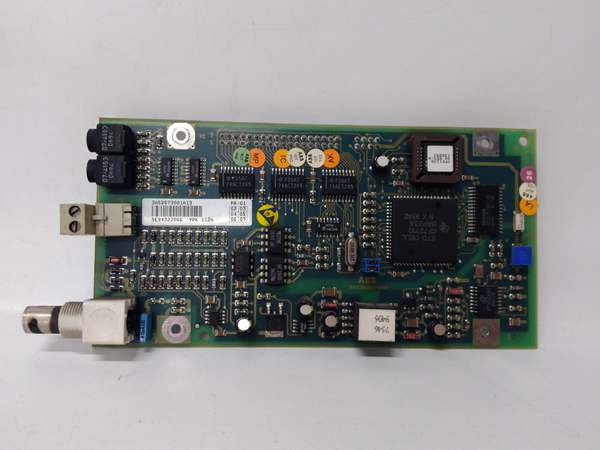
ABB 3ASD573001A13
Technical Deep Dive & Overview
The ABB 3ASD573001A13 is a ruggedized serial communication module engineered to facilitate reliable data transfer in industrial automation systems. At its core, it acts as a protocol translator and signal conditioner, converting raw device data into a format compatible with central controllers (PLCs, DCS, SCADA) while filtering out noise and voltage transients common in harsh environments.
The module’s multi-protocol support (RS-485, Modbus RTU, CANopen) is enabled by a configurable firmware layer, allowing it to adapt to diverse device ecosystems without hardware changes. Its communication channels (4 or 16) operate independently, with built-in isolation to prevent cross-talk and ground loop interference. The 1Mbps data rate ensures near-real-time transmission—critical for time-sensitive applications like pump control or pressure monitoring.
Power supply flexibility (fixed or wide-range) makes it adaptable to different plant electrical systems, while the compact, DIN-rail-compatible design simplifies integration into existing cabinets. Internally, protection circuits guard against ESD, surges, and short-circuits, extending lifespan in high-vibration, EMI-heavy settings. The module communicates with central systems via its primary serial interface, with auto-baud detection reducing configuration errors during setup.
What sets it apart is its balance of ruggedness and simplicity. It requires minimal programming (most configurations are done via DIP switches or basic software tools) and operates reliably without constant monitoring—essential for remote or hard-to-access installations. Whether used as a new-install component or a retrofit spare, it delivers consistent performance by prioritizing the core industrial need: uninterrupted data flow in unforgiving conditions.