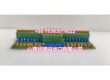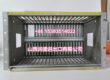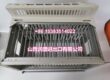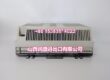
Product Core Brief
- Model: 500AIM02 / 1MRB150022R0002
- Brand: ABB
- Series: ABB 500-Series Control System Racks
- Integration Role: Multi-channel analog input module for ABB 500-series control system racks — brings plant analog signals (4–20 mA, 0–10V, RTD/TC temperature sensors) safely into the controller with stable A/D conversion and robust galvanic isolation, ideal for maintaining legacy cabinets or extending installed capacity without reworking the entire I/O scheme.
- Product Type: Analog Input Module
- Key Specs: 8-channel analog input | 16-bit ADC (≈0.015% full-scale resolution) | Supports 4–20 mA, 0–10V, RTD (PT100/PT1000), Thermocouple (K/J/T) | 24V DC supply | Channel-to-backplane galvanic isolation (500V AC/1min) | Software-adjustable filtering (0.1–100 Hz) | ≤2 ms per-channel sampling | DIN rail / 500-series rack mount
- Note: Condition: New Original (New Surplus)
Key Technical Specifications
- Product Type: Analog Input Module
- Brand: ABB
- Model Number: 500AIM02 / 1MRB150022R0002
- Series: ABB 500-Series Control System Racks
- Number of Channels: 8-channel analog input (supports differential or single-ended input)
- Signal Types Supported:
- Voltage: 0–10V, ±10V, 0–5V
- Current: 4–20 mA, 0–20 mA (requires external 250Ω resistor for voltage conversion)
- Temperature Sensors: RTDs (PT100, PT1000), Thermocouples (Types K, J, T, etc.)
- ADC Resolution: 16-bit, resolution approximately 0.015% (full scale)
- Sampling Performance: Software-adjustable filtering (0.1–100 Hz), sampling period ≤2 ms per channel
- Power Supply: 24V DC (±20%), power consumption ≤5W
- Isolation: Channel-to-channel and channel-to-backplane galvanic isolation, isolation voltage 500V AC/1min — reduces ground loops and noise pickup in high-EMI environments
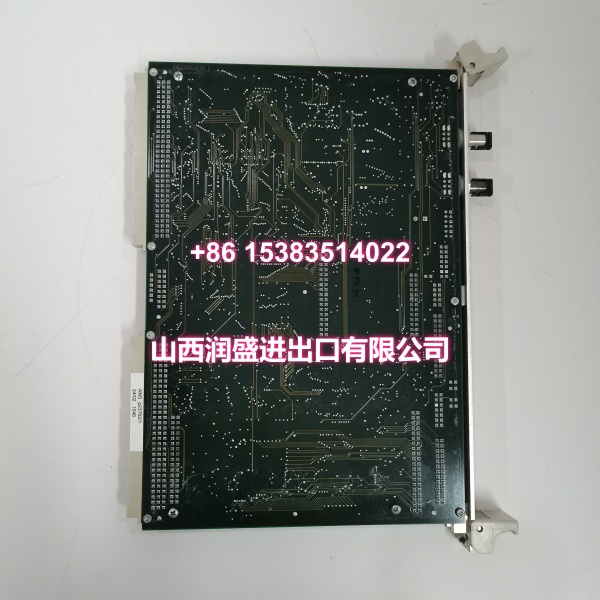
- Mounting Method: 35mm DIN rail mounting or direct plug-in to 500-series backplane; supports vertical/horizontal installation
- Operating Temperature: -25°C to +60°C (some sources cite -20°C to +70°C — verify against your specific revision)
- Humidity: 5% to 95% RH (non-condensing)
- Protection Level: IP20, compliant with EN 61131-2 industrial standards
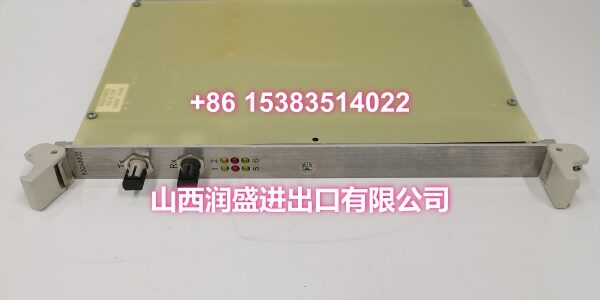
- Diagnostics: Built-in channel health and module status indicators for quick fault finding during commissioning and maintenance
- Typical Applications: Process control (chemical, oil & gas); manufacturing automation; power monitoring; mechanical automation; energy management systems; legacy ABB 500-series cabinet maintenance and brownfield I/O expansion
Product Introduction
The ABB 500AIM02 (order code 1MRB150022R0002) is a multi-channel analog input module designed for ABB 500-series control system racks. It serves as a critical I/O interface that brings plant analog signals — including 4–20 mA current loops, 0–10V voltage signals, and RTD/thermocouple temperature sensors — safely into the controller with stable A/D conversion and robust galvanic isolation.
This module is particularly valued in brownfield maintenance and legacy cabinet upgrades. Because it slots directly into standard 500-series backplanes and follows ABB’s familiar wiring conventions, it enables fast drop-in replacement with minimal disturbance to existing cabinet wiring — keeping commissioning time short and avoiding the need to rework the entire I/O scheme.
The 8-channel architecture supports both differential and single-ended input configurations, accommodating a wide range of process signal types. The 16-bit ADC delivers approximately 0.015% full-scale resolution, which is well-suited for most process control and monitoring loops where precision matters. Software-adjustable filtering (0.1–100 Hz) allows engineers to tune the module’s response to match the dynamics of each process variable, while the ≤2 ms per-channel sampling period ensures timely data acquisition for fast-moving control loops.
Galvanic isolation between channels and the backplane (500V AC/1min) is a key feature for industrial environments. It breaks ground loops and suppresses common-mode noise that can corrupt analog measurements in electrified, high-EMI areas — a common challenge in drive rooms, switchgear cabinets, and process plants with heavy power electronics nearby.
The module operates on a standard 24V DC supply (±20%, ≤5W consumption) and includes built-in channel health and module status indicators that support quick fault finding during commissioning and routine maintenance. Its compact form factor mounts on 35mm DIN rail or plugs directly into the 500-series rack backplane, supporting both vertical and horizontal installation to fit diverse cabinet layouts.
System integrators and maintenance engineers specify this module for its proven compatibility with ABB 500-series systems, reliable analog signal conversion in noisy industrial environments, and straightforward drop-in replacement that minimizes retrofit risk and reduces downtime during module swaps.
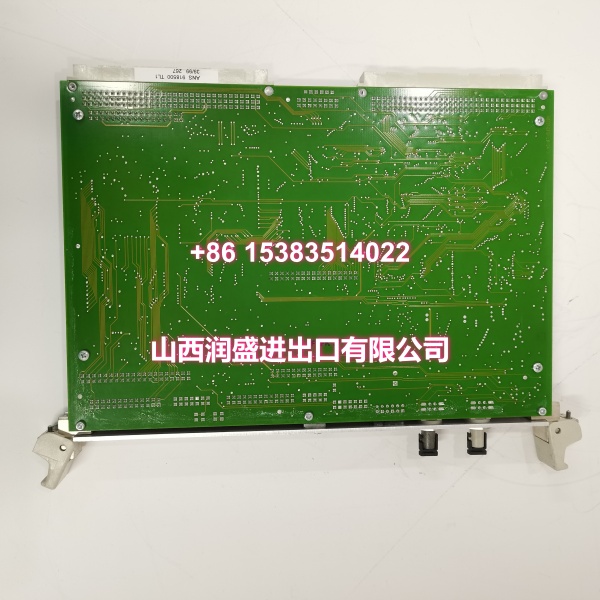
Installation & Integration Notes
- Backplane Compatibility: This module is designed for ABB 500-series control racks. Verify that your backplane revision is compatible with the 500AIM02 before installation. The module communicates over the 500-series rack bus — no external communication dongles or adapters are required.
- Signal Type Configuration: Each channel can be configured for voltage (0–10V, ±10V, 0–5V), current (4–20 mA, 0–20 mA), or temperature (RTD/thermocouple) input. For current inputs, an external 250Ω resistor is required for voltage conversion. Verify the signal type configuration matches your field wiring before applying power.
- Galvanic Isolation Verification: The module provides channel-to-backplane galvanic isolation at 500V AC/1min. Ensure that field wiring does not bypass this isolation by incorrectly commoning signal grounds — doing so defeats the noise-rejection benefit and can introduce ground loops.
- Shielded Cable Requirement: Use shielded twisted-pair cable for all analog signal connections. Ground the shield at the cabinet end only (single-point grounding) to minimize electromagnetic interference from nearby power cables and drive systems.
- Filtering Configuration: The software-adjustable filter (0.1–100 Hz) should be tuned to match the dynamics of each process variable. Use a lower cutoff frequency for slow-moving signals (temperature, level) to reject noise, and a higher cutoff for faster signals (pressure, flow) to maintain loop response.
- Sampling Period Considerations: With a ≤2 ms per-channel sampling period, the total scan time for all 8 channels is approximately 16 ms. Verify that this scan time is acceptable for your control loop requirements. For faster loops, consider distributing channels across multiple modules.
- Power Supply Verification: Confirm your cabinet’s 24V DC supply is within the ±20% tolerance (19.2–28.8V DC) and can deliver at least 5W per module. An unstable or under-powered supply can cause measurement drift or module malfunction.
- ESD-Safe Handling: As a rack-mounted control module, the 500AIM02 requires ESD-safe handling procedures. Always use an anti-static wrist strap when handling the module outside of its protective packaging. Avoid touching terminal blocks or circuit traces directly.
- Diagnostics Utilization: The built-in channel health and module status indicators provide immediate visual feedback during commissioning. Use these indicators to verify signal presence and module operation before proceeding to software configuration.
- Compatibility Note: Always cross-reference the full part number (1MRB150022R0002) against your system’s spare parts list, as revision-specific variants (e.g., R0001, R0002) may have minor differences in firmware or terminal assignments.
Integrator’s FAQ
What signal types does this module support? The 500AIM02 supports voltage signals (0–10V, ±10V, 0–5V), current signals (4–20 mA, 0–20 mA with external 250Ω resistor), and temperature sensors including RTDs (PT100, PT1000) and thermocouples (Types K, J, T). Each of the 8 channels can be independently configured for the appropriate signal type.
Can this module be used in non-ABB control systems? This module is designed specifically for ABB 500-series control racks and communicates over the 500-series rack bus. It is not a standalone module and requires an ABB 500-series backplane and compatible controller. It cannot be directly integrated into third-party PLC systems without an ABB 500-series rack as the host platform.
How does the galvanic isolation protect my system? The channel-to-backplane galvanic isolation (500V AC/1min) breaks ground loops between field devices and the controller, preventing common-mode noise from corrupting analog measurements. This is especially important in environments with heavy power electronics (VFDs, UPS systems) where ground potential differences and electromagnetic interference are common.
What is the typical accuracy of this module? The 16-bit ADC provides approximately 0.015% full-scale resolution. Actual accuracy depends on the signal type, wiring quality, filtering configuration, and environmental conditions. For critical measurements, perform a field calibration against a known reference after installation.
How do I troubleshoot a channel that reads incorrectly? First, verify the signal type configuration matches the field wiring (voltage vs. current vs. temperature). Second, check the field wiring for loose connections, broken wires, or incorrect polarity. Third, verify the shield is grounded at the cabinet end only. Fourth, use the built-in channel health indicator to confirm the module detects the signal. If the indicator shows a fault, check the field device and wiring. If the indicator is normal but the reading is wrong, verify the software scaling and filtering configuration.
Can I mix signal types on the same module? Yes, each of the 8 channels can be independently configured for a different signal type. However, ensure that the external wiring matches the configured signal type for each channel — for example, current inputs require an external 250Ω resistor, while voltage inputs do not.
What warranty do you offer on New Surplus parts? We provide a full 12-month warranty on all New Original / New Surplus units. This is fundamentally different from refurbished I/O modules, which often carry 30–90 day warranties and come with unknown thermal cycling history, degraded ADC characteristics, and potential terminal wear. For process control applications where measurement accuracy matters, the reliability difference between new surplus and refurbished is significant — it’s the difference between a planned maintenance replacement and an unexpected analog measurement failure during operation.
Why is your pricing lower than OEM direct but higher than used parts? Our pricing reflects New Original / New Surplus inventory sourced from factory overstock and authorized distributors. You pay less than OEM list because these are surplus units, not current production. You pay more than used/refurbished because the part has zero operating hours, no degradation of the ADC or isolation barriers, and no wear on the backplane connectors. For analog input modules where measurement accuracy and isolation integrity are critical, the difference between new surplus and refurbished is not marginal — it directly impacts process control reliability.