Product Core Brief
- Model: IS230TNCIH4C
- Brand: General Electric (GE)
- Series: Mark V (Speedtronic)
- Core Function: Network communication board that provides UDH or IONet connectivity between the Mark V controller and external systems — supporting Simplex, Dual, and TMR redundant architectures.
- Product Type: TNCI Communication Board
- Key Specs: UDH/IONet communication | Simplex/Dual/TMR redundancy | 3× 37-pin sub-D connectors | 2× terminal blocks (TB1/TB2) | 25× metal oxide varistors | 5–95% humidity (non-condensing)
- Condition: New Original / New Surplus
Product Introduction
The GE IS230TNCIH4C is a TNCI (Turbine Network Communication Interface) communication board in GE’s Mark V Speedtronic turbine control system. It serves as the network interface between the Mark V controller and external systems — providing UDH or IONet communication links that enable data exchange with HMIs, engineering workstations, and other control systems.
In Simplex architecture systems, the TNCI board typically operates alongside the control module as the primary communication link. In TMR (Triple Modular Redundant) architectures, it works in conjunction with IONet, the main processor card, and the control module to provide fault-tolerant communication across all three redundant channels.
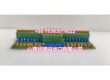
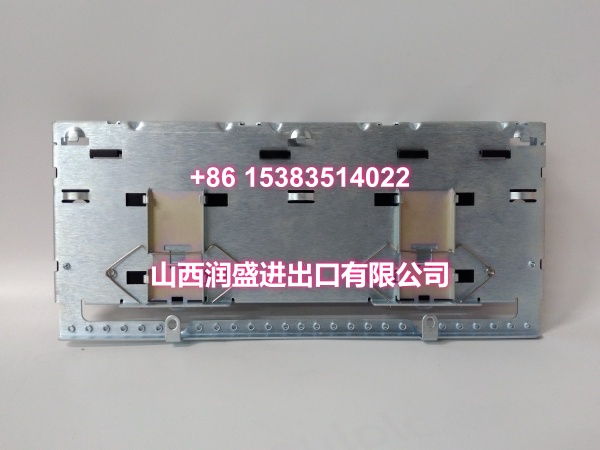
The board features three 37-pin sub-D connectors along the top edge for network and data connections, and two terminal blocks (TB1 and TB2) along the bottom edge for field wiring. Twenty-five metal oxide varistors (MOVs) are mounted directly above the terminal blocks, providing surge protection for field signal lines — critical for the harsh electrical environments found in turbine generator installations.
Key Technical Specifications
| Parameter | Value |
|---|---|
| Manufacturer | General Electric (GE) |
| Product Type | TNCI Communication Board |
| Series | Mark V (Speedtronic) |
| Communication Protocol | UDH or IONet |
| Redundancy Support | Simplex, Dual, TMR |
| Network Connectors | 3× 37-pin sub-D connectors (top edge) |
| Field Wiring Connectors | 2× terminal blocks TB1/TB2 (bottom edge) |
| Surge Protection | 25× metal oxide varistors (MOVs) |
| Operating Humidity | 5–95% non-condensing |
| Rack Compatibility | 13-slot or 21-slot VME rack |
| Application | Gas turbine control network communication |
| Origin | USA |
Quality Control Process
Every IS230TNCIH4C goes through a full functional bench test before it ships. We start with a visual PCB inspection — checking for cold solder joints, burnt traces, swollen capacitors, and corrosion on all three 37-pin sub-D connectors and the TB1/TB2 terminal blocks. We pay special attention to the 25 metal oxide varistors above the terminal blocks, since MOV degradation from surge events is a common failure mode in turbine installations.
Then we power it up on a regulated DC supply and verify all power rail voltages are within spec. We test each of the three sub-D connectors for proper pin continuity and verify the UDH/IONet communication link by connecting to a Mark V controller and confirming the board registers on the network with its correct hardware ID. We simulate network traffic to verify data throughput and latency meet Mark V communication specs. We also verify the MOV surge protection circuits by checking clamping voltage on each varistor. Finally, we confirm the board functions correctly in its configured redundancy mode (Simplex, Dual, or TMR). Each unit ships in anti-static foam with a moisture barrier bag.
Replacement Pitfall Guide
❗ Confirm your redundancy architecture before ordering. The IS230TNCIH4C supports Simplex, Dual, and TMR configurations — but the firmware and jumper settings differ between modes. If you’re replacing a board in a TMR system but the replacement is configured for Simplex, it won’t synchronize with the other two channels and the redundant communication link will fault. Always verify the redundancy mode matches your existing system configuration.
❗ Verify UDH vs. IONet protocol compatibility. The TNCI board can operate on either UDH or IONet, but these are different communication protocols. If your Mark V system uses IONet and the replacement board is configured for UDH (or vice versa), the controller won’t recognize it on the network. Check your existing board’s configuration or system documentation before installation.
❗ Check the MOV surge protectors. The 25 metal oxide varistors above TB1/TB2 are your first line of defense against electrical surges from field wiring. If the original board failed due to a surge event, some MOVs may have degraded or shorted. Even if the replacement board is new, verify that the surge protection circuits on adjacent boards in the rack are intact — a cascading surge can take out multiple boards.
❗ Verify the sub-D connector pinout. The three 37-pin sub-D connectors carry network and data signals. If you’re cross-wiring from a different TNCI revision, a pinout change can misroute communication signals. Always compare the wiring diagram on your existing board’s label against the replacement before connecting.
❗ Don’t skip the network registration test. After installing the replacement TNCI board, verify it registers on the UDH/IONet network with the correct hardware ID and that the Mark V controller can communicate with it. A board that powers up but doesn’t register on the network will leave your HMI blind and your engineering workstation unable to download configuration changes.
Keep these in mind and you’ll cut 90% of rework time.
Compatibility Matrix & Benchmarks
| Original Model | Replacement / Successor Model | Compatibility Level | Migration Notes |
|---|---|---|---|
| IS230TNCIH4B | Direct | Earlier revision; verify firmware and protocol config match | |
| IS230TNCIH4D | Direct | Later revision; drop-in compatible | |
| Mark V legacy TNCI | Direct | Drop-in for Mark V VME racks | |
| IS420YACSH1B | Needs Adaptation | Mark VIeS variant; requires full network map migration |
- Network Protocol: UDH or IONet communication link
- Redundancy Support: Simplex, Dual, and TMR architectures
- Surge Protection: 25× metal oxide varistors on field signal lines
Need me to pull up the compatible Mark V controller models and the specific UDH/IONet network topology this TNCI board supports? The redundancy mode and protocol configuration are critical for a clean swap.