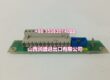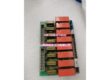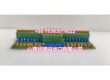
Product Core Brief
- Model: IS230SRTDH2A
- Brand: General Electric (GE)
- Series: Mark V (Speedtronic)
- Core Function: RTD (Resistance Temperature Detector) signal conditioning board that scales and converts resistance-based temperature signals from field sensors into digitized values for the Mark V turbine controller.
- Product Type: SRTD RTD Input Board
- Key Specs: Pt100/Pt1000/Cu50 RTD support | 2/3/4-wire RTD connection | 3PL data bus to STCA | 2PL power distribution | -30°C to 65°C operating range | TMR redundancy support
- Condition: New Original / New Surplus
Product Introduction
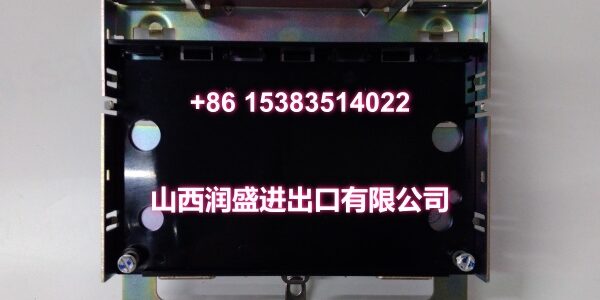
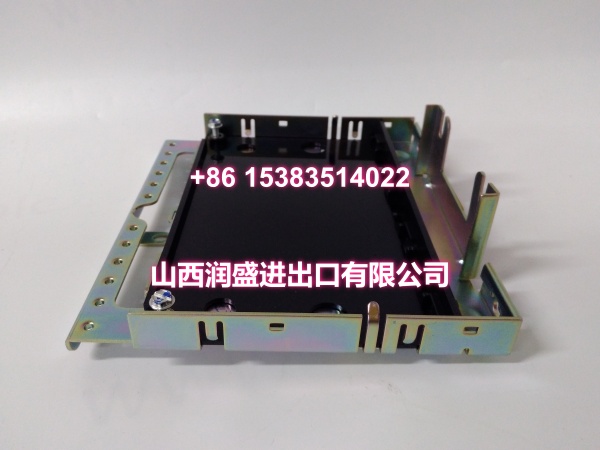
The GE IS230SRTDH2A is an SRTD (RTD Temperature Input) board in GE’s Mark V Speedtronic turbine control system. It’s mounted in the I/O core (R1, R2, or R3) and handles scaling and conditioning of resistance temperature detector (RTD) signals from field sensors — including Pt100, Pt1000, and Cu50 RTD types — used for monitoring bearing temperatures, lube oil temperatures, coolant temperatures, and other critical thermal parameters across the gas turbine.
The SRTD board supports 2-wire, 3-wire, and 4-wire RTD connection configurations. The 4-wire mode eliminates lead wire resistance errors and delivers the highest measurement accuracy, which is critical for long cable runs in turbine installations. Conditioned temperature signals are routed to the STCA board via the 3PL data bus connector over the COREBUS link. Power is distributed from the TCPS board through the 2PL connector to the entire I/O core.
In TMR (Triple Modular Redundant) architectures, three SRTD boards operate in parallel — one in each R1, R2, and R3 core — providing fault-tolerant temperature monitoring. If one channel faults, the remaining two continue to report temperature values while the controller votes out the failed channel, preventing nuisance trips.
Key Technical Specifications
| Parameter | Value |
|---|---|
| Manufacturer | General Electric (GE) |
| Product Type | SRTD RTD Input Board |
| Series | Mark V (Speedtronic) |
| Supported RTD Types | Pt100, Pt1000, Cu50 |
| Wiring Configuration | 2-wire, 3-wire, 4-wire RTD |
| Temperature Range | -200°C to 850°C (sensor-dependent) |
| Measurement Accuracy | ±0.1% typical |
| Data Bus Connector | 3PL (to STCA board via COREBUS) |
| Power Connector | 2PL (power distribution from TCPS board) |
| Operating Temperature | -30°C to 65°C (free convection cooling) |
| Redundancy Support | Simplex, Dual, TMR |
| Application | Gas turbine temperature monitoring — bearings, lube oil, coolant, exhaust |
| Origin | USA |
Quality Control Process
Every IS230SRTDH2A goes through a full functional bench test before it ships. We start with a visual PCB inspection — checking for cold solder joints, burnt traces, swollen capacitors, and corrosion on all connector headers (2PL, 3PL, and RTD input terminals). RTD boards are sensitive to moisture ingress and thermal cycling, which can degrade precision resistor networks over time.
Then we power it up on a regulated DC supply and verify the 2PL power rail voltages are within spec. We inject calibrated resistance values through each RTD input channel — simulating Pt100 sensors at multiple temperature points across the operating range — and measure the conditioned output on the 3PL data bus, confirming scaling accuracy against NIST-traceable reference tables. We test all three wiring modes (2-wire, 3-wire, and 4-wire) to verify lead-wire compensation is functioning correctly. We also verify the board’s cold-end compensation circuitry and confirm the 3PL data bus communication with the STCA board by verifying the board responds with its hardware ID packet. Each unit ships in anti-static foam with a moisture barrier bag.
Replacement Pitfall Guide
❗ Verify RTD wiring configuration matches the original. The IS230SRTDH2A supports 2-wire, 3-wire, and 4-wire RTD connections — but the board’s internal compensation logic differs between modes. If your field sensors are wired in 4-wire mode but the replacement board is configured for 2-wire, you’ll get significant measurement errors from lead-wire resistance. Always check the wiring diagram on your existing board or terminal block before connecting the replacement.
❗ Confirm RTD type compatibility. The SRTD board must be configured for the correct RTD type (Pt100, Pt1000, or Cu50) to match your field sensors. A Pt1000 sensor connected to a board configured for Pt100 will report temperatures roughly 10× lower than actual — potentially causing the controller to miss an overtemperature condition. Verify the RTD type setting on the replacement board matches your installed sensors.
❗ Check for lead-wire degradation on long runs. In turbine installations, RTD sensors are often located far from the control cabinet, and the lead wires can develop resistance from corrosion, loose terminations, or heat damage over decades of operation. Even with 3-wire or 4-wire compensation, excessive lead resistance can cause measurement drift. Measure lead-wire resistance before connecting the replacement board and compare against the original baseline.
❗ Confirm TMR channel synchronization. If you’re replacing an SRTD board in a TMR system, the new board must synchronize with the other two channels before the controller will accept it into the voting logic. If the replacement board’s firmware revision or calibration doesn’t match the other two channels, the controller may vote it out immediately. Verify firmware match and run a channel sync test after installation.
❗ Don’t skip the cold-end compensation check. RTD measurements rely on accurate reference junction compensation. If the replacement SRTD board reports a different baseline temperature than the original, you may get offset errors across all channels. Verify cold-end compensation calibration after installation by comparing readings against a known reference temperature.
Keep these in mind and you’ll cut 90% of rework time.
Compatibility Matrix & Benchmarks
| Original Model | Replacement / Successor Model | Compatibility Level | Migration Notes |
|---|---|---|---|
| IS230SRTDH1A | Direct | Earlier revision; verify firmware and RTD type config match | |
| IS230SRTDH2B | Direct | Later revision; drop-in compatible | |
| Mark V legacy SRTD | Direct | Drop-in for Mark V RST cores (R1/R2/R3) | |
| IS420YRTDH1B | Needs Adaptation | Mark VIeS variant; requires full I/O map migration |
- RTD Support: Pt100, Pt1000, Cu50 with 2/3/4-wire configurations
- Measurement Accuracy: ±0.1% typical with lead-wire compensation
- Redundancy: TMR voting architecture for fault-tolerant temperature monitoring