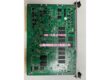
Product Core Brief
- Model: 85UVF1-1QDK3
- Brand: Fireye
- Series: Phoenix 85UVF/IRF
- Core Function: Microprocessor-based, self-checking UV flame scanner with an internal flame relay for detecting 295-340 nm ultraviolet emissions in industrial combustion processes.
- Product Type: Integrated Flame Scanner / UV Flame Detector
- Key Specs: 24 Vdc Power | 8-Pin Quick-Disconnect (QD) | 4-20mA Output | Class I Div 2 Certified
- Condition: New Surplus / OEM Original
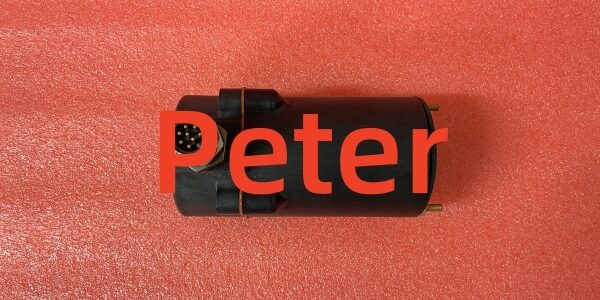
Fireye 85UVF1-1QDK3
Key Technical Specifications
- Module Type: Integrated Flame Scanner with Internal Flame Relay
- Part Number: 85UVF1-1QDK3
- Detection Type: Ultraviolet (UV)
- Wavelength Range: 295 to 340 nm (Standard); K3 variant extends optical sensitivity up to 500 nm via advanced optical filter
- Power Supply: 24 Vdc
- Power Consumption: 5 Watts
- Output Signals: Internal Flame Relay (Auto ON/OFF thresholds) & 4-20 mA analog flame strength
- Electrical Connection: 8-pin electrical quick-disconnect (QD)
- Response Time: < 1 Second
- Operating Temperature: -40°C to +65°C (-40°F to 150°F)
- Hazardous Area Certification: Suitable for Class I Division 2 hazardous areas (eliminates need for “EX” models)
- System Compatibility: Duct Burners, Industrial Gas Burners, Refinery Applications, Low NOx Burners, Waste Gas Units, Incinerators, Steel Plant Blast/Coke Oven Gas
Product Introduction
The Fireye 85UVF1-1QDK3 is a high-performance, self-checking UV flame scanner belonging to the Phoenix 85UVF series. Engineered for demanding industrial combustion environments, it utilizes a solid-state sensor to detect the modulated amplitude (flicker) of target flames across a wide frequency range. The “K3” designation indicates the use of an advanced optical filter that adjusts the detection cell’s sensitivity from the standard 310 nm range up to 500 nm, making it particularly suited for measuring light emissions from steel plant applications like blast furnace and coke oven gas burners.
A defining feature of this scanner is its integrated microprocessor and internal flame relay. During setup, it automatically stores the target flame’s amplitude and optimizes the ON/OFF switching thresholds, eliminating the need for a remote flame amplifier or switch. It also features full self-diagnostics and electronic self-checking to ensure continuous, reliable safety monitoring.
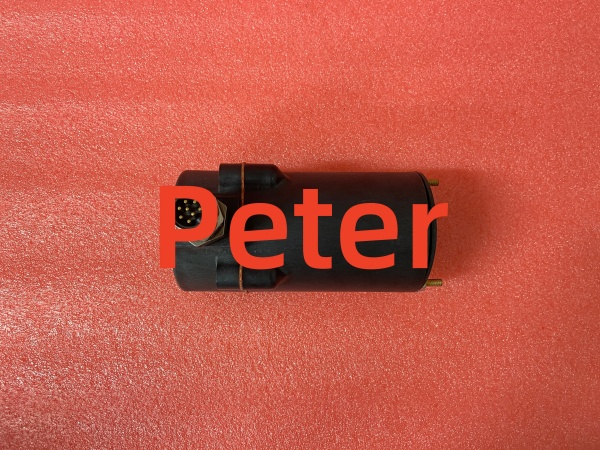
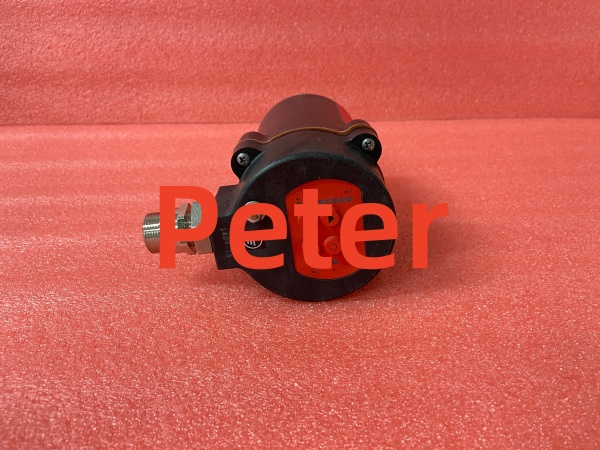
Fireye 85UVF1-1QDK3
QA & Testing SOP
Flame scanners are critical safety devices; their optical and electronic integrity must be flawless. We verify both the sensor and the relay logic.
- Anti-Counterfeit & Visual Audit: We inspect the Fireye housing, verify the 85UVF1-1QDK3 part number, and check the 8-pin QD connector and optical window for physical damage, cracks, or debris.
- Power & Self-Diagnostic Test: We apply 24 Vdc to verify the scanner powers up correctly and passes its internal electronic self-check without triggering internal fault LEDs.
- Signal Output Validation: We verify the 4-20 mA analog output scales correctly with simulated flame strength and test the internal flame relay for proper switching action.
- Learn Mode Simulation: We verify the scanner’s keypad interface and confirm it can successfully enter “Learn Mode” to auto-calibrate ON/OFF thresholds.
- ESD Safe Packaging: The solid-state UV sensor and microprocessor are highly ESD sensitive. We pack in anti-static shielding bags with desiccant to prevent latent semiconductor damage.
Installation Pitfalls & Guide
❗ QD Cable Compatibility: The “QD” in the model number means it uses an 8-pin electrical quick-disconnect rather than a captive cable. You must use the matching Fireye cable assembly (e.g., 59-546-X series). Standard wiring cannot be used.
❗ Optical Window Maintenance: The UV sensor relies on a clear line of sight to the flame. Regularly clean the scanner’s optical window to prevent soot, oil, or dust buildup, which will attenuate the UV signal and cause false “flame loss” trips.
❗ Small Pilot Flames: Fireye explicitly states that Phoenix scanners are NOT recommended for use on small pilot flames or in applications with obstructed sighting. Ensure the scanner has a clear, unobstructed view of the main flame.
❗ Proper Learn Mode Setup: After installation, you must properly execute the “Learn Mode” setup procedure. The scanner needs to observe the target flame to automatically set the correct gain and ON/OFF thresholds. Skipping this step will result in unreliable operation.
Replacement SOP:
- Pre-Install: Document the existing wiring and place the burner management system in bypass/maintenance mode.
- Removal: Disconnect the 8-pin QD connector; unthread the scanner from its mounting bracket.
- Install: Thread the new 85UVF1-1QDK3 into the bracket; ensure the optical window faces the flame; reconnect the 8-pin QD cable securely.
- Power-On Test: Apply 24 Vdc; verify the scanner passes self-diagnostics; enter Learn Mode to auto-calibrate to the flame; verify the flame relay closes and 4-20 mA output is stable before removing bypass.
Technical FAQ
What does the “K3” suffix mean in 85UVF1-1QDK3?
The “K3” designates a specialized derivative of the standard Phoenix scanner. It utilizes an advanced optical filter that extends the detection cell’s optical sensitivity from the standard 310 nm UV range up to 500 nm. This makes it specifically optimized for steel plant applications, such as burners firing blast furnace gas and coke oven gas.
What is the difference between QD, EX, and CEX models?
“QD” models use an 8-pin quick-disconnect and are certified for Class I Division 2 hazardous areas, eliminating the need for “EX” models. “CEX” models remain unchanged and are specifically certified for Ex II 2 G/D hazardous areas. Always match the exact certification required for your installation zone.
Can this scanner be used for oil or heavy oil fuels?
Yes. While UV scanners are typically used for gaseous fuels, the solid-state sensors in the Phoenix series can perform well with oils and heavy oils. However, Fireye recommends performing a field test to be 100% sure of correct application before final deployment.
How does the internal flame relay work?
Unlike traditional scanners that require a remote amplifier, the 85UVF1-1QDK3 has a built-in microprocessor. During the Learn Mode setup, it automatically measures the target flame’s flicker amplitude and sets the optimal ON/OFF switching thresholds and sensor gain. It then uses the internal relay to switch based on these stored criteria.
Why is this sold as new surplus?
This unit was pulled from sealed OEM overstock or an unfulfilled project before installation. We test it electrically to verify power, self-diagnostics, and relay functionality, but we aren’t replacing internal components. You are getting unused factory hardware with original manufacturing tolerances at a fraction of the active OEM list price.