Product Core Brief
- Model: SSA-G1018-0652
- Brand: Enterasys Networks (Extreme Networks)
- Series: S-Series Stand Alone (SSA) Switch
- Core Function: Provides high-performance, managed Gigabit Ethernet switching for enterprise access and aggregation layers.
- Product Type: 18-Port Gigabit Managed Switch
- Key Specs: 18x 10/100/1000 Mbps Ports | L2 Switching | Stackable | SFP+ Uplinks
- Condition: New Surplus / Original OEM
Enterasys SSA-G1018-0652
Key Technical Specifications
- Manufacturer: Enterasys Networks / Extreme Networks
- Part Number:
- Product Category: S-Series Stand Alone Gigabit Switch
- Port Configuration: 18x 10/100/1000BASE-T RJ45 Ports
- Uplink Options: SFP / SFP+ Pluggable Transceiver Slots
- Switching Architecture: Non-blocking, Wire-Speed Forwarding
- L2 Features: VLAN, STP/RSTP, Link Aggregation (LACP), Port Mirroring
- Management: CLI, Web UI, SNMP, RMON, Micro-USB Console
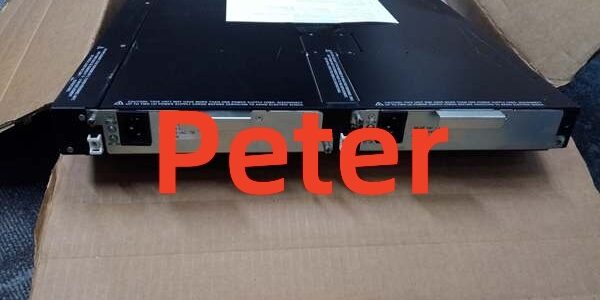
- Power: Internal AC Power Supply (Optional Redundant PSU)
- Cooling: Hot-swappable Fan Modules
- Compliance: IEEE 802.3, 802.3u, 802.3ab, 802.3z, 802.1Q, 802.1D
Product Introduction (No Fluff)
is a member of the S-Series Stand Alone (SSA) family, designed as a compact, high-density Gigabit edge switch. It delivers 18 auto-sensing 10/100/1000 Mbps copper ports with optional SFP/SFP+ fiber uplinks for flexible backbone connectivity.
This managed switch supports advanced L2 features including VLAN tagging, spanning tree protocols, and link aggregation for resilient network design. Its stackable architecture allows multiple units to operate as a single logical device, simplifying management and improving redundancy. Sourcing this exact OEM replacement ensures seamless integration into existing Enterasys/Extreme infrastructure without re-engineering.
QA & Testing SOP (Dynamic & Transparent)
Gigabit switches demand absolute port integrity and switching undergoes a rigorous validation process:
- Anti-Counterfeit Inspection: Verify Enterasys/Extreme factory labels, PCB silkscreen, and port module build quality against OEM baselines.
- Port Connectivity Test: Inject traffic across all 18 copper ports and SFP+ uplinks to validate link establishment, auto-negotiation, and line-speed throughput.
- L2 Functionality Check: Configure test VLANs, STP instances, and LACP bundles to verify correct forwarding and blocking behavior.
- Management Stack Verification: Validate access via CLI, Web UI, and SNMP to confirm configuration persistence and remote management capabilities.
- Thermal & Fan Test: Run under full load to verify fan RPM control and thermal stability.
- Packaging: Shipped in anti-static shielding with a printed QA test report.
Installation Pitfalls & Guide (Engineer to Engineer)
❗ Console Access: Use the front-panel Micro-USB port or RJ45 COM port for initial out-of-band management. Default baud rate is typically 9600-8-N-1. Default credentials are often rw / [Enter] – change immediately.
❗ SFP+ Compatibility: When installing SFP/SFP+ transceivers, ensure they are Enterasys/Extreme-coded or properly coded MSA-compliant modules. Uncoded or incompatible optics may be rejected by the switch firmware.
❗ Stacking Configuration: If stacking multiple SSA units, use the dedicated stacking ports (if equipped) or high-speed uplinks. Ensure all units in the stack have compatible firmware versions to prevent split-brain scenarios.
❗ Power Redundancy: This model supports optional redundant power supplies. If deploying in a critical environment, install both PSUs and connect to separate AC circuits. Verify the “Power Supply OK” LED is solid green after installation.
❗ Fan Replacement: The features hot-swappable fans. If a fan fails, replace it immediately without powering down the switch to prevent thermal shutdown. Follow the hardware manual’s fan replacement procedure (F1-F13 zones).
Replacement Protocol:
- Pre-Install: Backup the running configuration from the failing unit. Map all port connections and stacking topology.
- Removal: Disconnect all cables. Remove the failed unit from the rack. Inspect SFP cages and RJ45 ports for physical damage.
- Install:. Reconnect all copper and fiber links. Insert SFP+ modules if applicable.
- Power-on Test: Restore AC power. Verify System, Power, and Port LEDs. Access CLI to restore configuration or join existing stack. Validate port status and L2 protocols.
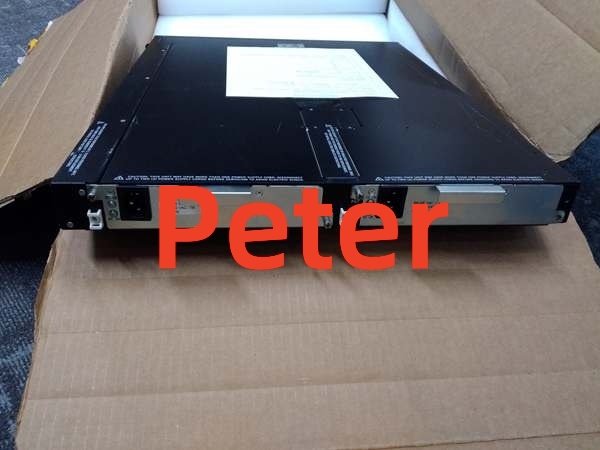
Enterasys SSA-G1018-0652
Technical FAQ
Is this an exact drop-in replacement for my older Enterasys SSA switch?
the maintains complete backward compatibility with existing S-Series SSA stacks and configurations. It offers the same 18-port Gigabit architecture and integrates seamlessly with Enterasys NetSight/Extreme Management Center. You can swap it directly into an existing stack without reconfiguring the entire network.
Why is this listed as “New Surplus” instead of factory-new?
This is genuine Enterasys/Extreme Networks stock that was never deployed in a data center or enterprise campus. It has been stored in climate-controlled inventory rather than exposed to continuous thermal cycling and dust. You receive the exact same MTBF and lifespan as a factory-fresh unit, typically at a significantly lower cost without extended OEM lead times.
Can I hot-swap this switch while the stack is live?
While the S-Series SSA supports redundant management and closed-loop stacking to maintain virtual switch connectivity during a member failure, physically replacing the unit requires disconnecting cables. Always schedule this replacement during a planned maintenance window to prevent temporary link flaps and traffic disruption.
What is the warranty coverage on this part?
We provide a standard 12-month functional warranty. If the switch fails to pass traffic, loses stack communication, or exhibits hardware defects under normal operating conditions within that window, we replace it. Our QA testing proves the unit passed all switching and management tests before it left our bench.
My switch is showing intermittent link drops. Is the switch bad?
Not necessarily. Be, check the Ethernet patch cables for bends, dirt, or broken connectors. Verify SFP+ modules are seated correctly and compatible. Intermittent drops can also be caused by EMI near the cable path or excessive cable length (>100m for copper). Only replace the switch if known-good cables and optics still fail to maintain a stable link.