Product Core Brief
- Model: (Material Number: P-)
- Brand: Eaton
- Series: ATS Single-Phase Power Transfer Switch
- Core Function: Provides automatic, seamless power redundancy for single-corded IT equipment by switching between two independent AC power sources (e.g., UPS A and UPS B).
- Product Type: 1U Rack-Mount Static Transfer Switch (STS/ATS)
- Key Specs: 30A Rated | 208-240V | <10ms Transfer Time | SNMP/Network Management
- Condition: New Surplus / Original OEM
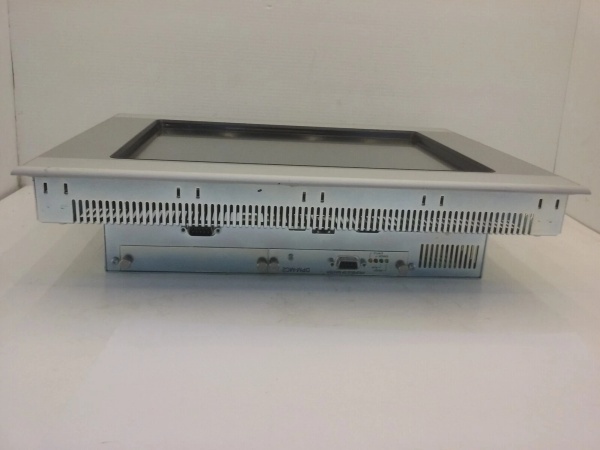
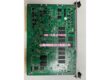
Eaton XV-440-10TVB-1-50
Key Technical Specifications
- Manufacturer: Eaton
- Part Number: / P-
- Product Category: Automatic Transfer Switch (ATS) / Static Transfer Switch (STS)
- Rated Current: 30A (Derated to 25.6A at 40°C ambient)
- Rated Voltage: 208/220/230/240V ±12%, 50/60Hz
- Transfer Time: <10ms (Typical 8ms), seamless for server power supplies
- Form Factor: 1U Rack-Mount (43mm x 430mm x 390mm)
- Input/Output Connection: Hardwired (Terminal Block)
- User Interface: LED Status Indicators
- Network Management: Built-in Ethernet, SNMP, HTTP/HTTPS, Telnet
- Operating Temp: 0°C to 40°C
- Compliance: CE, IEC/EN 60950-1, IEC/EN 62310
Product Introduction (No Fluff)
The Eaton is a 1U rack-mounted automatic transfer switch designed to solve the single-point-of-failure problem for critical IT equipment that only has one power supply. It continuously monitors two independent AC power sources and automatically transfers the load to the backup source within milliseconds if the primary source fails, ensuring zero downtime for connected servers, switches, and routers.
Unlike mechanical ATS units, the uses solid-state (static) switching, eliminating moving parts and enabling the sub-10ms transfer time required to keep modern server power supplies from resetting. The built-in network interface allows for remote monitoring, configuration, and firmware updates via SNMP or a web browser, integrating seamlessly into existing data center management ecosystems.
Sourcing this exact OEM replacement part prevents costly downtime when legacy transfer switches fail or when expanding power redundancy in high-density racks. Keeping verified new surplus stock on hand drastically reduces lead times during critical infrastructure upgrades or emergency replacements.
QA & Testing SOP (Dynamic & Transparent)
Static transfer switches are the last line of defense for power continuity. Every undergoes a rigorous validation process:
- Anti-Counterfeit Inspection: Verify Eaton labeling, PCB silkscreen, and terminal block quality against OEM baselines.
- Transfer Timing Test: Simulate a primary source failure and measure the actual transfer time to confirm it remains under 10ms using an oscilloscope.
- Load Bank Validation: Apply a 30A resistive load and verify stable output voltage, current balance, and thermal performance over a 2-hour burn-in.
- Network Stack Verification: Connect to the management port and verify SNMP traps, web UI responsiveness, and firmware version accuracy.
- Protection Logic Test: Inject over-voltage and under-voltage conditions to confirm the unit transfers correctly and triggers appropriate alarms.
- Packaging: Shipped in anti-static shielding with a printed QA test report.
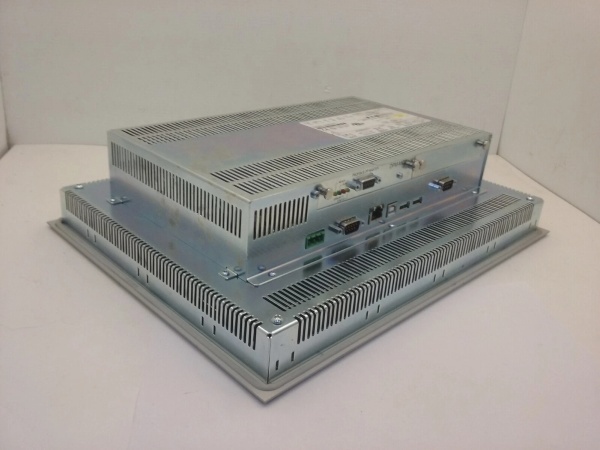
Eaton XV-440-10TVB-1-50
Installation Pitfalls & Guide (Engineer to Engineer)
❗ Source Synchronization: The is designed for two independent sources (e.g., separate UPS outputs). Do not feed both inputs from the same UPS or the same PDU branch. If the sources are not phase-synchronized, the transfer will still be safe, but you lose the true redundancy benefit. Verify your power distribution design before energizing.
❗ Derating at High Ambient: The 30A rating is valid only up to 35°C. At 40°C ambient, you must derate to 25.6A. In high-density server racks where inlet temps exceed 35°C, calculate your actual load and ensure you have at least a 20% headroom. Overloading in hot environments will trigger thermal protection and cause a transfer.
❗ Hardwired Connections: This model uses hardwired terminal blocks, not IEC C19/C20. Ensure your rack PDU or whip has compatible terminal connections. Use a calibrated torque screwdriver for all terminal screws; loose connections under 30A load will cause arcing and catastrophic failure.
❗ Network Security: The built-in Ethernet port exposes the ATS to your management network. Change the default password immediately. Disable unused protocols (Telnet, FTP) and enable HTTPS/SSL. Place the ATS management interface on a dedicated VLAN isolated from production traffic.
Replacement Protocol:
- Pre-Install: Schedule a maintenance window. Verify both power sources are active and within spec. Notify the NOC that a brief transfer test will occur.
- Removal: Disconnect the load from the old ATS. Power down and disconnect both input sources. Remove the unit from the rack. Inspect the terminal blocks for heat damage.
- Install: Mount the in the 1U slot. Connect Input A and Input B to the designated terminals. Connect the load output. Connect the Ethernet management cable.
- Power-on Test: Apply Input A first, then Input B. Verify the “Primary” LED is lit. Access the web UI to confirm firmware and settings. Manually trigger a test transfer via the UI to verify seamless switching and alarm generation.
Technical FAQ
Is this an exact drop-in replacement for my older Eaton ATS 16 or ATS 30?
Yes, the (P-) is the current 30A hardwired model in the Eaton ATS family. It maintains the same 1U form factor and hardwired terminal connections. If you are upgrading from an ATS 16, verify your load does not exceed 30A (or 25.6A at high temp). The network management capabilities are enhanced over older non-Netpack models.
Why is this listed as “New Surplus” instead of factory-new?
This is genuine Eaton stock that was never deployed in a data center. It has been stored in climate-controlled inventory rather than exposed to continuous load cycling and thermal stress. You receive the exact same MTBF and lifespan as a factory-fresh unit, typically at a significantly lower cost and without the 8-12 week OEM lead time.
Can I hot-swap this ATS while the load is powered?
No. While the provides seamless transfer between sources, the unit itself is not hot-swappable. Removing it under load will cause an immediate power interruption to the connected equipment. Always schedule this replacement during a planned maintenance window with the load safely transferred or powered down.
What is the warranty coverage on this part?
We provide a standard 12-month functional warranty. If the unit fails to transfer, exhibits excessive transfer time, or has a network interface failure under normal operating conditions within that window, we replace it. Our QA testing proves the unit met all transfer and load specifications before it left our bench.
My ATS is transferring frequently. Is it defective?
Not necessarily. Frequent transfers usually indicate a problem with the primary power source, not the ATS. Check the upstream UPS or PDU for voltage sags, frequency drift, or harmonic distortion. The is designed to protect your load; if the primary source is marginal, it will do its job. Review the event log via SNMP/web UI to identify the trigger (e.g., “Input A Under-Voltage”).
Need me to pull up the SNMP MIB file or the terminal block torque specifications? That usually comes up right before final commissioning.