Product Core Brief
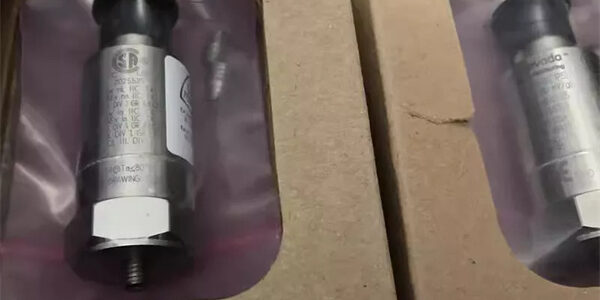
- Model: 177230-01-02-05
- Brand: Bently Nevada
- Series: 177230 Seismic Transmitter
- Core Function: Measures casing vibration velocity on rotating equipment and outputs a proportional 4-20 mA signal directly to PLC/DCS systems for condition monitoring.
- Product Type: Integrated Seismic Vibration Transmitter
- Key Specs: 0–25.4 mm/s (0–1.0 in/s) Range | 4-20 mA Loop Powered | 304L/316L Stainless Steel
- Condition: New Surplus / Original OEM
Key Technical Specifications
- Manufacturer: Bently Nevada
- Part Number: 177230-01-02-05
- Product Category: Seismic Vibration Transmitter
- Measurement Type: Casing Vibration Velocity (RMS)
- Measurement Range: 0.0 to 25.4 mm/s (0 to 1.0 in/s) ±10%
- Output Signal: 4-20 mA (Loop Powered)
- Supply Voltage: +12 to +35 VDC
- Frequency Response: 10 Hz to 1 kHz
- Housing Material: 304L / 316L Stainless Steel
- Dimensions: Ø25.4 mm (1.00 in) × 66.0 mm (2.60 in)
- Connector: 3-Pin MIL-C-5015, Stainless Steel
- Mounting Thread: 1/4-28 UNF
- Operating Temp Range: -40°C to +85°C
- Compliance: CSA / ATEX / IECEx / NEPSI (Hazardous Area Certified)
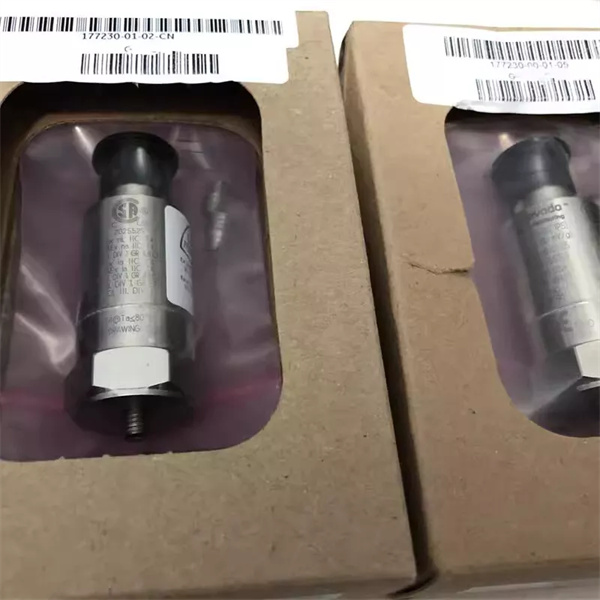
BENTLY 177230-01-01-05
Product Introduction (No Fluff)
The 177230-01-02-05 is a self-contained, loop-powered seismic vibration transmitter designed for monitoring the overall mechanical health of rotating equipment such as pumps, fans, motors, and small compressors. It integrates the sensing element and signal conditioning electronics into a single rugged housing, eliminating the need for a separate proximitors or signal conditioner.
The transmitter internally integrates the raw acceleration signal into velocity, then outputs a standard 4-20 mA signal proportional to the 0–25.4 mm/s vibration range. This makes it a direct plug-and-play solution for DCS/PLC-based condition monitoring without requiring a dedicated Bently Nevada rack system.
Sourcing this exact OEM replacement prevents measurement drift and false alarms caused by aging piezoelectric elements or degraded internal circuitry in legacy transmitters.
QA & Testing SOP (Dynamic & Transparent)
Every 177230-01-02-05 undergoes a rigorous validation process:
- Anti-Counterfeit Inspection: Verify Bently Nevada laser etching, MIL-C-5015 connector build quality, and housing markings against OEM baselines.
- Loop Current Verification: Power the unit at 24 VDC and confirm the 4-20 mA output sits within the specified quiescent range with no vibration input.
- Shaker Table Calibration: Inject a known vibration velocity at 100 Hz and verify the output current scales linearly to the expected mA value within ±10% tolerance.
- Diagnostic Fault Test: Simulate a sensor open-circuit condition and verify the output drops below 3.6 mA within 100 µs, confirming the built-in fault detection circuit is functional.
- Insulation Resistance Test: Verify >2 MΩ isolation between the housing and internal conductors.
- Packaging: Shipped in anti-static shielding with a printed QA test report.
Installation Pitfalls & Guide (Engineer to Engineer)
❗ Not for Critical Protection: Bently Nevada explicitly states that the 177230 series is designed for condition monitoring, not for critical machinery protection trips. If your application requires API 670-compliant trip logic, you must use a dedicated 3500-series monitor with seismic modules (e.g., 3500/42M). Use this transmitter for trending, alerting, and predictive maintenance only.
❗ Mounting Surface Integrity: The transmitter must be bolted directly to a clean, flat, machined surface on the bearing housing. Any paint, rust, debris, or gasket material between the transmitter base and the machine surface will attenuate high-frequency vibration content and produce falsely low readings. Use a torque wrench to achieve proper clamping force.
❗ Loop Power Budget: This is a 2-wire loop-powered device. Your PLC/DCS analog input card must supply sufficient voltage (minimum 12 VDC) to drive the transmitter through the entire loop resistance. Calculate your total loop resistance (cable + input card burden) and ensure the supply voltage minus the voltage drop across all resistances stays above 12 VDC.
❗ Cable Shielding & Grounding: The MIL-C-5015 connector carries the signal on a 3-pin interface. The cable shield must be grounded at the PLC/DCS end only. Grounding at both ends creates a ground loop that injects 50/60 Hz noise directly into your 4-20 mA signal.
❗ Orientation Sensitivity: While seismic transmitters measure casing vibration in any axis, ensure the mounting orientation aligns with the primary vibration direction you intend to monitor (typically radial). Mounting on a flexible or resonant surface will produce unreliable data.
Replacement Protocol:
- Pre-Install: Notify the control room. Isolate the analog input channel on the PLC/DCS to prevent spurious alarms during the swap.
- Removal: Disconnect the MIL-C-5015 cable. Unbolt the old transmitter from the bearing housing. Clean the mounting surface thoroughly.
- Install: Apply a thin layer of anti-seize compound to the mounting threads. Bolt the 177230-01-02-05 onto the clean surface. Torque to specification. Connect the cable and verify the shield is grounded at the control room end only.
- Power-on Test: Restore the loop power. Verify the PLC/DCS reads a stable value near the low end of the range (no vibration = ~4 mA). Compare the reading against a handheld vibration meter placed adjacent to the transmitter to confirm accuracy.
Technical FAQ
Is this an exact drop-in replacement for my older 177230-01-01-05?
Yes. The “-01” segment in the part number defines the measurement range (0–25.4 mm/s), and both variants share the same physical dimensions, connector type, and output characteristics. The “-02-05” suffix indicates the specific version/certification variant. Both are fully interchangeable in the field.
Why is this listed as “New Surplus” instead of factory-new?
This is genuine Bently Nevada stock that was never deployed in the field. It has been stored in climate-controlled inventory rather than exposed to oil mist, steam, and vibration. You receive the exact same calibration stability and lifespan as a factory-fresh unit, typically at a significantly lower cost and without extended lead times.
Can I use this transmitter to trip my machine if vibration exceeds a setpoint?
Technically, you can wire the 4-20 mA signal into a PLC and program a trip relay. However, Bently Nevada does not recommend this for critical protection. The 177230 series lacks the redundant diagnostics, response time guarantees, and SIL certification of a dedicated 3500-series protection system. Use it for monitoring and alerting; use a 3500 system for trips.
What is the warranty coverage on this part?
We provide a standard 12-month functional warranty. If the transmitter fails open, drifts out of calibration, or loses its diagnostic fault function under normal operating conditions within that window, we replace it. Our QA testing proves the unit met specification before it left our bench.
My 4-20 mA reading is stuck at 0 mA. Is the transmitter dead?
Not necessarily. A reading of 0 mA typically indicates a broken wire, a blown fuse in the loop, or a loss of loop power — not a failed transmitter. A properly functioning 177230 will never output true 0 mA; its minimum live output is ~4 mA. Check your loop wiring and power supply first. If the transmitter output drops below 3.6 mA while powered and connected, that is its built-in fault indication telling you the internal sensor has failed.