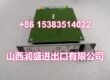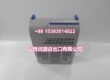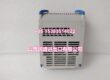
Product Core Brief
- Model: 172103-01
- Brand: Bently Nevada (Baker Hughes)
- Series: 3500 Machinery Protection System
- Core Function: 16-channel temperature monitor for high-density bearing metal and process variable measurement.
- Product Type: Temperature I/O Monitor Module (3500/65)
- Key Specs: 16 Channels | RTD/TC Inputs | Internal Termination
- Condition: New Surplus / OEM Original
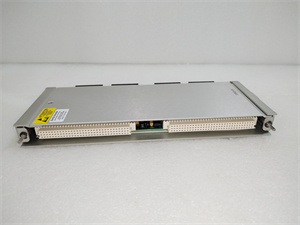
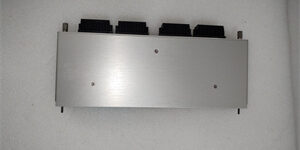
BENTLY 172103-01
Key Technical Specifications
- Module Function: 3500/65 16-Channel Temperature Monitor
- Input Types: RTD (Pt100, Cu10, Ni120) & Thermocouple (J, K, T, E, R, S, B, N)
- Channel Count: 16 Independently Configurable Channels
- Termination: Internal Terminal Block
- Measurement Accuracy: ±0.5% of Span (Typical)
- Scan Rate: User-Configurable (100ms to 10s)
- Analog Output: 4-20 mA per channel (Isolated)
- System Compatibility: 3500/05 Frame, 3500/22 TDI
- Configuration: 3500 Rack Configuration Software
- Obsolescence Note: Legacy Part Number (Check for 145988-02 upgrade)
Product Introduction
Engineered for high-density thermal monitoring, this Bently Nevada 172103-01 provides 16 channels of RTD and thermocouple inputs in a single module. It maximizes rack space efficiency for large rotating equipment like steam turbines, compressors, and generators that require extensive bearing metal temperature monitoring.
Integrating directly into the 3500 protection logic, this module allows temperature-driven alarms and trips to be voted with vibration data for comprehensive machine health assessment. For legacy systems, this internal-termination variant simplifies wiring by eliminating external terminal blocks, though you should verify if the newer 145988-02 revision offers better noise immunity for your specific grounding environment.
QA & Testing SOP
High-channel-count temperature modules are prone to cold-junction compensation drift. We verify both input accuracy and backplane communication.
- Anti-Counterfeit & Visual Audit: We inspect the internal terminal block for stripped screws or corrosion, verify the Bently Nevada silkscreen, and check for any field-repair solder joints.
- Cold-Junction Compensation (CJC) Test: We inject a known mV signal for a K-type TC and verify the module reads the correct temperature, confirming the CJC sensor at the terminal block is functional.
- RTD Excitation Check: We measure the excitation voltage at the internal terminals to ensure it’s within spec (typically 1mA), preventing self-heating errors in Pt100 sensors.
- Backplane Enumeration: We install in a 3500/05 test frame to verify the 3500/22 TDI correctly polls all 16 channels and reports valid temperature values.
- ESD Safe Packaging: Precision analog front-ends are ESD sensitive. We pack in anti-static shielding with desiccant to prevent latent drift or failure.
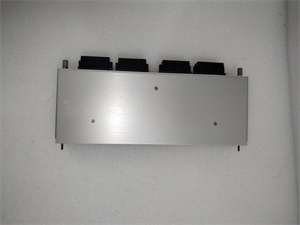
BENTLY 172103-01
Installation Pitfalls & Guide
❗ Thermocouple Wire Polarity: Reversed TC wires are the #1 field failure. If the temperature reads lower when the machine heats up, your leads are backwards. Always verify polarity with a millivolt source before connecting to the internal terminals.
❗ RTD Wire Configuration: This module supports 2-wire, 3-wire, or 4-wire RTDs. If you configure the software for 3-wire but wire a 2-wire RTD (or vice versa), you’ll get significant measurement errors due to lead resistance compensation failures. Double-check the jumper settings or software config against the physical wire count.
❗ Grounding & Shielding: Temperature signals are low-level DC. If you share a ground path with VFDs or motor leads, 60Hz noise will corrupt your readings. Use shielded twisted-pair cable and ground the shield at the 3500 module end only. Never ground at the sensor end in a floating thermocouple application.
❗ High Channel Count Heat: With 16 active channels, this module generates more internal heat than standard 4-channel monitors. Ensure adequate rack ventilation and avoid mounting directly adjacent to high-power output modules.
Replacement SOP:
- Pre-Install: Document the current channel configuration, sensor types, and alarm setpoints; place the machine in bypass/maintenance mode.
- Removal: Power down the 3500 rack; carefully disconnect wires from the internal terminal block (label every wire!); remove mounting screws and extract the module.
- Install: Slide the 172103-01 into the designated slot; reconnect wires to the internal terminals, ensuring no stray strands are shorting adjacent terminals; secure mounting screws.
- Power-On Test: Power up the rack; verify the 3500/22 TDI sees the module; inject a known temperature signal (e.g., ice bath for RTD or mV calibrator for TC) to validate accuracy before removing bypass.
Technical FAQ
Is 172103-01 the same as 145988-02?
145988-02 is the newer, direct replacement part number for the 3500/65 16-channel temperature module. Functionally, they are identical and interchangeable in the 3500/05 frame. If you’re replacing a failed 172103-01, the 145988-02 is the preferred option for new installations due to improved component availability, but the legacy part will work seamlessly in existing configurations.
Can I mix RTDs and Thermocouples on the same module?
Yes, but each channel must be configured independently. You can have channels 1-8 as Pt100 RTDs and channels 9-16 as K-type thermocouples. However, you cannot mix sensor types on the same channel. Verify your software configuration matches the physical wiring for each individual channel.
Does this module support Type S thermocouples for high-temp turbines?
Yes, the 3500/65 supports Type S, R, and B thermocouples for high-temperature applications. However, ensure your extension wires match the thermocouple type all the way to the module. Using copper extension wires with a Type S TC will introduce massive errors due to the Seebeck effect at the terminal block.
What is the scan rate, and can I change it?
The default scan rate is typically 1 second, but it’s user-configurable via the 3500 Configuration Software down to 100ms for fast-ramping temperature events. Be aware that faster scan rates increase backplane traffic; with 16 channels, keep the scan rate at 1s or higher to avoid communication bottlenecks.
Why is this sold as new surplus?
This unit was pulled from sealed OEM overstock or an unfulfilled project before installation. We test it on our OEM 3500 test racks to verify input accuracy and backplane communication, but we aren’t replacing internal components. You’re getting unused factory silicon with original manufacturing tolerances at a fraction of the active OEM list price.