Product Core Brief
- Model: NI-9853
- Brand: National Instruments (NI)
- Series: NI C Series CAN Modules
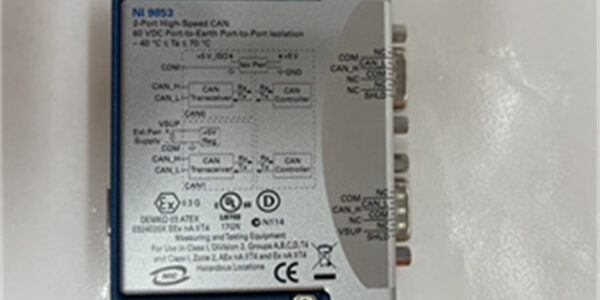
- Core Function: Provides dual-port, isolated, high-speed CAN bus communication for CompactRIO systems using LabVIEW FPGA.
- Product Type: 2-Port High-Speed C Series CAN Interface Module
- Key Specs: 2x CAN 2.0B Ports | Up to 1 Mbps | 11/29-bit IDs | FPGA-Level Control
- Condition: New Original (New Surplus)
Product Introduction
The NI NI-9853 is a specialized 2-port, high-speed Controller Area Network (CAN) interface module designed exclusively for NI CompactRIO systems. It serves as the critical communication bridge for automotive and industrial applications, allowing engineers to monitor CAN buses, read/write data from ECUs, and interface with industrial motion controllers.
Unlike standard CAN modules, the NI-9853 is engineered for LabVIEW FPGA programming, providing byte-level access to CAN frames and enabling hardware-timed synchronization with other C Series I/O modules at resolutions up to 25 ns. Each port features an independent Philips SJA1000 controller and a TJA 1041 transceiver, fully compliant with the ISO 11898 standard. With galvanic isolation between both ports and the rest of the system, it ensures robust data integrity in highly electrically noisy environments.
NI-9853
Key Technical Specifications
| Parameter | Value |
|---|---|
| Module Type | 2-Port High-Speed CAN Interface |
| System Compatibility | NI CompactRIO (cRIO) Platforms Only |
| CAN Protocol | CAN 2.0B Compatible |
| Identifier Support | 11-bit and 29-bit (J1939 Support) |
| Max Baud Rate | 1 Mbps |
| Hardware | Philips SJA1000 Controller, TJA 1041 Transceiver |
| Isolation | Channel-to-Channel and Channel-to-System |
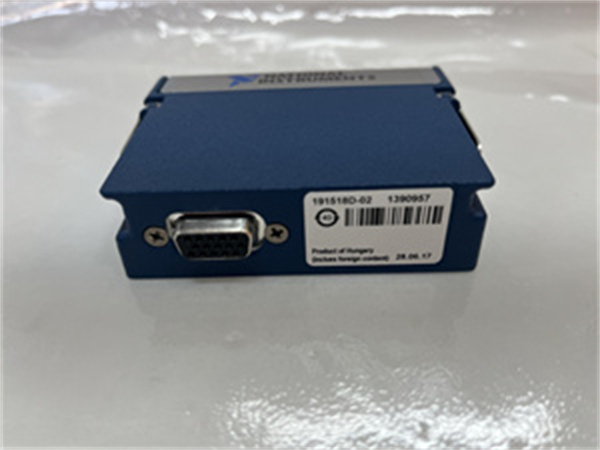
| Connectors | 2x 9-pin Male D-Sub |
| Bus Voltage Tolerance | CAN_H/CAN_L: -27 to +40 VDC |
| Operating Temp | -40 °C to +70 °C |
Quality Control Process (Engineer’s Perspective)
We don’t just box these and ship them. Here is our actual bench test workflow.
- Incoming Verification: We verify the serial number against NI traceability records. A visual inspection checks for bent pins on the D-Sub connectors and ensures the C Series backplane connector is free of debris.
- Live Functional Test: We mount the unit in a live CompactRIO test chassis. We verify that NI MAX correctly enumerates both CAN ports and that the FPGA bitfile loads without errors.
- Communication Loopback Test: We configure both CAN ports on the module to communicate with each other. We send and receive standard and extended CAN frames to verify the SJA1000 controllers and transceivers are fully operational.
- Electrical Parameter Test: We perform a Megger test to verify the galvanic isolation between CAN0, CAN1, and the system ground.
- Final QC & Packaging: The module is sealed in an anti-static bag with silica gel. A QC sticker showing the test date and technician initials is applied to the exterior.
Replacement Pitfall Guide
Field replacements on FPGA-based CAN systems are unforgiving. Watch out for these traps.
- Platform Incompatibility: ❗ Critical. The NI-9853 uses a low-level FPGA API and is strictly compatible with CompactRIO systems only. It will not work in CompactDAQ, PXI, or cDAQ chassis. If you need a CAN module for CompactDAQ, you must use the NI-XNET series (e.g., NI-9862).
- CAN1 External Power Requirement: ❗ Critical. While CAN0 is internally powered, CAN1 requires an external power supply (+8 V to +25 V) to operate. You must supply power to the VSUP pin (Pin 9) on the CAN1 D-Sub connector directly from the CAN bus. Failure to do so will result in CAN1 being completely unresponsive.
- Missing Termination Resistors: The NI-9853 does not have onboard termination resistors. To prevent signal reflections and communication errors, you must ensure that the CAN bus has exactly two 120 Ω termination resistors at the physical ends of the bus.
- EMC / Ferrite Bead Installation: For EMC compliance, NI requires a clamp-on ferrite bead on the CAN cable as close to the module as possible. If operating in a noisy environment and experiencing dropped frames, verify the ferrite bead is installed correctly.
- ESD Damage: The CAN transceivers are highly sensitive to electrostatic discharge. Always wear a grounded wrist strap when handling the bare PCB or connecting D-Sub cables.
Keep these in mind and you’ll cut 90% of rework time.
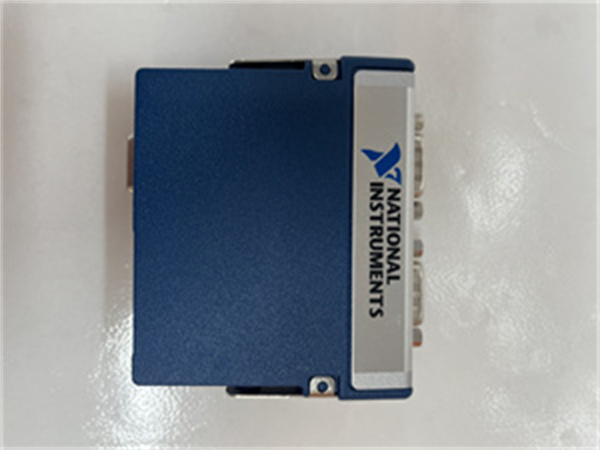
NI-9853
Compatibility Matrix & Benchmarks
Compatibility
- NI NI-9853 → NI-9853 : Direct Replacement – Verify FPGA bitfile and LabVIEW project compatibility.
- NI NI-9852 → NI-9853 : Upgrade Path – NI-9852 is Low-Speed/Fault-Tolerant; NI-9853 is High-Speed. Not pin/function compatible without code changes.
- NI NI-9862 → NI-9853 : Architecture Change – NI-9862 uses NI-XNET API; NI-9853 uses LabVIEW FPGA API. Requires complete code rewrite.
Benchmarks
- Max Baud Rate: 1 Mbps (Verified at full bus load)
- Sync Resolution: Up to 25 ns (Hardware-timed with other C Series modules)
- Bus Voltage Withstand: -27 VDC to +40 VDC (Continuous)