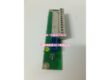
Product Core Brief
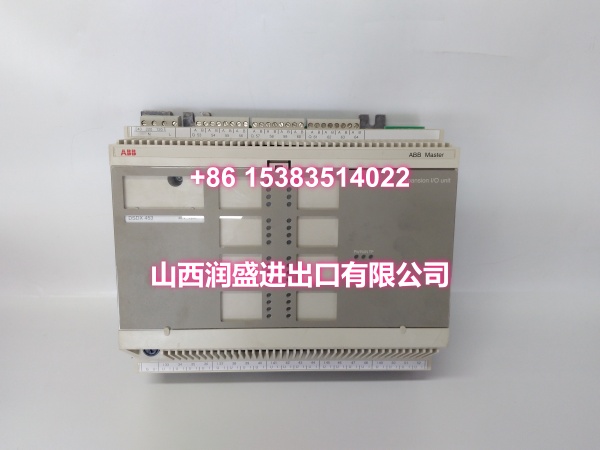
- Model: DSDX453
- Order Code: 5716075-AN
- Brand: ABB
- Series: ABB Advant/Master S100 I/O Systems
- Core Function: Master digital expansion unit that extends digital I/O capacity in ABB S100 rack systems — allows additional digital input/output channels to be added without changing the host controller strategy or rewiring marshalling cabinets, providing deterministic scan performance and consistent diagnostics within the Advant/Master toolset.
- Product Type: Digital Expansion Unit / Digital I/O Expansion Module
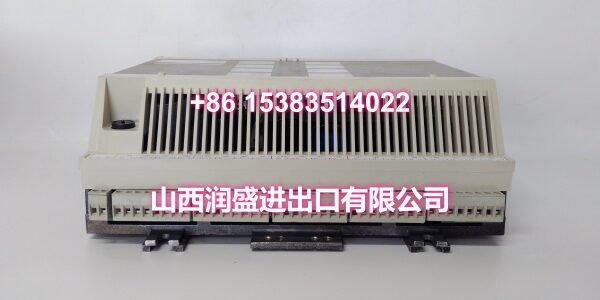
- Key Specs: High-density digital I/O configuration | 24VDC operating voltage | Fast data transfer via high-speed communication interface | Address configuration via DIP/coded settings | Onboard status indicators and system diagnostics | Modular rack-mount design
- Condition: New Original / New Surplus
Key Technical Specifications
- Product Type: Master Digital Expansion Unit for DCS/PLC Systems
- Brand: ABB
- Model Number:
- Order Code: 5716075-AN
- Series: ABB Advant/Master S100 I/O Systems
- Core Function: Digital I/O expansion — extends the digital signal handling capacity of ABB S100 rack-based DCS/PLC systems, allowing additional discrete input and output channels to be added without modifying the host controller strategy or rewiring existing marshalling cabinets
- I/O Configuration: High-density digital I/O — provides multiple digital input and output channels in a compact module footprint, maximizing I/O points per rack slot
- Operating Voltage: 24V DC (power supplied from backplane)
- Operating Temperature: -20°C to +65°C, suitable for industrial control room environments
- Communication Interface: High-speed communication interface for fast data transfer and response, ensuring real-time signal acquisition and control output
- Scan Performance: Deterministic scanning — works with the S100 backplane bus to maintain stable, predictable update times for all I/O channels
- Address Configuration: Supports simple address/signal grouping selection (e.g., DIP switch or coded settings) for clean integration into the existing I/O map
- Diagnostics: Onboard status indicators and system diagnostics allow technicians to verify module health and I/O status at a glance, reducing troubleshooting time
- Mounting Method: Rack-mounted modular plug-in format for installation in compatible ABB Master/Advant S100 I/O racks — drop-in replacement with minimal downtime
- Physical Dimensions: Specific dimensions not published in available documentation; designed to fit standard ABB S100 rack slot dimensions
- Environmental Rating: IP20 protection rating, suitable for indoor industrial control room environments
- Origin: Switzerland
- Compatibility: ABB Master/Advant S100 I/O rack systems — serves as a native, drop-in digital expansion option for plants standardizing on ABB S100 architecture
- Typical Applications: Extending digital I/O capacity in mature ABB S100 DCS installations without controller upgrades; adding discrete signal points for new equipment tie-ins in existing plants; serving as a critical spare part for lifecycle support of ABB Advant/Master systems where digital I/O expansion is required; process monitoring and control in power generation, petrochemical, metallurgical, and manufacturing industries
Product Introduction
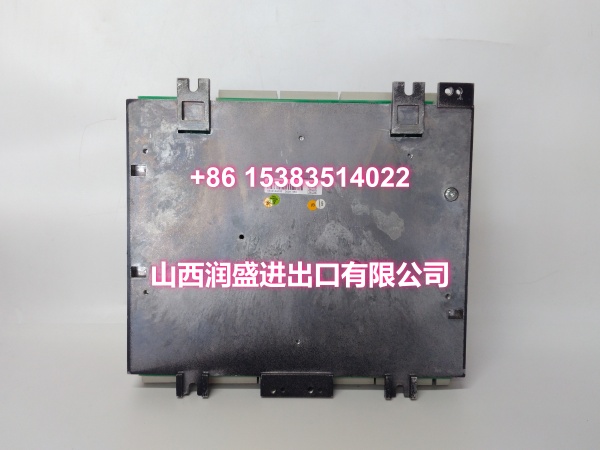
The ABB DSDX453 (order code 5716075-AN) is a master digital expansion unit designed for ABB Advant/Master S100 I/O systems, engineered to extend digital signal capacity without requiring controller changes or marshalling cabinet rewiring. As a native S100 rack module, the DSDX453 integrates seamlessly into existing ABB DCS/PLC architectures, providing additional digital input and output channels that the controller can scan and control just like any other I/O point in the system.
What makes the DSDX453 particularly valuable for system integrators and MRO procurement teams is its role as an incremental expansion solution for mature ABB installations. When a plant needs to add new field devices — additional limit switches, proximity sensors, solenoid valves, or indicator lights — but the existing I/O rack is at capacity, the DSDX453 provides a straightforward path to expand digital I/O without the cost and risk of a controller migration or a complete I/O rack replacement. The module’s deterministic scan performance ensures that newly added I/O points maintain the same predictable update times as existing channels, and its address configuration via DIP or coded settings allows clean integration into the existing I/O map without complex reprogramming.
The DSDX453’s high-density configuration maximizes the number of I/O points per rack slot, which is critical in control rooms where rack space is limited. Its high-speed communication interface ensures fast data transfer between the expansion unit and the host controller, maintaining real-time responsiveness for time-sensitive control applications. Onboard status indicators and system diagnostics give maintenance technicians immediate visibility into module health and individual channel status, reducing mean time to repair when issues arise.
For plants extending the lifecycle of ABB Advant/Master S100 systems, having verified genuine DSDX453 modules on hand ensures that digital I/O expansion needs can be met quickly and that failed expansion units can be replaced with minimal disruption. The 5716075-AN order code is a proven hardware variant with a strong reliability track record in installed bases across power, petrochemical, and manufacturing industries.
QA & Testing SOP
Every unit undergoes a standardized verification process before shipment:
- Visual & Anti-Counterfeit Check: Inspect the module housing for proper ABB branding and part number marking (DSDX453, 5716075-AN). Check for physical damage including cracked PCB, damaged connector pins, burnt components, or signs of moisture ingress (corrosion, white residue on contacts).
- Connector Pin Inspection: Examine the backplane connector pins and field wiring connectors for straightness, corrosion, or bending. Bent pins can cause intermittent connections or short circuits when inserted into the S100 rack.
- Backplane Power Test: Insert the module into a test ABB S100 rack and verify that it correctly draws 24VDC power from the backplane with no abnormal current draw or voltage drop.
- Digital Input Test: Apply known ON/OFF signals to each digital input channel and verify that the module correctly reports the input state to the test controller with no false readings or missed states.
- Digital Output Test: Command each digital output channel to ON and OFF states from the test controller and verify that the module correctly outputs the corresponding voltage level at each output terminal.
- Address Configuration Test: Verify that the module correctly responds to DIP switch or coded address settings, confirming that the assigned address is recognized by the controller and that I/O points map to the correct addresses in the I/O table.
- Communication Speed Test: Verify that the module maintains fast data transfer rates over the high-speed communication interface, with no communication timeouts or data corruption under continuous I/O cycling.
- Deterministic Scan Test: Verify that the module maintains stable, predictable scan times consistent with S100 backplane bus specifications, with no scan time spikes or missed scans under load.
- Diagnostics Test: Verify that onboard status indicators correctly reflect module health and channel status, and that system diagnostics correctly report any fault conditions to the controller.
- Long-Duration Stability Test: Run the module under continuous I/O cycling for an extended period to verify stable operation with no channel failures, communication dropouts, or thermal issues.
- Anti-Static & Mechanical Protection: After passing all tests, the module is placed in anti-static shielding with protective caps on connectors. It is then packed in rigid cardboard with foam cushioning to prevent mechanical shock and ESD damage during transit.
Installation Pitfalls & Guide
Real-World Risks When Replacing This Module:
❗ Address Configuration Mismatch: The DSDX453 uses DIP switches or coded settings to define its address and signal grouping within the S100 I/O map. If the address settings on the replacement module don’t match the original module’s configuration, the controller will not recognize the I/O points at the expected addresses, resulting in complete loss of all I/O signals on that module. Always document the original module’s DIP switch/coded settings before removal and replicate them exactly on the replacement.
❗ Incorrect Slot Placement: The DSDX453 must be installed in the designated rack slot position specified in the system configuration. Installing it in the wrong slot can cause address conflicts with other modules or prevent the controller from recognizing the expansion unit entirely. Always verify the slot assignment matches the system documentation before insertion.
❗ I/O Wiring Confusion: The DSDX453 combines both digital input and digital output channels on the same module. Confusing input terminals with output terminals during reconnection can cause damage to the module or field devices. Always verify wiring against the I/O documentation and terminal assignment diagram before applying power.
❗ Loss of I/O State on Replacement: When replacing a failed DSDX453, all output states will be lost and all input readings will be unavailable during the swap. For critical control outputs (e.g., safety interlocks, emergency systems), always schedule the replacement during a planned maintenance window and bypass or hold the process if possible.
❗ Hot-Swap Risk: While some ABB S100 rack systems support hot-swapping of I/O modules, removing or inserting the DSDX453 while the system is powered can cause momentary loss of I/O — potentially triggering false alarms or unintended equipment actions. For applications where I/O continuity is critical, always schedule the replacement during a planned maintenance window.
❗ Signal Voltage Level Mismatch: The DSDX453 expects digital signals at 24VDC. If field devices operate at a different voltage level, a signal converter or interface relay may be required. A mismatch can cause false readings or damage to the input/output circuits.
4-Step Replacement Guide:
- Pre-Install: Identify the failed module slot and document the existing configuration (rack slot position, DIP switch/coded address settings, I/O channel assignments, wiring connections, current output states from the controller/SCADA). Back up the current controller configuration including any I/O-specific settings. If possible, schedule the replacement during a planned maintenance window and notify operations of potential loss of I/O functionality.
- Removal: If hot-swap is supported per the system documentation, follow the proper hot-swap procedure. Otherwise, power down the S100 rack. Disconnect all field wiring cables from the module, labeling each cable for reconnection. Record the DIP switch/coded address settings from the old module. Release the module locking mechanism and carefully slide the old DSDX453 out of the rack slot. Inspect the backplane connector for damage or debris.
- Install: Set the DIP switches or coded address settings on the new DSDX453 to match the original module’s configuration exactly. Insert the new module into the correct rack slot, ensuring proper alignment with the backplane connector. Secure the module with the locking mechanism. Reconnect all field wiring cables to the correct terminals, verifying input vs. output assignments and signal polarity. Double-check that wiring matches the I/O documentation.
- Power-On Test: Power up the rack (if it was shut down). Verify that the module powers up correctly from the backplane. Check the controller for any I/O fault codes related to the digital expansion unit. Verify that the controller recognizes the module at the correct address and that all I/O points are mapped correctly. Apply test signals to input channels and verify that the module correctly reports input states to the controller. Command output channels to ON/OFF states and verify correct output at the terminals. Verify that onboard status indicators correctly reflect module health. Monitor the system for stable operation before returning to full production.
Technical FAQ
What is the difference between the DSDX453 and a standard DSDX digital I/O module? The DSDX453 is specifically designed as a master digital expansion unit for ABB Advant/Master S100 I/O rack systems, with features optimized for incremental I/O expansion — including DIP/coded address configuration for clean I/O map integration and deterministic scan performance on the S100 backplane bus. Standard DSDX modules (like DSDX110 or DSDX404) are general-purpose digital I/O modules that may be used in different ABB system architectures. The DSDX453 is the go-to choice when you need to add digital I/O capacity to an existing S100 rack without changing the controller or rewiring marshalling cabinets.
Can the DSDX453 be used in non-S100 ABB systems? The DSDX453 is designed specifically for ABB Master/Advant S100 I/O rack systems. Compatibility with other ABB platforms (such as 800xA or AC 800M) is not guaranteed and depends on the specific system architecture. For non-S100 systems, ABB offers alternative digital I/O expansion solutions. Always verify compatibility with your specific controller model and rack type before ordering.
What are common failure modes for this module? Common failure modes include: backplane connector pin damage from repeated insertion/removal; input circuit damage from voltage transients on field wiring; output circuit damage from short circuits or overcurrent on actuator wiring; DIP switch/coded setting corruption or accidental misconfiguration; PCB trace corrosion from moisture ingress in humid environments; and communication failure preventing the controller from reading/writing I/O values. In most cases, a failing DSDX453 will report incorrect input states, fail to switch outputs, or stop communicating entirely, which the controller will flag as an I/O fault.
How do I verify the correct address settings for a replacement DSDX453? The address settings (DIP switches or coded settings) define where the module’s I/O points appear in the controller’s I/O map. Before removing the failed module, photograph or document the exact position of each DIP switch or the coded address value. If documentation is unavailable, check the controller’s hardware configuration or I/O assignment table, which should list the expected address for each rack slot. Setting the wrong address will cause the controller to look for I/O points at the wrong location, resulting in all channels appearing faulty.
What warranty do you offer on New Surplus parts? We provide a full 12-month warranty on all New Original / New Surplus units. This is fundamentally different from refurbished or pulled modules, which often carry 30–90 day warranties and come with unknown operational history, potential connector wear, and degraded I/O accuracy. For a digital expansion unit used in critical process control, the reliability difference between new surplus and refurbished directly impacts process safety and the risk of false trips or missed alarms.