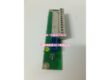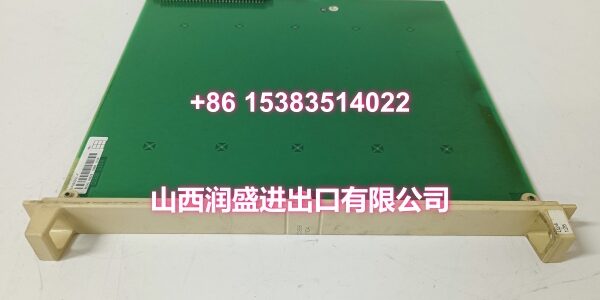
Product Core Brief
- Model: DSBB110A
- Brand: ABB
- Series: ABB Control Rack Shield Board Series
- Core Function: Rack-level electromagnetic shielding and grounding board for reducing EMI noise coupling in mixed-signal I/O environments.
- Product Type: Shield Board (Passive Component)
- Key Specs: Passive Design | Rack Plug-in Form Factor | No Firmware Required | No Configuration Needed | Backplane Ground Reference
- Note: Condition: New Original (New Surplus). Origin: Sweden.
Key Technical Specifications
| Parameter | Value |
|---|---|
| Manufacturer Part Number | 57330001-Y |
| Device Model | |
| Device Type | Shield Board (Main Shield Board) |
| Series | ABB Control Rack Shield Board Series |
| Function | Rack-level EMI control and grounding |
| Power Requirements | Passive component; no separate power feed |
| Signal I/O Types | No active I/O; provides shielding/ground reference within the rack |
| Communication Interfaces | None |
| Installation Method | Plug-in rack board; mates with backplane and chassis ground |
| Operating Temperature | Follows host rack rating (typically 0°C to +55°C) |
| Typical Applications | DCS I/O racks, Advant Master systems, mixed-signal environments with analog and digital I/O in proximity |
| Origin | Sweden |
| Condition | New Original (New Surplus) |
Product Introduction
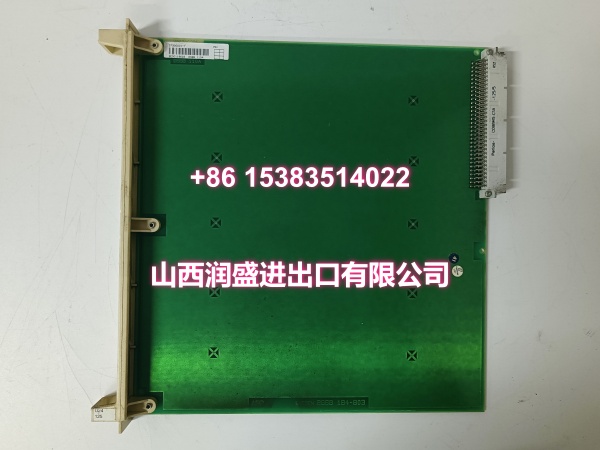
The ABB DSBB110A (order code 57330001-Y) is a shield board designed for ABB control and I/O racks. Unlike active modules such as processors or I/O cards, the DSBB110A is a passive component that provides electromagnetic interference (EMI) shielding and stable ground reference between adjacent modules within the rack assembly.
In mixed-signal environments where sensitive analog input modules (such as temperature, pressure, or flow transmitters) share the same rack with high-energy digital or power modules, electromagnetic coupling through the backplane can introduce noise, drift, or intermittent signal errors. The DSBB110A acts as a physical and electrical barrier, establishing a clean ground reference and reducing noise propagation between adjacent slots. This is particularly critical in applications such as chemical processing, power generation, and oil & gas, where measurement accuracy directly impacts process control stability and safety.
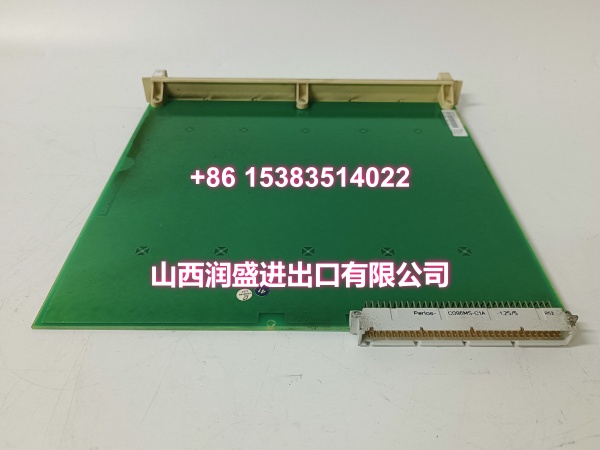
The board features a simple plug-in form factor that mates directly with the rack backplane and chassis ground. It requires no firmware, no configuration, and no separate power supply—making it one of the most maintenance-friendly components in the system. For engineers troubleshooting intermittent analog drift, crosstalk between channels, or unexplained noise spikes in legacy ABB installations, replacing a degraded or missing shield board with a genuine DSBB110A can restore signal integrity without requiring system redesign or module reconfiguration.
For maintenance teams managing aging Advant Master or other ABB DCS installations, the DSBB110A is a direct drop-in replacement for failed or missing shield boards. Its passive design means there are no firmware version compatibility concerns, and the standardized form factor ensures compatibility with existing rack hardware.
QA & Testing SOP
Every unit goes through a structured verification process before shipment:
- Visual Inspection: Check the board for cracks, corrosion on the backplane connector pins, and physical damage to the PCB traces. Verify that the grounding contact surfaces are clean and free of oxidation.
- Connector Pin Verification: Inspect the backplane connector pins for straightness, corrosion, or bending. Bent pins prevent proper mating with the backplane, compromising the ground reference and shielding effectiveness.
- Ground Continuity Test: Using a multimeter, verify continuity between the board’s grounding contact points and the chassis ground reference. An open circuit indicates a broken ground path, which would render the shield board ineffective at EMI suppression.
- Surface Flatness Check: Verify that the board’s mating surface is flat and undamaged. Warped or damaged boards may not seat properly in the rack, creating air gaps that reduce shielding effectiveness.
- Anti-Counterfeit & Packaging: Verify authenticity markings on the board body. Each unit is shipped in anti-static protective packaging with desiccant to prevent moisture absorption and connector oxidation during transit.
Installation Pitfalls & Guide
While the DSBB110A is a passive component, proper installation is still critical to its shielding performance.
❗ Slot Allocation Compliance: The DSBB110A must be installed in the specific slot(s) designated by the rack’s slot allocation plan. Installing it in an incorrect slot may leave critical signal paths unshielded or interfere with adjacent active modules. Always consult the rack manual or existing system documentation before installation.
❗ Backplane Connector Alignment: When inserting the board into the backplane slot, ensure the connector pins are perfectly aligned before applying force. Forcing a misaligned board can bend pins, causing poor ground contact and degraded shielding performance. Push firmly and evenly until the board is fully seated.
❗ Chassis Ground Verification: Before installing the shield board, verify that the rack’s chassis ground connection is intact and properly bonded to the plant grounding system. A shield board cannot provide effective EMI suppression if the chassis ground itself is compromised or has high impedance.
❗ Adjacent Module Seating: After installing the shield board, verify that adjacent modules are fully seated and their retention screws are tightened. Gaps between modules can create EMI leakage paths that bypass the shield board’s protection.
❗ No Configuration Required: The DSBB110A is a passive component with no firmware or configuration requirements. Do not attempt to configure it in the DCS software—doing so will result in errors. Simply install the board and verify physical seating and ground continuity.
4-Step Replacement Guide:
- Pre-install: Review the rack slot allocation plan to confirm the correct installation position for the DSBB110A. Verify the replacement board’s part number (57330001-Y) matches the original. Prepare anti-static protection.
- Removal: Disconnect power to the rack if required by your safety procedures. Loosen the retention screws (if present). Gently pull the old board straight out of the backplane slot. Inspect the backplane connector for damage.
- Install: Align the new DSBB110A’s connector with the backplane slot. Push firmly and evenly until fully seated. Tighten any retention screws. Verify that adjacent modules remain properly seated.
- Verification: Apply power to the rack. Verify that adjacent modules operate normally with no new fault codes. If you were troubleshooting analog noise or drift issues, monitor the affected channels to confirm signal stability has been restored.
Technical FAQ
1. Is the DSBB110A an active module or a passive component? The DSBB110A is a passive shield board, not an active module. It has no processor, no firmware, no communication interfaces, and no I/O channels. Its sole function is to provide electromagnetic shielding and a stable ground reference between adjacent modules in the rack. It requires no power supply and no configuration.
2. What problems can a missing or degraded shield board cause? A missing or degraded shield board can lead to electromagnetic interference (EMI) coupling between adjacent modules, resulting in intermittent analog signal drift, crosstalk between channels, unexplained noise spikes, or measurement inaccuracies. In severe cases, EMI can cause spurious alarms or affect control loop stability. If you’re experiencing these symptoms in a mixed-signal rack, check that all shield boards are properly installed and in good condition.
3. Can I install the DSBB110A in any slot in the rack? No. The DSBB110A must be installed in the specific slot(s) designated by the rack’s slot allocation plan. Installing it in an incorrect slot may leave critical signal paths unshielded or interfere with adjacent active modules. Always consult the rack manual or existing system documentation to determine the correct installation position.
4. How does the DSBB110A differ from a bus interface or communication module? The DSBB110A is a passive shield board with no communication capabilities. It does not support any industrial protocols (such as PROFIBUS, Modbus, or EtherNet/IP), has no communication interfaces, and cannot perform data transmission or protocol conversion. Its sole purpose is EMI shielding and grounding within the rack assembly.
5. What’s the difference between New Surplus and Refurbished for shield boards? We supply this unit as New Original (New Surplus)—unused, original factory stock. This comes with a standard 12-month warranty. While shield boards are passive components with fewer failure modes than active modules, refurbished units may have degraded connector contacts, oxidized grounding surfaces, or physical damage from previous installation/removal cycles that compromise shielding effectiveness. New surplus units ensure pristine contact surfaces and reliable ground continuity.