Product Core Brief
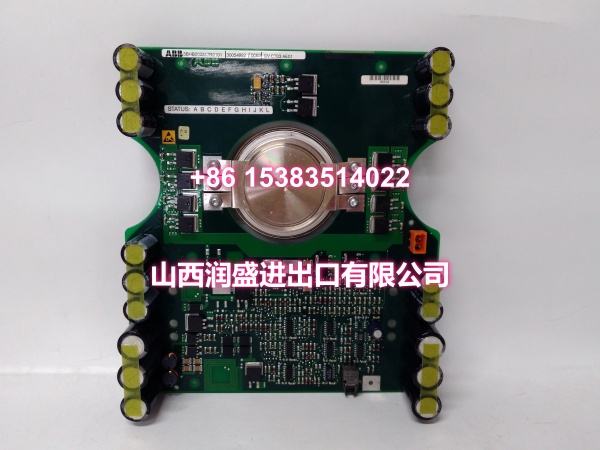
- Model: 5SHX08F4502
- Brand: ABB
- Series: ABB 5SHX Reverse-Conducting IGCT Series
- Core Function: High-power integrated gate commutated thyristor module combining a GCT switching element with an integrated anti-parallel diode, designed for medium-voltage, high-current energy conversion in industrial drives, excitation systems, and grid stabilization applications.
- Product Type: Integrated Gate-Commutated Thyristor (IGCT) Module
- Key Specs: 4500V Voltage Class | 800A Rated Current | Reverse-Conducting (GCT + anti-parallel diode integrated) | Low Inductance Gate Connection | Hard-Drive Gate Capability | Surge Current ≥20kA
- Note: Condition: New Original (New Surplus). Origin: Sweden/Switzerland.
Key Technical Specifications
| Parameter | Value |
|---|---|
| Manufacturer Part Number | 5SHX08F4502 |
| Device Type | Integrated Gate-Commutated Thyristor (IGCT) |
| Series | ABB 5SHX Reverse-Conducting IGCT Series |
| Rated Voltage (VDRM) | 4500V |
| Rated Current (IT(AV)) | 800A |
| Surge Current (ITSM) | ≥20kA |
| Internal Structure | Reverse-conducting: GCT switching element + integrated anti-parallel diode |
| Conduction Voltage Drop | Typical 1.5-2.5V |
| Gate Interface | Low-inductance gate connection for hard-drive gate driver |
| Switching Frequency | Up to ~1kHz (typical operating range 500Hz) |
| Operating Junction Temperature | -40°C to +125°C |
| Storage Temperature | -40°C to +150°C |
| Thermal Interface | Press-pack / hockey-puck package with double-sided cooling compatibility |
| Mounting Method | Press-fit into converter stack with clamping force (typically ~40kN for this package size) |
| Typical Applications | Medium-voltage drives (ACS1000), excitation control systems, HVDC, SVC, STATCOM |
| Origin | Sweden/Switzerland |
| Condition | New Original (New Surplus) |
Product Introduction
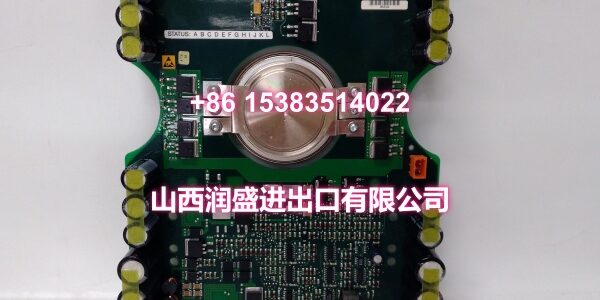
The ABB 5SHX08F4502 is a high-power integrated gate-commutated thyristor (IGCT) module from ABB’s 5SHX reverse-conducting IGCT series. It integrates a gate-commutated thyristor (GCT) switching element with an anti-parallel diode in a single press-pack device, connected to its gate driver via a low-inductance interface—eliminating the need for external snubber circuits and simplifying converter stack design in medium-voltage, high-current applications.
With a 4500V voltage class and 800A rated current, the 5SHX08F4502 is designed for megawatt-level power conversion in medium-voltage drive systems such as the ABB ACS1000, as well as excitation control systems, HVDC transmission, STATCOM reactive power compensation, and SVC static var systems. The reverse-conducting design (GCT + integrated free-wheeling diode) reduces component count in the converter bridge, lowers stray inductance, and improves overall system reliability.
The IGCT architecture delivers significantly lower conduction and switching losses compared to conventional GTO technology—dynamic losses are reduced by approximately 50%—while maintaining the high-voltage blocking capability required for 3.3kV and 4.16kV medium-voltage grid applications. The low-inductance gate connection enables hard-drive gate control, providing fast, deterministic turn-off without the tail-current losses associated with conventional GTOs. The device features a fail-short characteristic, meaning it defaults to a short-circuit failure mode rather than open-circuit, preventing catastrophic cascading failures in series-connected configurations.
For engineers maintaining or upgrading legacy high-power installations, this module is a direct drop-in replacement for failed or end-of-life IGCTs in ABB converter stacks. The Swedish/Swiss-origin press-pack construction ensures compatibility with existing clamping hardware and heat sink interfaces, avoiding costly mechanical rework.
QA & Testing SOP
Every unit goes through a structured verification process before shipment:
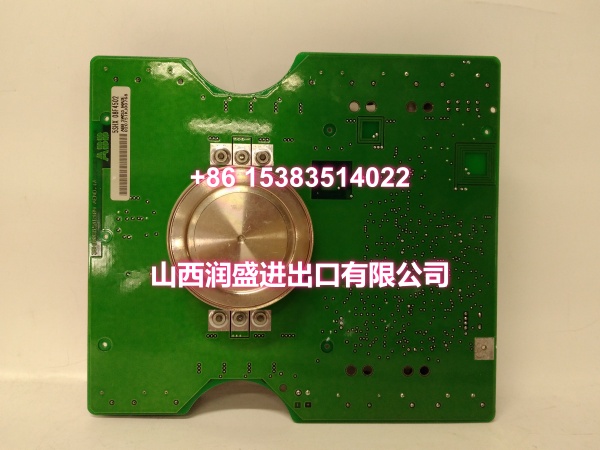
- Visual Inspection: Check the press-pack housing for cracks, corrosion on the anode/cathode/gate contact surfaces, and physical damage to the ceramic insulation. Verify that the gate contact pin is straight and undamaged.
- Contact Surface Verification: Inspect the anode and cathode contact surfaces for flatness, pitting, or oxidation. Surface imperfections cause uneven current distribution and localized hot spots under high-current operation, leading to premature thermal runaway.
- Gate-Cathode Resistance Test: Using a multimeter, verify the gate-cathode junction resistance is within the expected range per ABB specifications. An open or shorted gate junction indicates internal bond wire failure.
- Blocking Voltage Test (Leakage Current): Where test infrastructure allows, apply rated forward and reverse blocking voltage (4500V class) and measure leakage current. Excessive leakage indicates degraded junction integrity and reduced voltage margin.
- Trigger Verification: Apply a gate trigger pulse and verify the device turns on correctly. This confirms the gate-cathode junction and internal trigger structure are functional.
- Anti-Counterfeit & Packaging: Verify authenticity markings on the device body. Each unit is shipped in protective packaging with desiccant to prevent moisture absorption and contact surface oxidation during transit.
Installation Pitfalls & Guide
Replacing a press-pack IGCT is fundamentally different from swapping a PCB-mounted module—mechanical precision is as critical as electrical correctness.
❗ Clamping Force Specification: The press-pack IGCT requires a specific clamping force (typically ~40kN for this package size) to ensure low thermal and electrical contact resistance. Under-clamping causes high contact resistance, leading to localized heating and device failure. Over-clamping can crack the ceramic housing or damage the silicon die. Always use a calibrated torque wrench and follow ABB’s specified clamping force/torque sequence for the specific device size.
❗ Heat Sink Surface Preparation: The heat sink mating surface must be clean, flat, and free of oxidation. Apply a thin, even layer of thermal interface compound (silicone grease or phase-change material) before installation. Air gaps between the device and heat sink create thermal bottlenecks that cause junction temperature to exceed the 125°C limit under load.
❗ Gate Wiring Inductance: The low-inductance gate connection is critical to IGCT performance. Use the manufacturer-specified gate lead length and routing. Excessive gate lead inductance slows turn-off, increases switching losses, and can cause destructive voltage overshoot. Never substitute generic wire for the specified gate connection hardware.
❗ Snubber Circuit Verification: While IGCTs are designed for snubberless operation in many applications, some converter topologies still use RC snubbers across the device. Verify that snubber components (if present) are within specification before energizing the converter—a failed snubber capacitor or resistor can cause destructive dv/dt stress on the replacement IGCT.
4-Step Replacement Guide:
- Pre-install: Document the clamping force specification, gate wiring configuration, and snubber circuit values from the existing converter documentation. Verify the heat sink surface is clean and flat. Back up the drive/converter control parameters.
- Removal: Disconnect all power and verify zero voltage on the DC bus. Discharge all capacitors. Loosen the clamping mechanism in the specified sequence (typically a cross-pattern) to avoid uneven stress. Remove the old device and clean the heat sink surface thoroughly.
- Install: Apply thermal interface compound to the heat sink surface. Position the new IGCT with correct anode/cathode/gate orientation. Tighten the clamping mechanism in the specified sequence to the specified torque/force. Connect the gate wiring with the specified low-inductance hardware.
- Power-on Test: Apply control power first and verify gate drive signals are present and correct at the device terminals. Apply main power at reduced voltage if possible. Monitor device temperature and gate drive waveforms during initial operation. Verify normal switching behavior before returning to full load.
Technical FAQ
1. What’s the difference between IGCT and conventional GTO? IGCT is an evolution of GTO technology. The key difference is the low-inductance gate connection that enables “hard-drive” gate control—applying a high-amplitude, fast-rising gate current to turn off the device almost instantaneously. This eliminates the storage time and tail current associated with conventional GTOs, reducing switching losses by approximately 50%. IGCTs can also operate snubberless in many applications, simplifying converter design.
2. What does “reverse-conducting” mean for this device? The 5SHX08F4502 integrates both the GCT switching element and an anti-parallel free-wheeling diode in a single press-pack package. This eliminates the need for a separate diode in the converter bridge, reducing component count, stray inductance, and installation complexity. The integrated diode is optimized for fast recovery to match the IGCT’s switching speed.
3. Can I substitute a different IGCT or GTO for the 5SHX08F4502? IGCTs and GTOs are not directly interchangeable without verifying voltage rating, current rating, gate drive requirements, mechanical dimensions, and clamping force specifications. Even within the ABB 5SHX series, different suffixes indicate different voltage/current ratings. Always match the exact part number or consult ABB’s cross-reference documentation before substitution.
4. What converter systems use the 5SHX08F4502? The 5SHX08F4502 has been deployed in medium-voltage drive systems such as the ABB ACS1000, excitation control systems, HVDC transmission converters, STATCOM reactive power compensation systems, SVC static var systems, and large industrial inverters for mining, oil & gas, and metals processing applications.
5. What’s the difference between New Surplus and Refurbished for press-pack IGCTs? We supply this unit as New Original (New Surplus)—unused, original factory stock. This comes with a standard 12-month warranty. Refurbished press-pack IGCTs carry significant risks including degraded silicon junctions from previous overvoltage events, damaged contact surfaces from previous clamping cycles, and undocumented gate junction degradation. Press-pack devices are particularly sensitive to contact surface condition—refurbished units may have microscopic surface damage that causes thermal runaway under high-current operation. Refurbished units typically come with 30-90 day limited warranties that don’t cover latent thermal failures.