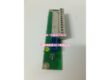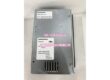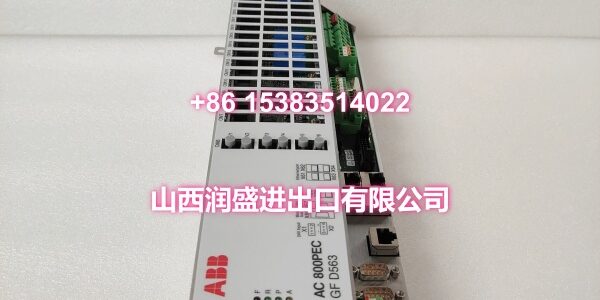
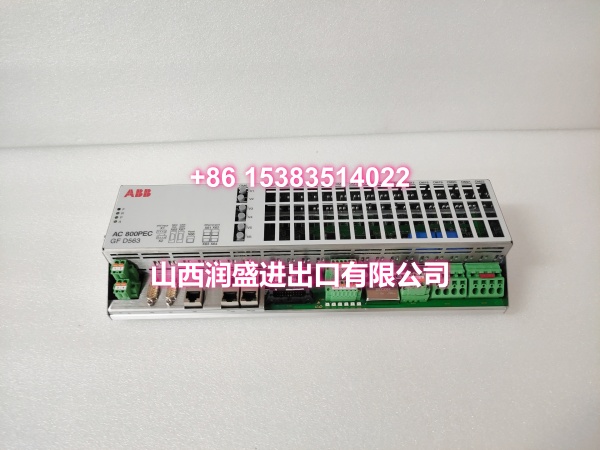
Product Core Brief
- Model: 3BHE046836R0101 / GFD563A101
- Brand: ABB
- Series: ABB AC 800PEC Series
- Integration Role: High-performance excitation CPU controller module designed for self-shunt static rectifier excitation systems, serving as the core processor for generator excitation current and voltage regulation — widely deployed in power generation, metallurgy, and heavy industrial drive applications.
- Product Type: Excitation CPU Controller Module
- Key Specs: High-performance microprocessor | Analog-to-digital and digital-to-analog signal conversion | Multi-protocol communication (Modbus, Profibus, Ethernet/IP) | 24V DC power input | PID control, state monitoring, and feedback control functions | Over-current, over-voltage, and over-temperature protection
- Note: Condition: New Original (New Surplus)
Key Technical Specifications
- Product Type: Excitation CPU Controller Module
- Brand: ABB
- Model Number: 3BHE046836R0101 / GFD563A101
- Series: AC 800PEC
- Primary Function: Excitation control for self-shunt static rectifier excitation systems, regulating generator excitation current and voltage to meet power system requirements
- Processor: High-performance microprocessor with precision signal processing circuits and reliable power management module
- Signal Processing: Analog-to-digital conversion (receives continuous analog signals from sensors — temperature, voltage, current — and converts to digital signals for PLC processing) and digital-to-analog conversion (converts digital control signals back to analog signals for field device control)
- Communication Protocols: Supports Modbus, Profibus, Ethernet/IP, and other industrial communication protocols for seamless data exchange and integration with other devices and systems
- Control Functions: PID control, state monitoring, feedback control, motion control, logic control, and data acquisition
- Power Input: DC 24V (allowable fluctuation range: ±10%)
- Power Consumption: Maximum 10W, low-power design reduces system energy consumption
- Insulation Resistance: ≥100MΩ (tested at 500VDC), ensuring electrical safety and preventing leakage interference
- Withstand Voltage: Between input and output: AC 1500V, no breakdown for 1 minute; Between power supply and ground: AC 2000V, no breakdown for 1 minute
- Operating Temperature: 0 to +55°C (typical for ABB board-level modules; confirm against site conditions)
- Dimensions: Approximately 100 mm × 80 mm × 50 mm
- Weight: Approximately 0.22 kg (net) / 0.24 kg (including packaging)
- Mounting: DIN rail or panel mounting; plug-in board for ABB control/drive or excitation rack with rack/edge connectors — no major rewiring required for field swap
- Protection Features: Over-current, over-voltage, and over-temperature protection; hardware and software watchdog mechanisms; robust, power-loss-insusceptible file system for reliable data retention
- Enclosure Material: Compact and robust housing with excellent impact and vibration resistance
- Programming: AC 800PEC controllers support ABB Control Builder M (IEC 61131-3 compliant), MATLAB, Simulink, and Simulink Coder
- Typical Applications: Power generation (generator excitation control, power plant auxiliaries), metallurgy (rolling mill drive control), mining (hoist and heavy-duty crane applications), pulp & paper (process line drive control), marine propulsion systems, industrial motor drive systems, and retrofit projects requiring form-fit-function compatibility
Product Introduction
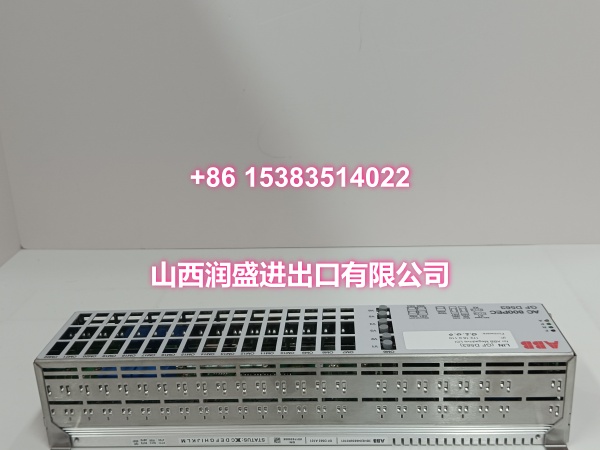
The ABB 3BHE046836R0101 (GFD563A101) is a high-performance excitation CPU controller module from the AC 800PEC series, engineered specifically for self-shunt static rectifier excitation systems. As a core component of ABB’s AC 800PEC controller platform, it serves as the central processing unit for generator excitation control, receiving voltage and reactive power signals from the generator, calculating the target excitation current according to the configured control strategy, and adjusting the thyristor rectifier output to precisely regulate generator voltage and reactive power.
This module bridges the gap between the analog physical world and digital control systems. Its analog-to-digital conversion capability receives continuous signals from field sensors (temperature, voltage, current) and converts them into digital data for processing, while its digital-to-analog conversion outputs precise control signals to field devices. This dual-direction signal processing makes it equally suitable for general industrial automation applications beyond excitation control, including process control, mechanical automation, and motor drive systems.
The GFD563A101 integrates a high-performance microprocessor, precision signal processing circuits, and a reliable power management module. Its compact design (100 × 80 × 50 mm, approximately 0.22 kg) supports both DIN rail and panel mounting, allowing flexible installation in control cabinets while saving valuable panel space. The robust housing provides excellent impact and vibration resistance, ensuring stable operation in harsh industrial environments with high temperature, humidity, and electromagnetic interference.
Communication flexibility is a key strength — the module supports Modbus, Profibus, Ethernet/IP, and other mainstream industrial protocols, enabling seamless integration with existing automation infrastructure and third-party devices. Its built-in protection functions (over-current, over-voltage, over-temperature) and watchdog mechanisms ensure operational safety and minimize unplanned downtime in critical applications.
Integrators and power system engineers specify this module for its proven reliability in generator excitation applications, precise signal processing accuracy, and straightforward configuration — reducing commissioning time and minimizing integration complexity in both new installations and retrofit projects.
Wiring & Backplane Integration Notes
- Power Supply Verification: This module operates on DC 24V with an allowable fluctuation range of ±10%. Confirm your cabinet’s power distribution provides a stable and regulated 24V DC supply within this tolerance before energizing. Voltage fluctuations outside the specified range can cause controller malfunction or damage.
- Backplane Power Architecture: The module is typically powered from the cabinet’s control supply via the backplane, which reduces wiring complexity and minimizes electrical noise. Verify the backplane power rail is properly configured before inserting the module.
- Signal Type Configuration: The module handles both analog-to-digital and digital-to-analog conversion. Before commissioning, verify that each channel is configured to match the signal type expected by the connected device. A mismatched signal type (e.g., sending a 0–10V signal to a 4–20mA input) will result in incorrect operation or equipment damage.
- Communication Protocol Setup: When integrating with external controllers or SCADA systems, verify the communication protocol settings (protocol type, baud rate, node address, IP configuration) in your engineering tool before commissioning. A mismatched protocol configuration will prevent data exchange between the module and the connected device.
- Cable Selection: Use shielded cable for all analog signal connections to minimize electromagnetic interference. Ground the shield at one end only to prevent ground loops. For digital communication connections (Ethernet, Profibus), use appropriately rated communication cable — Cat5e or better for Ethernet, shielded Profibus cable with proper termination for Profibus networks.
- ESD-Safe Handling: As a plug-in board-level module, the GFD563A101 requires ESD-safe handling procedures. Always use an anti-static wrist strap when handling the module outside of its protective packaging. Avoid touching connector pins or circuit traces directly.
- Mechanical Mounting: The module measures approximately 100 × 80 × 50 mm and weighs approximately 0.22 kg. It can be installed via DIN rail or panel mounting, or as a plug-in board in an ABB excitation rack using edge connectors. Ensure all mating connectors are fully seated before applying power. The compact design allows dense panel layouts, but maintain sufficient spacing for heat dissipation and service access.
- Hot-Swap Consideration: The module is commonly secured via rack/edge connectors and designed for quick field swaps without major rewiring. However, always follow your plant’s lockout/tagout procedure and coordinate with operations before replacing a live controller. Verify the replacement module’s firmware revision matches the system requirements before insertion.
- Compatibility: This module is designed for ABB AC 800PEC series systems. Always cross-reference the full part number (3BHE046836R0101 / GFD563A101) against your system’s spare parts list, as revision-specific variants (e.g., GFD563A102 / 3BHE046836R0102) may have different firmware or hardware compatibility.
Integrator’s FAQ
What applications is this excitation controller module best suited for? The GFD563A101 is primarily designed for self-shunt static rectifier excitation systems in power generation applications, where it regulates generator excitation current and voltage to maintain power system stability. It is also widely used in metallurgy (rolling mill drive control), mining (hoist and heavy-duty crane applications), pulp & paper (process line drive control), and general industrial automation where precise analog signal processing and PID control are required.
Can this module be used for non-excitation applications? Yes. Beyond its primary excitation control function, the module serves as a versatile analog/digital I/O processor and general-purpose controller. Its analog-to-digital and digital-to-analog conversion capabilities, combined with PID control, state monitoring, and multi-protocol communication support, make it suitable for process control, mechanical automation, motor drive systems, and data acquisition applications.
What programming environments are supported? The AC 800PEC platform supports ABB Control Builder M (IEC 61131-3 compliant), MATLAB, Simulink, and Simulink Coder. This flexibility allows control engineers to develop and deploy control strategies using familiar IEC languages or model-based design workflows, reducing development time and engineering costs.
How does the module protect itself and the connected equipment? The module includes comprehensive protection functions: over-current, over-voltage, and over-temperature protection, plus hardware and software watchdog mechanisms. These features continuously monitor system status and take timely protective measures in case of anomalies, ensuring operational safety and minimizing unplanned downtime.
What is the signal processing accuracy of this module? The module integrates precision signal processing circuits that provide accurate analog-to-digital and digital-to-analog conversion. While specific resolution figures are not published in available documentation, the module is designed for predictable, low-jitter control in drive and excitation applications — indicating sufficient precision for industrial control tasks.
How do I troubleshoot communication issues with this module? First, verify the communication protocol settings (protocol type, baud rate, node address, IP configuration) match between the module and the connected device. Second, check all physical connections — ensure cables are properly seated and shields are grounded at one end only. Third, verify the module is receiving proper 24V DC power within the ±10% tolerance range. If issues persist, consult the ABB AC 800PEC system troubleshooting guide for module-specific fault codes.
What warranty do you offer on New Surplus parts? We provide a full 12-month warranty on all New Original / New Surplus units. This is fundamentally different from refurbished excitation controller modules, which often carry 30–90 day warranties and come with unknown thermal cycling history, aged components, and potential firmware issues. For critical generator excitation and process control applications, the cost of an unexpected controller failure — measured in unplanned downtime and potential equipment damage — far exceeds any upfront savings from a used part.
Why is your pricing lower than OEM direct but higher than used parts? Our pricing reflects New Original / New Surplus inventory sourced from factory overstock and authorized distributors. You pay less than OEM list because these are surplus units, not current production. You pay more than used/refurbished because the part has zero operating hours, no thermal aging on internal components, and no degradation of the processor or signal processing circuitry. For mission-critical excitation control applications, the reliability difference between new surplus and refurbished is not marginal — it’s the difference between planned maintenance and an emergency generator trip.