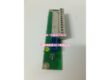
Product Core Brief
- Model: IS200AEPAH1BJD
- Brand: General Electric (GE)
- Series: Mark VIe (Speedtronic)
- Core Function: AEPA (Analog I/O Processor) module — provides 16 analog input channels and 8 isolated analog output channels for gas/steam turbine control and industrial process applications, with ±0.1% signal accuracy and hot-swap capability.
- Product Type: Analog I/O Processor Module (I/O Pack)
- Key Specs: 16 analog inputs (4-20mA/0-10V) | 8 isolated analog outputs | ±0.1% accuracy | Hot-swap ready | Dual redundant 24VDC power | Mark VIe-native backplane communication | -25°C to +70°C operating range
- Condition: New Original / New Surplus
Product Introduction
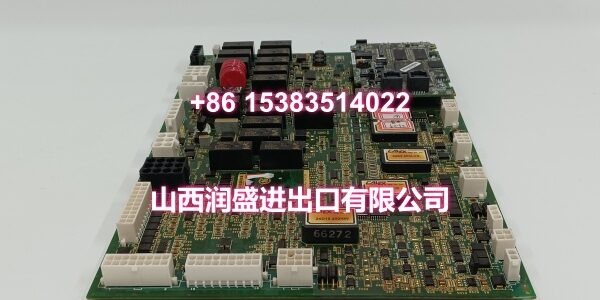
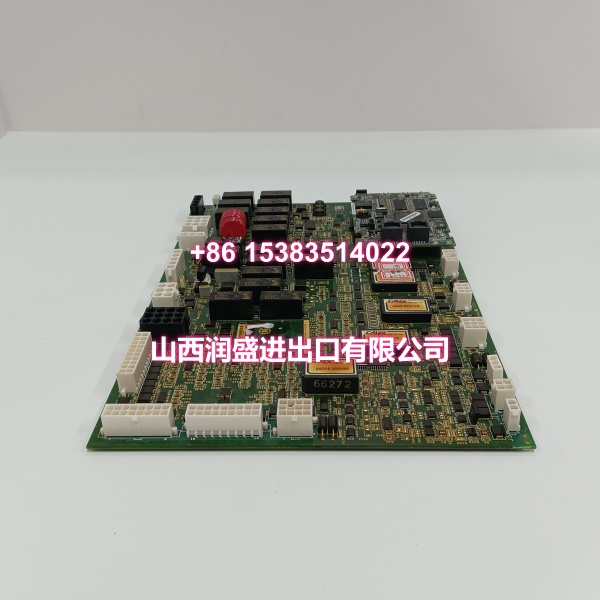
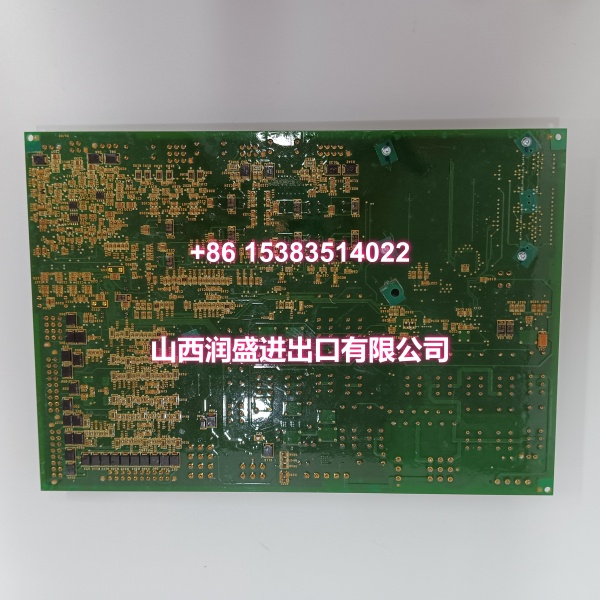
The GE IS200AEPAH1BJD is an AEPA (Analog I/O Processor) module in GE’s Mark VIe Speedtronic control system, designed for high-density analog signal acquisition and output in gas turbine, steam turbine, and industrial process control applications. It serves as the critical interface between field analog devices (transmitters, sensors, actuators) and the Mark VIe controller, converting analog signals into digital data for real-time monitoring, control logic, and safety protection functions.
The module provides 16 analog input channels configurable for either 4-20mA current loop or 0-10V voltage signals, and 8 isolated analog output channels for driving field devices such as control valve positioners, actuators, and analog indicators. With ±0.1% signal accuracy that holds up in demanding power plant environments, the AEPA module delivers the precision needed for critical turbine control functions — from monitoring exhaust temperatures and compressor discharge pressures to driving fuel control valves and speed reference signals.
The IS200AEPAH1BJD integrates natively into GE’s Mark VIe control system via the proprietary backplane, communicating directly with the TCI (Turbine Control Interface) card without the protocol translation headaches associated with third-party replacements. This native integration ensures deterministic, low-latency communication between the analog I/O and the control processor — essential for fast-acting protection functions like overspeed trip and flame-out detection.
The module features hot-swap capability, allowing replacement without scheduling a full turbine shutdown. This is particularly valuable in combined-cycle power plants where an unplanned outage can cost $200,000+ per hour — technicians can simply pop the module out while the system runs (after verifying signal redundancy first) and insert the replacement without disrupting turbine operation.
Dual redundant 24VDC power inputs keep the module processing signals even if one power rail fails, providing critical protection during grid instability or brownout conditions. The redundant power paths ensure that analog I/O continues to function during the moments when it matters most — during startup, shutdown, and transient operating conditions when power quality is most likely to fluctuate.
The AEPA module is commonly used for:
- Monitoring steam turbine exhaust temperature (4-20mA RTD/thermocouple transmitters)
- Reading gas compressor discharge pressure for surge protection
- Monitoring lube oil pressure and temperature for bearing protection
- Driving fuel control valve positioners with 4-20mA output signals
- Reading flame detector analog signals for combustion monitoring
- Monitoring vibration and displacement sensor signals for machinery protection
- Outputting analog speed reference and load control signals
- Reading flow transmitter signals for fuel flow control and emissions compliance
The module is installed in a 3U Mark VIe chassis slot, compatible with IS200/210 series racks. It operates in ambient temperatures from -25°C to +70°C and is tested at 95% RH non-condensing, making it suitable for installation in I/O cabinets in power plants, refineries, and other industrial environments.
Key Technical Specifications
| Parameter | Value |
|---|---|
| Manufacturer | General Electric (GE) |
| Product Type | AEPA Analog I/O Processor Module |
| Series | Mark VIe (Speedtronic) |
| Analog Input Channels | 16 (configurable 4-20mA / 0-10V) |
| Analog Output Channels | 8 (isolated) |
| Signal Accuracy | ±0.1% of full scale |
| Power Requirements | 24VDC ±10% (dual redundant inputs) |
| Communication | Mark VIe-native backplane (TCI card interface) |
| Additional Interfaces | 2× RJ45 Gigabit Ethernet, 1× RS485 serial port |
| Hot-Swap | Supported |
| Operating Temperature | -25°C to +70°C (tested at 95% RH non-condensing) |
| Installation | 3U Mark VIe chassis slot (IS200/210 series compatible) |
| HS Code | 8534.00.00 (Printed circuit assemblies) |
| Origin | USA |
Quality Control Process
Every IS200AEPAH1BJD goes through a full functional bench test before it ships. We start with a visual PCB inspection — checking for cold solder joints, burnt traces, swollen capacitors, and verifying the integrity of all connectors, the backplane interface, and both RJ45 Ethernet jacks. We also inspect the conformal coating for any cracks or peeling that could compromise environmental protection.
Then we power it up on a regulated 24VDC supply and verify the power draw is within spec. We test the dual redundant power inputs by powering the module from each input independently and confirming it operates correctly on either rail. We verify the redundant power switchover by disconnecting one input while the module is running and confirming it continues to operate without interruption.
We test all 16 analog input channels by applying known voltage signals (0V, 2.5V, 5V, 10V) and current signals (4mA, 12mA, 20mA), confirming the module correctly reads each input value via the backplane interface. We verify the input accuracy is within ±0.1% of full scale as specified. We test all 8 isolated analog output channels by commanding them to output specific current values (4mA, 12mA, 20mA) and measuring the actual output with a precision multimeter, confirming accuracy within spec.
We test both Ethernet ports by connecting to a network switch and confirming link/activity LEDs illuminate on each port. We test the RS485 serial port by configuring each supported baud rate (9600/19200/38400/57600/115000bps) and confirming data transmission. We verify the backplane communication by installing the module in a Mark VIe chassis and confirming it registers with the TCI card correctly.
We test the hot-swap function by removing and reinserting the module while the chassis is powered, confirming the system detects the removal and re-insertion without faulting. We run a stability test by continuously reading all 16 inputs and driving all 8 outputs for several hours, monitoring for drift or communication failures. We also verify the isolation between output channels by measuring resistance between adjacent outputs and between outputs and module ground. Finally, we confirm the module dimensions and connector alignment match the 3U Mark VIe chassis specifications. Each unit ships in anti-static foam with a moisture barrier bag.
Replacement Pitfall Guide
❗ Verify the input/output channel configuration matches your application. The AEPA module’s 16 input channels are configurable for either 4-20mA current loop or 0-10V voltage signals. If the replacement module’s channel configuration doesn’t match the original (e.g., a channel configured for 4-20mA is reading a 0-10V signal), the controller will read incorrect values. After installing the replacement, verify the I/O configuration in ToolboxST matches your application’s I/O map.
❗ Confirm the output isolation is intact. The 8 analog output channels are isolated to prevent ground loops and noise coupling between channels. If the isolation is compromised (due to damage or improper handling), output signals can interfere with each other or with the module’s internal circuitry, causing erratic control behavior. Verify the isolation resistance between output channels meets specification before putting the module into service.
❗ Don’t skip the hot-swap verification. If you’re replacing the module in a running system, verify signal redundancy first — confirm that the signals being read/output by this module are also being handled by redundant channels or modules. Removing a non-redundant module during operation could cause a turbine trip or process upset. Always coordinate with the control room before performing a hot-swap.
❗ Verify the dual power rail connections. The module has two redundant 24VDC power inputs. Ensure both are connected to independent power sources (or at least independent fuses/breakers) to provide true redundancy. If both inputs are fed from the same power source, you lose the redundancy benefit — a single power failure will take down the module.
❗ Check the backplane seating. The module communicates with the TCI card via the proprietary Mark VIe backplane. If the module is not fully seated in the chassis slot, communication may be intermittent or lost entirely. After installation, verify the module is fully seated and the backplane connector is making solid contact. Confirm the module registers on the IONet with its correct hardware ID.
❗ Watch for Ethernet cable routing issues. The dual Ethernet ports provide redundant communication. Route the primary and backup Ethernet cables through separate physical paths (separate conduits or cable trays) to provide true redundancy. If both cables run through the same cable tray and that tray is damaged, you lose both communication paths simultaneously.
Keep these in mind and you’ll cut 90% of rework time.
Compatibility Matrix & Benchmarks
| Original Model | Replacement / Successor Model | Compatibility Level | Migration Notes |
|---|---|---|---|
| IS200AEPAH1BJE | Direct | Later revision; verify I/O channel configuration match | |
| IS200AEPAH1BJF | Direct | Later revision; drop-in compatible | |
| IS215AEPAH1BJD | Direct | IS215 series variant; verify chassis compatibility | |
| IS200AEPAH1ACB | Functional Equivalent | Same AEPA family; verify firmware and I/O configuration match | |
| IS200AEPAH1BKE | Functional Equivalent | AEPAH1BKE is cost-optimized; AEPAH1BJD is general-purpose |
- Input Channels: 16 analog inputs (configurable 4-20mA / 0-10V)
- Output Channels: 8 isolated analog outputs
- Signal Accuracy: ±0.1% of full scale
- Power: Dual redundant 24VDC inputs
- Hot-Swap: Supported
- Communication: Mark VIe-native backplane + dual Ethernet + RS485