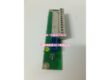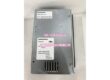
Product Core Brief
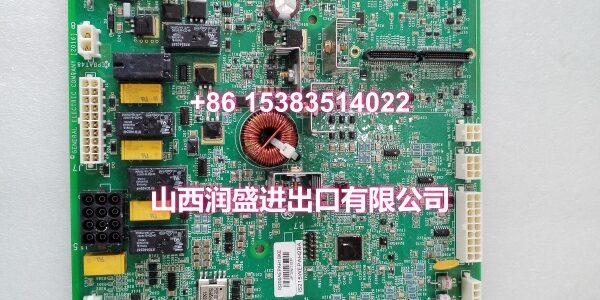
- Model: IS215WEPAH2BB
- Brand: GE (General Electric)
- Series: Speedtronic Mark VIe — Analog I/O Pack (WEPA)
- Core Function: Multi-function analog I/O module for processing pressure, temperature, vibration, and position signals in GE Mark VIe turbine control systems, supporting simplex or triple modular redundancy (TMR) configurations.
- Product Type: Analog I/O Module
- Key Specs: Multi-signal input support (4-20mA, ±10VDC, LVDT, thermocouple, vibration) | 0.1% FS accuracy | TMR-capable | 24VDC power | ≤20ms response time | Dual IONet Ethernet | Hot-swappable | Class 1 Div 2 / ATEX certified
- Condition: New Original / New Surplus
Product Introduction
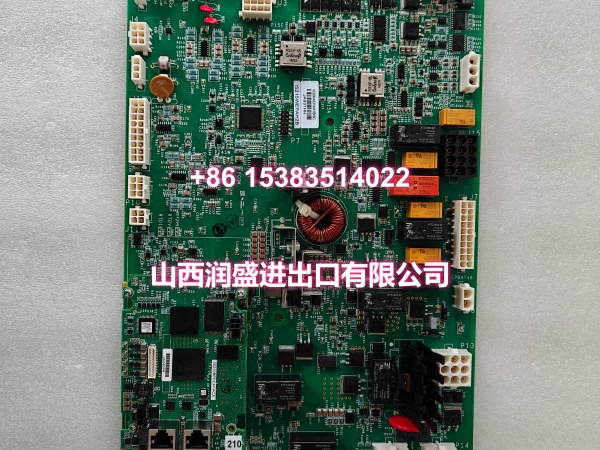
The GE IS215WEPAH2BB is a multi-function analog I/O module from GE’s Mark VIe Speedtronic turbine control series. It serves as a critical interface between the Mark VIe controller’s IONet Ethernet network and field analog devices, capable of acquiring and processing a wide variety of signal types including pressure, temperature, vibration, and position feedback in gas turbine, steam turbine, and industrial process control applications.
This module supports multiple input signal types including 4-20mA current loop, ±10VDC voltage, LVDT (Linear Variable Differential Transformer) position feedback, thermocouple temperature, and vibration signals. It features high-precision signal conditioning with 0.1% FS (full scale) measurement accuracy and a built-in RC filter network with common mode rejection ratio ≥80dB, ensuring clean and accurate signal acquisition even in electrically noisy turbine environments. The module’s response time is ≤20ms, suitable for real-time turbine control applications.
The IS215WEPAH2BB is designed for both simplex and Triple Modular Redundancy (TMR) configurations, allowing it to be deployed in safety-critical applications where system availability is paramount. In TMR mode, three identical modules operate in parallel, with the controller voting on the three readings to mask any single module failure. The module communicates with the Mark VIe controller over dual redundant 100M full-duplex IONet Ethernet and is powered by a 24VDC input (±10% tolerance, ≤15W power consumption). It features an industrial-grade operating temperature range of -40°C to 70°C with no performance derating across the full range, and is certified for Class 1 Div 2 and ATEX hazardous area deployment.
Key Technical Specifications
| Parameter | Value |
|---|---|
| Manufacturer | GE (General Electric) Energy |
| Product Family | Speedtronic Mark VIe |
| Module Type | Analog I/O Pack (WEPA) |
| Input Signal Types | 4-20mA, ±10VDC, LVDT, thermocouple, vibration |
| Measurement Accuracy | 0.1% FS (full scale) |
| Response Time | ≤20ms |
| Filter | Built-in RC filter network, CMRR ≥80dB |
| Protection | Overvoltage protection, EMI suppression |
| Power Input | 24VDC (±10% tolerance) |
| Power Consumption | ≤15W |
| Communication | Dual 100M full-duplex Ethernet (IONet redundancy) |
| Redundancy | Simplex or Triple Modular Redundancy (TMR) capable |
| Operating Temperature | -40°C to +70°C (no derating) |
| Storage Temperature | -40°C to +85°C |
| Humidity | 5% to 95% RH (non-condensing) |
| Certifications | Class 1 Div 2, ATEX, CE, UL, SIL 2/SIL 3 |
| Mounting | Rack slot mount (I/O core R1/R2/R3 positions), hot-swappable |
Quality Control Process
Every IS215WEPAH2BB module goes through a four-stage bench check before shipping. First, a visual inspection under magnification checks for cold solder joints, cracked traces, and connector pin damage — common failure points on analog modules exposed to turbine-deck vibration and thermal cycling. Second, we power up the module on a verified Mark VIe test rack and confirm the 24VDC input circuit reads within spec using a Fluke 87V. Third, we inject calibrated signals across all supported input types (4-20mA, ±10VDC, LVDT, thermocouple, vibration) and verify acquisition accuracy against a precision reference meter, confirming 0.1% FS accuracy and proper RC filter operation. Fourth, we confirm both IONet Ethernet ports establish proper communication and verify TMR voting functionality by testing with three modules in parallel. Finally, the module is sealed in anti-static foam with desiccant — no exceptions.
Replacement Pitfall Guide
❗ Signal type configuration mismatch. The WEPA module supports multiple input signal types (4-20mA, ±10VDC, LVDT, thermocouple, vibration). If the ToolboxST configuration doesn’t match the actual field signal type connected to a channel, the controller will read incorrect values or no signal at all. Always export the ToolboxST configuration from the original module before swapping and verify each channel’s signal type setting.
❗ TMR configuration consistency. In TMR applications, all three modules in the redundant group must have matching firmware versions and configuration parameters. Replacing a single module in a TMR group with a module that has different firmware or configuration can cause voting errors and potentially trigger a false trip. Always verify firmware version consistency and re-download the correct configuration after replacement.
❗ LVDT excitation voltage. If the module is configured for LVDT input, verify the excitation voltage setting matches the LVDT sensor’s specification. Incorrect excitation voltage will cause inaccurate position readings, which is critical for servo valve and fuel actuator position feedback applications.
❗ Thermocouple type selection. If the module is configured for thermocouple input, verify the thermocouple type (J, K, T, E, etc.) in ToolboxST matches the actual sensor type. A mismatch will cause significant temperature reading errors. Also verify cold junction compensation is functioning correctly.
❗ IONet redundancy verification. The module supports dual redundant IONet Ethernet. If only one Ethernet cable is connected, you lose redundancy. In a TMR configuration, verify all three modules have both IONet connections active. A single network fault on multiple modules could cause loss of voting capability.
❗ Hot-swap in TMR mode. While the module supports hot-swapping, in TMR applications always verify the other two modules in the redundant group are healthy before removing the failed module. Removing a module when another is already degraded reduces the system to simplex operation with no redundancy, making it vulnerable to a single-point failure.
Keep these in mind and you’ll cut 90% of rework time.
Compatibility Matrix & Benchmarks
| Original Model | Replacement / Successor Model | Compatibility Level | Migration Notes |
|---|---|---|---|
| IS215WEPAH2BA | Direct Upgrade | BB revision may include updated firmware and improved environmental hardening; verify ToolboxST configuration | |
| IS215WEPAH2BB (same part, new revision) | Direct | Verify firmware version and channel configuration in ToolboxST | |
| IS200AEPAH1BKE | Needs Adaptation | AEPAH1BKE is Mark VI series; different backplane and I/O mapping; requires system-level migration | |
| IS220PAICH2A | Not Compatible | PAICH2A is a different analog I/O pack with different signal types and pinout |
Benchmarks:
- Multi-signal input support (4-20mA, ±10VDC, LVDT, thermocouple, vibration)
- 0.1% FS measurement accuracy with ≤20ms response time
- TMR-capable with built-in RC filter and EMI suppression
- Dual redundant IONet Ethernet with hot-swappable 24VDC power
- Class 1 Div 2 / ATEX and SIL 2/SIL 3 certified for safety-critical deployment
Need me to pull up the ToolboxST channel configuration guide for the WEPA module? The signal type setup and TMR voting configuration are critical for a successful swap.