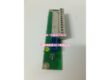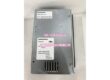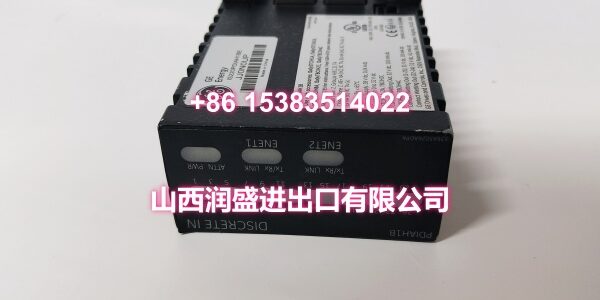
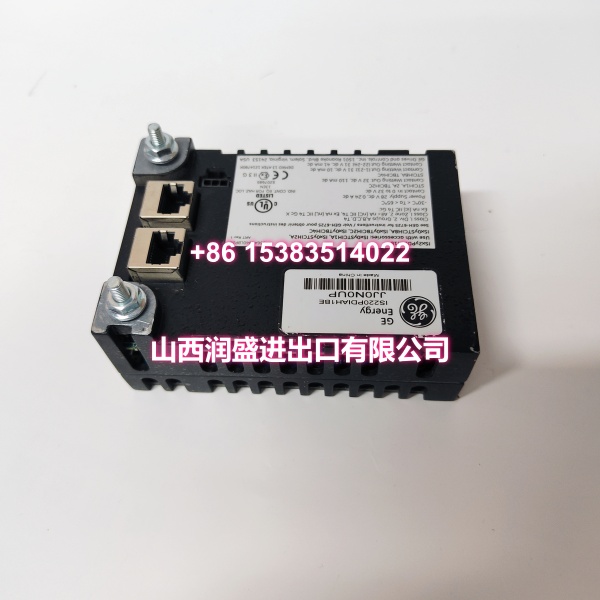
Product Core Brief
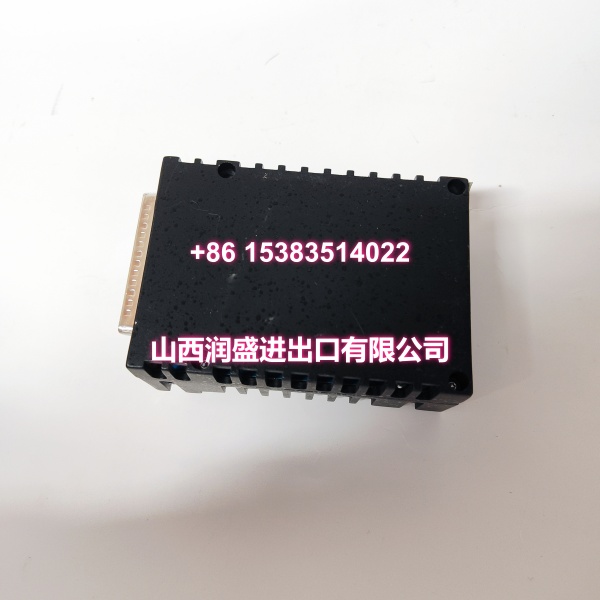
- Model: IS220PDIAH1BE (Part Number: 336A5026ADP4)
- Brand: GE (General Electric)
- Series: Speedtronic Mark VIe — Discrete Input I/O Pack (PDIA)
- Core Function: 24-channel discrete input module for acquiring field switching signals (limit switches, relay contacts, pressure switches, etc.) in GE Mark VIe TMR/DCS turbine control systems.
- Product Type: Discrete (Digital) Input I/O Module
- Key Specs: 24 discrete input channels | 24VDC nominal (max 28.6VDC) | 32VDC max contact input rating | Dual IONet Ethernet | Compatible with TBCI/STCI terminal blocks | Hot-swappable | Class 1 Div 2 / ATEX certified
- Condition: New Original / New Surplus
Product Introduction
The GE IS220PDIAH1BE (Part Number 336A5026ADP4) is a 24-channel discrete input module from GE’s Mark VIe Speedtronic turbine control series. It serves as the critical interface between the Mark VIe controller’s dual IONet Ethernet network and field discrete input devices such as limit switches, contactor auxiliary contacts, pressure switches, and temperature switches. A failure in this module can directly prevent the controller from detecting critical turbine protection signals, potentially leading to unsafe operating conditions.
This module provides 24 independently isolated discrete input channels, each rated for 24VDC nominal operation (maximum 28.6VDC) with a contact input maximum rating of 32VDC. It supports both sinking and sourcing signal configurations, and is compatible with multiple GE terminal block types including IS200STCIH1A/2A/8A, IS200TBCIH2C/H4C, IS400STCIH1A/2A/8A, and IS400TBCIH2C. A single channel failure does not affect the operation of other channels, ensuring fault isolation.
The module communicates with the Mark VIe controller over dual redundant 100M full-duplex IONet Ethernet (RJ45) and is powered by a 24VDC input with hot-swappable design, allowing maintenance without interrupting system operation. It features channel-level LED status indication, built-in self-test diagnostics, and remote monitoring via ControlST software for rapid fault location. The module is certified for Class 1 Div 2 and ATEX hazardous area deployment, with an operating temperature range of -30°C to 65°C.
Key Technical Specifications
| Parameter | Value |
|---|---|
| Manufacturer | GE (General Electric) Energy |
| Product Family | Speedtronic Mark VIe |
| Module Type | Discrete Input I/O Pack (PDIA) |
| Part Number | 336A5026ADP4 |
| Input Channels | 24 discrete inputs |
| Input Voltage | 24VDC nominal, max 28.6VDC |
| Contact Input Max Rating | 32VDC |
| Channel Isolation | Independent per channel (2500Vrms inter-channel isolation) |
| Communication | Dual 100M full-duplex Ethernet (IONet redundancy) |
| Power Supply | 24VDC, overvoltage/reverse connection protection |
| Diagnostics | Channel-level LED status, built-in self-test, ControlST remote diagnostics |
| Operating Temperature | -30°C to +65°C |
| Storage Temperature | -40°C to +85°C |
| Certifications | Class 1 Div 2, ATEX, CE, UL |
| Compatible Terminal Blocks | IS200STCIH1A/2A/8A, IS200TBCIH2C/H4C, IS400STCIH1A/2A/8A, IS400TBCIH2C |
| Mounting | DIN rail mount, hot-swappable |
Quality Control Process
Every IS220PDIAH1BE module goes through a four-stage bench check before shipping. First, a visual inspection under magnification checks for cold solder joints, cracked traces, and connector pin damage — common failure points on input modules exposed to turbine-deck vibration and thermal cycling. Second, we power up the module on a verified Mark VIe test rack and confirm the 24VDC input circuit reads within spec using a Fluke 87V. Third, we individually stimulate each of the 24 discrete input channels and verify proper signal acquisition at both sinking and sourcing configurations, confirming channel-level isolation. Fourth, we confirm both IONet Ethernet ports establish proper communication and that all channel-level LEDs indicate correct status. Finally, the module is sealed in anti-static foam with desiccant — no exceptions.
Replacement Pitfall Guide
❗ Sinking vs. sourcing configuration mismatch. The PDIA module supports both sinking and sourcing input configurations. If the configuration in ControlST doesn’t match the field wiring (e.g., the module is configured for sinking but the field devices are wired for sourcing), the controller will not detect any input signals. Always verify the input mode setting in ControlST against the original configuration before swapping.
❗ Terminal block type compatibility. The PDIA module must be paired with a compatible terminal block. While it supports multiple terminal block types (IS200STCIH1A/2A/8A, IS200TBCIH2C/H4C, IS400STCIH1A/2A/8A, IS400TBCIH2C), each has different wiring pinouts and isolation characteristics. Using an incompatible terminal block will prevent proper signal acquisition. Verify the terminal block model matches the ControlST configuration.
❗ Input voltage level mismatch. The PDIA module is rated for 24VDC nominal input (max 28.6VDC, contact max 32VDC). If field devices operate at a different voltage level (e.g., 48VDC or 120VAC), the module will not correctly read the input signals and may be damaged. Always verify field device voltage levels match the module’s input rating before connecting.
❗ IONet redundancy configuration. The module supports dual redundant IONet Ethernet. If only one Ethernet cable is connected, you lose redundancy. In a trip-critical input application, a single network fault could cause loss of all 24 input channel signals to the controller. Always verify both ENET1 and ENET2 LEDs are active after installation.
❗ Channel-level diagnostics not verified. The PDIA module provides per-channel LED status indication and remote diagnostics via ControlST. After a module swap, verify each channel’s status in ControlST matches the actual field device state. A channel that appears inactive in ControlST but is actually active in the field could mask a critical alarm condition.
❗ Hot-swap procedure. While the module supports hot-swapping, always verify the redundant power supply and IONet communication are functioning correctly before removing the module. Removing a module without proper redundancy can cause a momentary loss of all 24 input channels, potentially triggering a turbine trip if critical protection signals are lost.
Keep these in mind and you’ll cut 90% of rework time.
Compatibility Matrix & Benchmarks
| Original Model | Replacement / Successor Model | Compatibility Level | Migration Notes |
|---|---|---|---|
| IS220PDIAH1A | Direct Upgrade | E-revision may include updated firmware and improved environmental hardening; verify ControlST configuration parameters | |
| IS220PDIAH1BE (same part, new revision) | Direct | Verify firmware version and channel configuration in ControlST | |
| Mark VIe equivalent PDIA (OEM surplus) | Direct | Must match 24-channel discrete input and terminal block compatibility | |
| IS220PDIOH1B | Partial | PDIOH1B is a combined input/output module (24 DI + 12 DO); different function and pinout |
Benchmarks:
- 24 independently isolated discrete input channels rated 24VDC nominal (max 28.6VDC)
- Compatible with multiple GE terminal block types (IS200/IS400 STCIH and TBCIH series)
- Dual redundant 100M IONet Ethernet with hot-swappable 24VDC power
- Class 1 Div 2 / ATEX certified for hazardous area deployment
Need me to pull up the STCI/TBCI terminal block wiring diagram and ControlST channel configuration guide for the PDIA module? The sinking/sourcing setup and terminal block compatibility are critical for a successful swap.