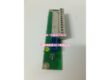
Product Core Brief
- Model: IS410STAIS2A (board) / IS400STAIS2AED (assembly)
- Brand: General Electric (GE)
- Series: Mark V (Speedtronic)
- Core Function: RST analog I/O board that scales and conditions field signals for gas turbine control, with embedded Ethernet data link for distributed I/O applications.
- Product Type: STAI Analog I/O Pack
- Key Specs: RICC processor | Embedded Ethernet port | LVDT, servo valve, thermocouple, 4-20mA, vibration, pulse, relay driver I/O | 3PL data bus to STCA board
- Condition: New Original / New Surplus
Product Introduction
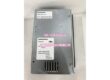
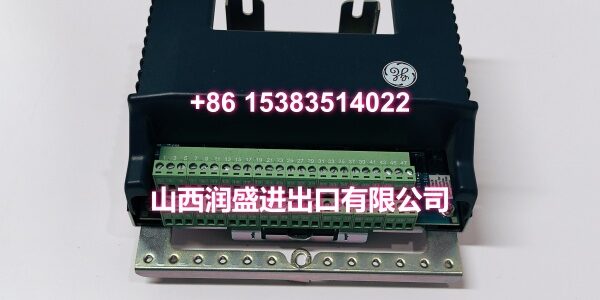
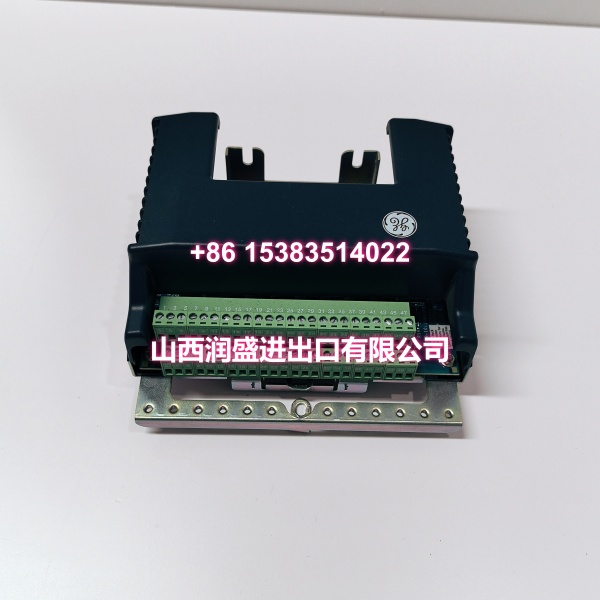
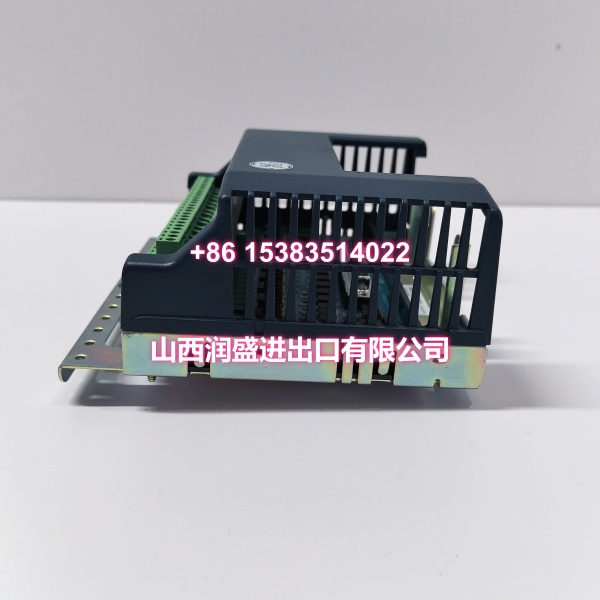
The GE IS410STAIS2A (board-level designation) / IS400STAIS2AED (assembly-level designation) is a STAI analog I/O pack in GE’s Mark V Speedtronic turbine control system. It pairs a universal processor board with a device-specific data acquisition board to digitize, scale, and condition analog signals from field instruments — and it introduces embedded Ethernet data link capability for high-performance distributed I/O applications.
Powered by a RICC processor, this pack handles LVDT inputs, servo valve outputs, thermocouple signals, 4-20mA loops (including compressor stall detection and fuel flow pressure signals), vibration inputs, relay driver outputs, pulse inputs, voltage inputs, and generator/line signals. The 3PL connector routes conditioned signals to the STCA board, while the JE connector handles generator and line signal exchange with the TCQC board.
The embedded Ethernet interface delivers strong I/O throughput and scan times suitable for closed-loop control, and the PLC Explorer utility makes configuration and system migration fast. Its compact, rugged industrial module design is built for the harsh environments found in gas turbine control rooms.
Key Technical Specifications
| Parameter | Value |
|---|---|
| Manufacturer | General Electric (GE) |
| Product Type | STAI Analog I/O Pack |
| Series | Mark V (Speedtronic) |
| Processor | RICC |
| Supported I/O Signals | LVDT, servo valve, thermocouple, 4-20mA, vibration, pulse, voltage, relay driver, generator/line signals |
| Data Bus Connector | 3PL (to STCA board) |
| Generator/Line Signal Connector | JE (to TCQC board) |
| Network Interface | Embedded Ethernet port |
| Configuration Tool | PLC Explorer utility |
| Application | Gas turbine control, distributed I/O |
| Origin | USA |
Quality Control Process
Every IS410STAIS2A / IS400STAIS2AED goes through a full functional bench test before it ships. We start with a visual PCB inspection — checking for cold solder joints, swollen capacitors, and corrosion on the Ethernet port and all I/O connectors. Mark V systems often run for decades, and condensation in turbine enclosures can be brutal on older boards.
Then we power it up on a regulated DC supply and verify the status LEDs sequence correctly. We inject calibrated 4-20mA signals and verify the scaled output on the 3PL data bus with a Fluke 754 process calibrator. We test LVDT excitation voltage, thermocouple input channels, and servo valve output drive. The embedded Ethernet port gets a link-layer test to confirm data link functionality and I/O throughput. Finally, we verify communication with the STCA board over the 3PL bus and confirm the RICC processor responds with its hardware ID packet. Each unit ships in anti-static foam with a moisture barrier bag.
Replacement Pitfall Guide
❗ Know which part number you’re ordering. IS410STAIS2A is the board-level designation; IS400STAIS2AED is the assembly-level designation. They refer to the same functional unit, but your procurement system or OEM documentation may list one or the other. Confirm which format your BOM uses to avoid confusion during ordering.
❗ Verify the embedded Ethernet configuration. The IS410STAIS2A introduces Ethernet data link capability for distributed I/O — but if your existing Mark V system wasn’t originally configured for Ethernet-based I/O, you’ll need to update the system configuration via PLC Explorer. A drop-in hardware swap without the matching software config will leave the Ethernet port dead.
❗ Check the 3PL connector pinout. The 3PL data bus routes conditioned signals to the STCA board. If you’re cross-wiring from a different STAI revision, a pinout change can misroute signals to the wrong channels. Always compare the wiring diagram on your existing board’s label against the replacement.
❗ Confirm backplane power headroom. The 2PL connector distributes power from the TCPS board to the entire I/O core. Adding a new pack without verifying remaining headroom can cause brownouts on adjacent modules — especially if the RICC processor draws more current than the legacy processor it replaces.
❗ Don’t skip the PLC Explorer migration. If you’re upgrading from an older STAI pack to this Ethernet-enabled version, use the PLC Explorer utility to migrate the existing I/O map. Manual reconfiguration is error-prone and can introduce scaling mismatches on critical turbine signals.
Keep these in mind and you’ll cut 90% of rework time.
Compatibility Matrix & Benchmarks
| Original Model | Replacement / Successor Model | Compatibility Level | Migration Notes |
|---|---|---|---|
| IS410STAIS1A | Direct | Earlier revision; verify firmware and Ethernet config | |
| IS200STAIS2A | Needs Adaptation | Different series designation; verify Mark V vs. Mark VI compatibility | |
| Mark V legacy STAI (no Ethernet) | Direct | Drop-in upgrade; enables Ethernet distributed I/O | |
| IS420YAICS1B | Needs Adaptation | Mark VIeS variant; requires full I/O map migration |
- I/O Throughput: High-speed scan times suitable for closed-loop turbine control
- Network Capability: Embedded Ethernet data link for distributed I/O applications