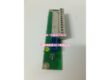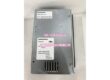
Product Core Brief
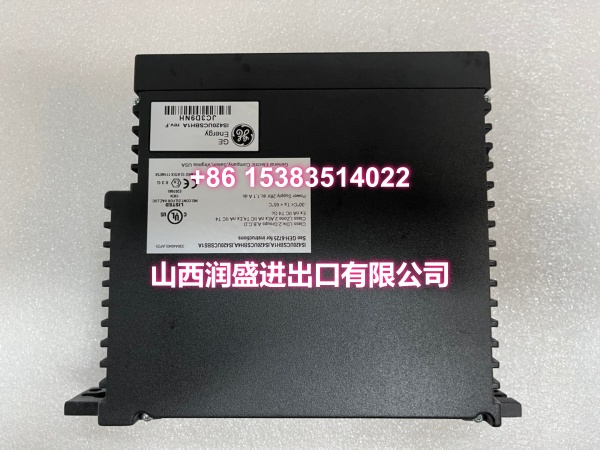
- Model: IS420UCSBH1A
- Brand: General Electric (GE)
- Series: Mark VIe / Mark VIeS / EX2100e / LS2100e
- Core Function: Executes application-specific control logic for turbine and process control systems via IONet.
- Product Type: UCSB Controller Module
- Key Specs: 600 MHz Intel EP80579 processor | 256 MB DDR2 ECC RAM + 2 GB NAND flash | 3× IONet + 3× ENET + 1× USB
- Condition: New Original / New Surplus
Product Introduction
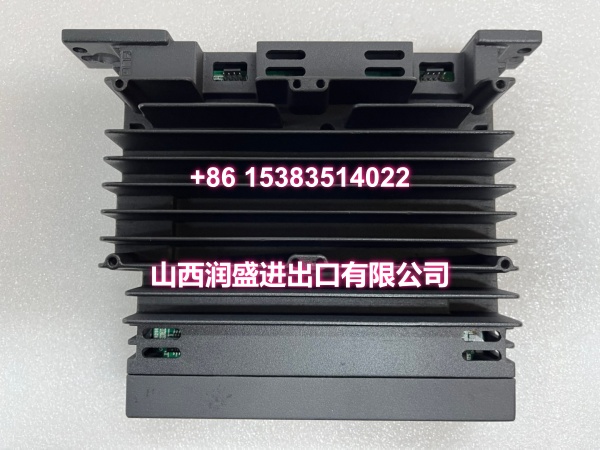
The GE IS420UCSBH1A is a UCSB controller module in GE’s Mark VIe/VIeS control system family. Unlike traditional controllers that host I/O directly on a backplane, this unit is a standalone computer that communicates with all I/O packs over dedicated IONet networks — meaning a controller swap during maintenance won’t lose any single-point application input data.
Powered by a 600 MHz Intel EP80579 processor with 256 MB of ECC-protected DDR2 SDRAM and 2 GB of NAND flash, this controller runs ladder or block logic on QNX Neutrino RTOS. It supports simplex, dual-redundant, and triple modular redundant (TMR) configurations, with IEEE 1588 clock synchronization across R, S, and T IONets to within 100 microseconds.
Key Technical Specifications
| Parameter | Value |
|---|---|
| Manufacturer | General Electric (GE) |
| Product Type | UCSB Controller Module |
| Series | Mark VIe / Mark VIeS / EX2100e / LS2100e |
| Processor | Intel EP80579, 600 MHz |
| Memory | 256 MB DDR2 SDRAM (ECC) + 2 GB NAND Flash |
| Operating System | QNX Neutrino |
| IONet Interfaces | 3× 100 Mbps Ethernet (R, S, T networks) |
| ENET Interfaces | 3× Ethernet (HNMI, peer-to-peer, Historian) |
| Additional Ports | 1× USB, 1× COM |
| Power Supply | 18–32 V DC (nominal 24/28 V DC), max 1.5 A |
| Operating Temperature | -30°C to 65°C (-22°F to 149°F) |
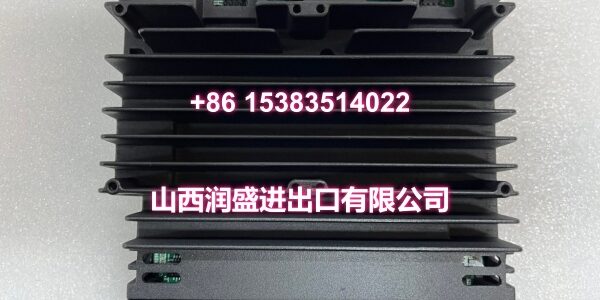
| Cooling | Convection (fanless) |
| Certifications | UL E207685, ATEX Zone 2 IIC (UL DEMKO 12 ATEX 1114875X) |
| Configuration Software | ToolboxST / ControlST |
| Redundancy Support | Simplex, Dual, TMR |
| Weight | ~2.4 lbs (1.1 kg) |
Quality Control Process
Every IS420UCSBH1A gets a full functional bench test before it leaves. We start with a visual inspection of the PCB — checking for cold solder joints, capacitor swelling, or corrosion on the Ethernet and USB connectors. Turbine control rooms aren’t always kind to electronics.
Then we power it up on a regulated 28 V DC supply and verify the status LEDs sequence correctly: Power, Boot, OnLine, and Diag should all come up clean. We confirm the Intel EP80579 processor boots into QNX Neutrino and verify the firmware revision via the COM port. Next, we test all six Ethernet ports — three IONet and three ENET — for link negotiation and packet throughput using a network tester. We also validate the USB port and run a memory test on the 256 MB DDR2 to confirm ECC error correction is functional. Finally, we verify the IEEE 1588 clock sync capability and check the NAND flash for bad sectors. Each unit ships in anti-static foam with a moisture barrier bag.
Replacement Pitfall Guide
❗ Verify your redundancy configuration before swapping. The IS420UCSBH1A supports simplex, dual, and TMR setups. If you’re replacing a controller in a dual or TMR system, the new unit must synchronize its state and initialization data with the running controllers. A mismatched firmware revision between redundant controllers will prevent synchronization and can cause a trip.
❗ Check your IONet cabling and topology. Each controller has three dedicated IONet ports (R, S, T). If you’re cross-connecting these to the wrong IONet segments during replacement, the controller won’t see the correct I/O data. Label your cables before disconnecting — it’s a five-minute task that saves hours of troubleshooting.
❗ Confirm your power supply voltage. The controller accepts 18–32 V DC, but the nominal rating is 24/28 V DC at up to 1.5 A. If your panel’s DC supply is sagging below 18 V under load, the controller will brown out. Measure your supply voltage at the controller’s power terminals with a Fluke multimeter before and after installation.
❗ Don’t skip the ToolboxST configuration backup. Before removing the old controller, export the current configuration and logic from ToolboxST. Even though the IS420UCSBH1A stores its application in flash, having a local backup means you can reload the exact same logic if the replacement needs reprogramming.
Keep these in mind and you’ll cut 90% of rework time.
Compatibility Matrix & Benchmarks
| Original Model | Replacement / Successor Model | Compatibility Level | Migration Notes |
|---|---|---|---|
| IS420UCSBH3A | Needs Adaptation | H3A runs at 1200 MHz with fan cooling; verify firmware and power budget | |
| IS420UCSCH1A | Needs Adaptation | Different controller family; requires I/O map and logic migration | |
| IS420UCSBH4A | Needs Adaptation | H4A uses 1066 MHz processor; check firmware compatibility | |
| Mark VIe UCSC (legacy) | Direct | Software-compatible; hardware differs but operation is nearly identical |
- Control Frame Rate: 10, 20, 40, 80, 160, or 320 ms configurable
- Clock Synchronization: IEEE 1588 PTP, within 100 microseconds across R/S/T IONets
Need me to pull up the cross-reference for the compatible I/O packs that pair with this UCSB controller? The IONet port mapping matters for proper configuration.