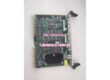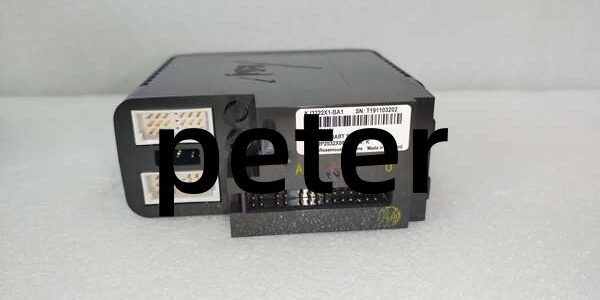
Product Core Brief
- Model: MAS2600
- Brand: Emerson (Rosemount / Damcos)
- Series: Marine Tank Gauging Systems
- Core Function: Highly accurate, submersible pressure sensor designed for marine tank level and draft measurement in harsh environments.
- Product Type: Marine Pressure Transmitter / Level Sensor
- Key Specs: Titanium Housing | IP68 Submersible | Programmable 0.2 to 35mH2O
- Condition: New Surplus / OEM Original
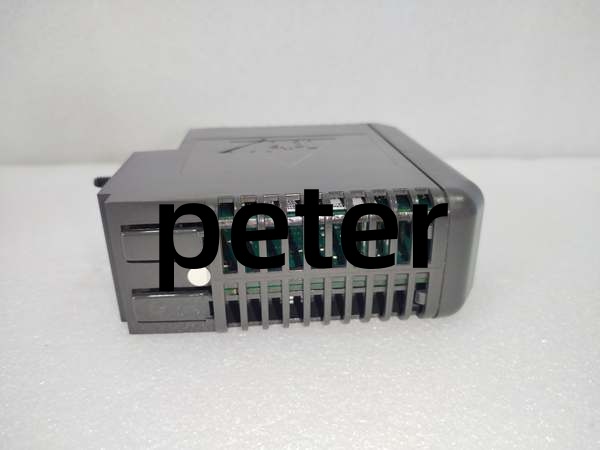
EMERSON VE4033S2B1
Key Technical Specifications
- Module Type: Marine Tank Contents Transmitter
- Housing & Diaphragm Material: Titanium (Fully welded, no joints/gaskets)
- Enclosure Rating: Transducer IP68 (Submersible), Amplifier Box IP56
- Measuring Range: Programmable from 0.2 to 35 mH2O
- Operating Temperature: -40°C to +85°C (Standard); up to +125°C (High Temp variant)
- Explosion Protection: Ex ia IIC T4 Ga (Intrinsically Safe)
- Physical Dimensions: ∅ 25 mm, Height 193 mm
- Weight: 0.3 kg
- Certifications: Approved by all major marine classification societies
- Cable Length: Up to 300 meters (Max 75 meters for IS installations)
Product Introduction
Engineered specifically for the harshest marine environments, the Emerson pressure sensor provides highly accurate and reliable level and draft measurement for ship tanks. Its defining feature is a robust, fully welded titanium housing and titanium diaphragm, which eliminates the need for gaskets or joints and provides extreme resistance to seawater, hydrocarbons, and aggressive chemicals.
Versatility is at the core of this transmitter. It can be mounted inside or outside, on the top or sides of virtually any tank type. The programmable amplifier allows for flexible range configuration (0.2 to 35 mH2O), making it suitable for a wide variety of marine tank gauging applications. Built to withstand extreme temperatures and certified intrinsically safe (Ex ia IIC T4 Ga), the ensures continuous, maintenance-free operation for critical vessel monitoring.
QA & Testing SOP
Marine sensors demand rigorous validation of their sealing and signal integrity. We verify both the mechanical robustness and the electronic accuracy before release.
- Anti-Counterfeit & Visual Audit: We inspect the titanium housing for any signs of impact damage, verify the Emerson/Rosemount laser etching, and check the amplifier box and cable entry for physical integrity.
- Diaphragm Integrity Check: We perform a non-destructive inspection to ensure the titanium diaphragm has not been compromised, as any physical damage will immediately ruin the sensor’s calibration and IP68 seal.
- Signal Output Validation: We apply calibrated pressure to verify the 4-20 mA output signal accurately corresponds to the programmed range and matches expected values.
- Power & Loop Test: We verify the unit operates correctly within the 14-33 VDC power supply range and that the 4-20 mA loop functions without signal degradation.
- ESD Safe Packaging: The internal programmable amplifier is highly sensitive to electrostatic discharge. We pack in anti-static shielding bags with desiccant to prevent latent damage.
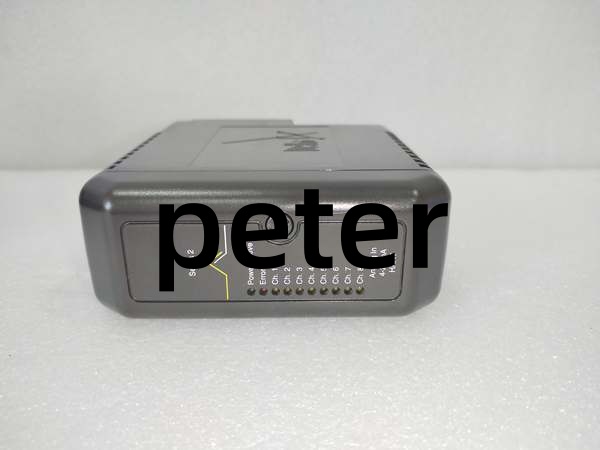
EMERSON VE4033S2B1
Installation Pitfalls & Guide
❗ Diaphragm Protection: The titanium diaphragm is extremely sensitive to physical impact. During installation and handling, never allow tools or hard objects to strike the sensing face. Even a minor dent can permanently alter the sensor’s calibration or cause a leak.
❗ Intrinsically Safe (IS) Cable Limits: If installing in an Ex ia hazardous area, the maximum cable length from the amplifier to the safe area barrier is strictly limited to 75 meters. Exceeding this length can compromise the intrinsic safety certification. Standard installations can use up to 300 meters of XLPE cable.
❗ Shield Grounding: The transducer cable shield must be correctly connected to the shield terminal inside the amplifier box. Failure to properly ground the shield can introduce electrical noise from the marine environment, corrupting the 4-20 mA signal.
❗ Annual Maintenance: Emerson recommends an annual visual inspection of the cable, transducer, and amplifier. The signal should be compared against a manual hand sounding, and zero/full-scale calibration should be performed if discrepancies are found.
Replacement SOP:
- Pre-Install: Document the existing measuring range, cable routing, and amplifier box configuration; isolate the tank or schedule maintenance.
- Removal: Disconnect the amplifier box wiring; unthread the transducer from its mounting bracket; carefully extract the old sensor.
- Install: Thread the new into the designated mounting point (flange, pipe end, or bracket); route the cable securely away from sharp edges; connect the shield and signal wires in the amplifier box.
- Power-On Test: Apply 24 VDC power; verify the 4-20 mA output matches the physical tank level (e.g., via hand sounding); recalibrate zero/span if necessary before returning to service.
Technical FAQ
What is the difference between the standard and high-temperature variants?
The standard operates from -40°C to +85°C using standard XLPE cabling. The high-temperature variant (often denoted with an ‘H’ in the transducer type code) operates up to +125°C and requires high-temperature FEP cabling. FEP cables are not approved for Intrinsically Safe (IS) installations.
Can this sensor be used for fresh water or ballast tanks?
Yes. While the titanium construction is specifically designed to resist the extreme corrosion of seawater, it is equally effective and highly durable for fresh water, ballast, and hydrocarbon tanks.
What does the “Ex ia IIC T4 Ga” certification mean?
This indicates the sensor is intrinsically safe (Ex ia) for use in the most hazardous gas atmospheres (Group IIC), with a maximum surface temperature not exceeding 135°C (T4), and is approved for use in Zone 0 (Ga) inside the tank itself.
How do I select the correct measuring range?
The amplifier is programmable from 0.2 to 35 mH2O. You should select a range that slightly exceeds the maximum expected liquid height in the tank to allow for headroom, while maximizing the resolution of the 4-20 mA signal. For example, a 10-meter tank would typically use a 12 or 16 mH2O range.
Why is this sold as new surplus?
This unit was pulled from sealed OEM overstock or an unfulfilled marine project before installation. We test it electrically to verify signal output and power functionality, but we aren’t replacing internal components. You are getting unused factory hardware with original manufacturing tolerances at a fraction of the active OEM list price.