Product Core Brief
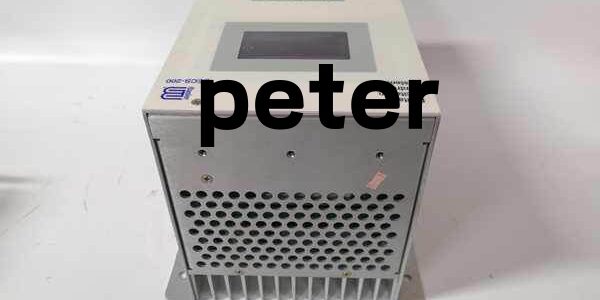
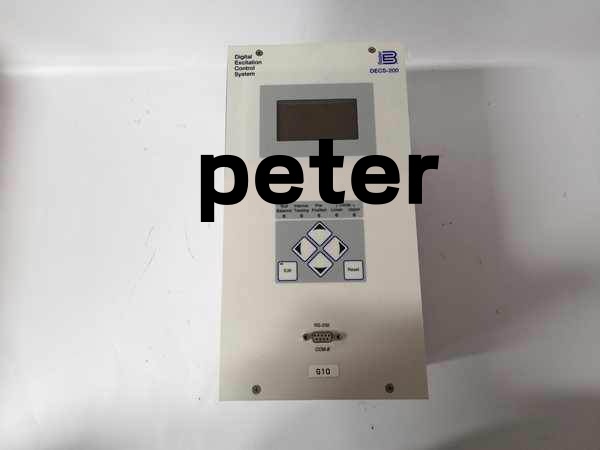
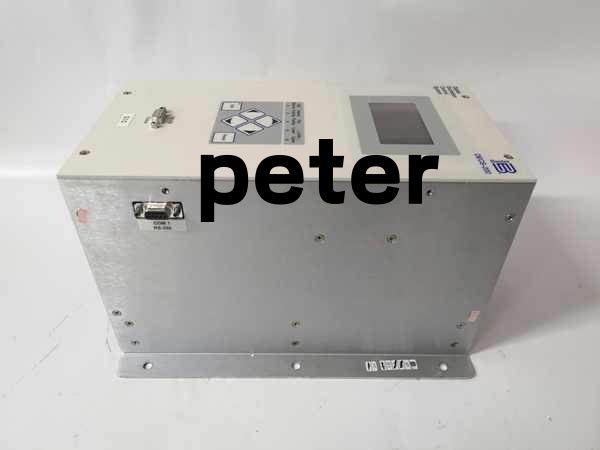
- Model: DECS-150
- Brand: Basler Electric
- Series: DECS Digital Excitation Control
- Core Function: Compact digital excitation controller providing precise voltage regulation, reactive power control, and integrated generator protection.
- Product Type: Digital Automatic Voltage Regulator (AVR) / Excitation System
- Key Specs: 7A/10A PWM Output | Auto-Tune PID | Modbus TCP/Ethernet
- Condition: New Surplus / OEM Original
Key Technical Specifications
- Control Modes: Automatic Voltage Regulation (AVR), Field Current Regulation (FCR), Power Factor (PF), Var Regulation
- Power Stage: 7 or 10 Amp PWM (Pulse Width Modulation)
- PID Tuning: Dual PID stability groups with Auto-Tune functionality
- Communication: Ethernet (RJ-45), Modbus TCP, Optional CAN, USB
- Protection Functions: 17 integrated protections (e.g., Machine Undervoltage 27, Overvoltage 59, Loss of Sensing, Sync-Check 25)
- Limiting Functions: Overexcitation, Underexcitation, Stator Current, Underfrequency
- Software Interface: BESTCOMSPlus® configuration software
- Mounting: Behind-the-panel, grounded metal EMC enclosure required
- Power Options: Shunt, Permanent Magnet Generator (PMG), or Station-powered
- Optional Features: Integrated Power System Stabilizer (PSS), Network Load Sharing
Product Introduction
Designed for synchronous generators and motors, this Basler consolidates excitation control and protection into a single, compact module. It replaces bulky analog relays by delivering precise voltage regulation, grid-code compliance, and comprehensive fault clearing in one unit.
The built-in Auto-Tune PID feature eliminates the guesswork during commissioning. By automatically calculating optimal gain settings, this digital AVR drastically reduces setup time and ensures stable system response to load transients without requiring extensive field tuning.
QA & Testing SOP
Excitation controllers are the brain of generator stability. We verify both the analog sensing and digital logic before releasing these units.
- Anti-Counterfeit & Visual Audit: We inspect the conformal coating, verify the Basler silkscreen and serial number, and check the front panel LEDs and USB port for physical damage.
- Power Rail & PWM Output Test: We apply control power and use an oscilloscope to verify the PWM power stage outputs clean, correctly timed pulses to the exciter field.
- Sensing & Feedback Validation: We inject simulated generator voltage and current signals to verify the RMS sensing circuits accurately track the input without phase errors.
- Communication Handshake: We connect via the USB port using BESTCOMSPlus® software to verify the microprocessor is alive, reading memory correctly, and accepting configuration parameters.
- ESD Safe Packaging: Highly sensitive microprocessors and MOSFETs require strict ESD handling. We pack these in anti-static shielding bags with desiccant to prevent latent semiconductor damage.
Installation Pitfalls & Guide
❗ EMC Enclosure Requirement: This unit must be mounted inside a grounded, metal, EMC-type enclosure. Running the PWM power stage outside a shielded environment will radiate noise that can scramble your plant’s PLC networks and cause erratic AVR behavior.
❗ USB Driver Conflicts: When connecting to a modern Windows PC for configuration, the USB driver may fail to auto-install. Do not panic. Manually update the driver via Device Manager by pointing it to the C:\Program Files\Basler Electric\USB Device Drivers\USBIO directory included with the software.
❗ Grounding Loops in Sensing: When wiring the generator voltage sensing lines, ensure you use a single-point ground. Ground loops between the and the generator neutral will introduce 60Hz hum into the AVR’s RMS sensing, causing the unit to continuously hunt for the setpoint.
Replacement SOP:
- Pre-Install: Lock out/tag out the generator and exciter power; document all DIP switch and software settings from the legacy unit.
- Removal: Disconnect control power first, then carefully remove the PWM output and sensing wires.
- Install: Mount the securely to the grounded backplane; reconnect wiring according to the Typical Connections diagram.
- Power-On Test: Apply control power, verify LED status, run the Auto-Tune sequence, and perform a no-load voltage buildup test.
Technical FAQ
Can this unit handle high waveform distortion from nonlinear loads?
Yes. The utilizes true RMS sensing rather than peak-sensing. This means it accurately measures generator voltage even when nonlinear loads introduce severe harmonic distortion, preventing the AVR from falsely tripping or over-exciting the machine.
Do I need external hardware for Power System Stabilization?
No. Unlike older systems, the offers an optional integrated Power System Stabilizer (PSS). This eliminates the need for external PSS modules, extra wiring, and separate tuning, making grid-code compliance much simpler to achieve.
Is this compatible with parallel generator operations?
Absolutely. The unit features built-in network load sharing capabilities. When operating multiple generators in parallel, the can communicate with other units to seamlessly distribute reactive power and maintain stable bus voltage.
What happens if the generator loses its sensing signal?
The controller includes a dedicated Loss of Sensing (LOS) protection function. If the sensing wires break or fail, the will immediately detect the anomaly and safely clear the fault before the generator can experience dangerous overvoltage conditions.
Why is this sold as new surplus?
This unit was pulled from sealed OEM overstock or an unfulfilled project before ever being installed. We perform comprehensive functional testing on our OEM test racks, but we aren’t replacing internal capacitors or reflowing the PCB. You are getting unused factory silicon with original manufacturing tolerances at a significant discount.