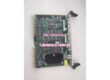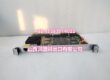
Product Core Brief
- Model: F7133
- Brand: HIMA
- Series: HIMax / H41q / H51q
- Core Function: Distributes power to four channels with integrated fuse monitoring.
- Product Type: Power Distribution Module
- Key Specs: 4 Channels | 30 VDC / 4 A | 100 ms Switch Time
- Condition: New Original (New Surplus)
Product Introduction
The HIMA is a 4-channel power distribution module designed for HIMA safety control systems. It routes 30 VDC power to field devices while actively monitoring each micro-fuse for blown conditions.
Unlike basic distribution blocks, this unit features an evaluation logic circuit tied to individual LED indicators. This allows operators to instantly identify a tripped circuit without pulling the card. The integrated relays offer a 100 ms switching time and a continuous load capacity of 4 A.
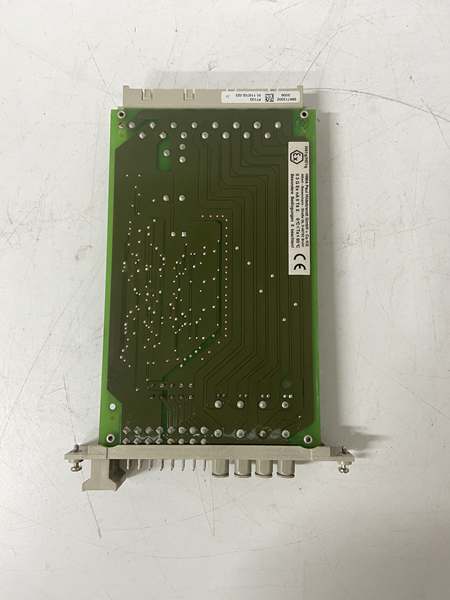
HIMA F7133
Key Technical Specifications
| Parameter | Value |
|---|---|
| Channel Count | 4 independent channels |
| Nominal Load Voltage | 30 VDC |
| Continuous Load Current | 4 A per channel |
| Switching Time | ~100 ms (relay) |
| Residual Voltage | 0 V |
| Protection Type | Micro-fuses with LED indication |
| Fuse Monitoring | Evaluation logic circuit |
| Structure | Modular form factor |
| Operating Temp | Standard industrial range |
| Safety Compliance | IEC 61508 / DIN 19250 |
Quality Control Process (Engineer’s Perspective)
We don’t just box these and ship them. Here is our actual bench test workflow.
- Incoming Verification: We verify the serial number against HIMA’s traceability records. A visual inspection checks for heat damage on the bus connector and ensures the DIN rail clip isn’t cracked.
- Live Functional Test: We mount the unit in a live HIMax test rack. We apply a 30 VDC load and verify the relay switching time and LED status indicators using an oscilloscope.
- Electrical Parameter Test: We perform a 500 V Megger test between the field wiring terminals and the backplane. Insulation resistance must exceed 10 MΩ. Ground continuity is also verified.
- Firmware Verification: We read the module’s internal firmware revision via the service port. We photograph the DIP switch settings to ensure they match factory defaults before shipping.
- Final QC & Packaging: The module is sealed in an anti-static bag with silica gel. A QC sticker showing the test date and technician initials is applied to the exterior.
Replacement Pitfall Guide
Field replacements on safety systems are unforgiving. Watch out for these traps.
- Firmware Mismatch: ❗ Critical. A brand-new module might have a newer firmware revision than your existing CPU. The HIMax CPU will block it with a configuration mismatch fault. Always check your system’s allowed firmware matrix before installing.
- DIP Switch / Jumper Misconfiguration: This module uses hardware addressing. If you pull the old card and forget to transfer the binary address switches to the new one, the CPU will report a missing module.
- Terminal / Cable Incompatibility: Inspect the field wiring before plugging in the new card. Ensure all power connections are tight; a loose 30 VDC connection can cause intermittent brownouts that mimic module failure.
- Power Supply Mismatch: Verify your external 30 VDC field power supply has at least 20% headroom over the total calculated load. This module draws current for its own internal monitoring circuits.
- ESD Damage: Safety modules are highly sensitive to electrostatic discharge. Always wear a grounded wrist strap when handling the bare PCB. I’ve seen modules fail bench testing because they were handled on a dry winter day without protection.
Keep these in mind and you’ll cut 90% of rework time.
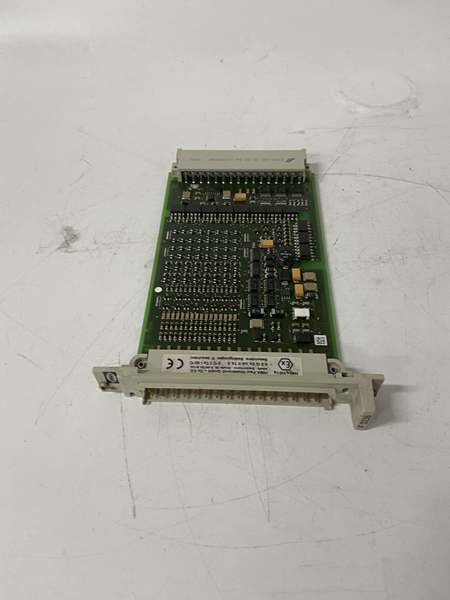
HIMA F7133
Compatibility Matrix & Benchmarks
Compatibility
- HIMA Rev A → Rev B : Direct Replacement — Verify firmware compatibility with CPU.
- HIMA F7130 → : Needs Adaptation — Different power distribution architecture; requires logic re-validation.
Benchmarks
- Relay Switching Time: ~100 ms (at nominal 30 VDC load)
- Continuous Load Capacity: 4 A per channel (zero residual voltage)
Need me to pull up the wiring diagram for the ‘s fuse monitoring circuit? It’s useful when troubleshooting a tripped channel.