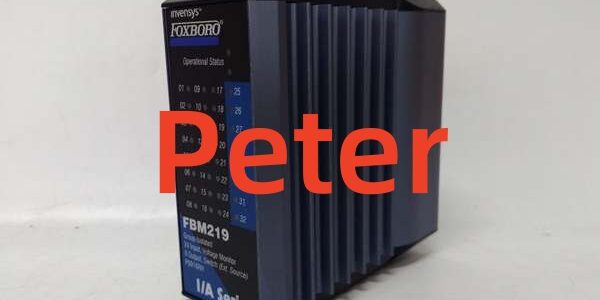
Product Core Brief
- Model: P0916RH
- Brand: Foxboro (Invensys / Schneider Electric)
- Series: I/A Series Distributed Control System (DCS)
- Core Function: Acquires 24 channels of isolated discrete voltage signals for high-density switch and interlock monitoring.
- Product Type: Discrete Input Field Bus Module (FBM)
- Key Specs: 24 Channels | Group Isolated Voltage Monitor | Part Number
- Condition: New Original (New Surplus) | Factory Sealed
Key Technical Specifications
| Parameter | Value |
|---|---|
| Module Type | Discrete Input Field Bus Module (FBM) |
| System Platform | Foxboro I/A Series DCS |
| Channel Count | 24 Independent Input Channels |
| Input Signal Type | Voltage Monitor (Group Isolated) |
| Manufacturer Part Number | |
| Channel Grouping | 24 Inputs, Group Isolated |
| Mounting | Plug-in I/A Series FBM Baseplate |
| Application | Switch Status, Relay Contacts, Limit Switches |
| Environmental Rating | Industrial Grade, High Precision |
| Condition | New Original (New Surplus) |
| Warranty | 1-Year Functional Warranty |
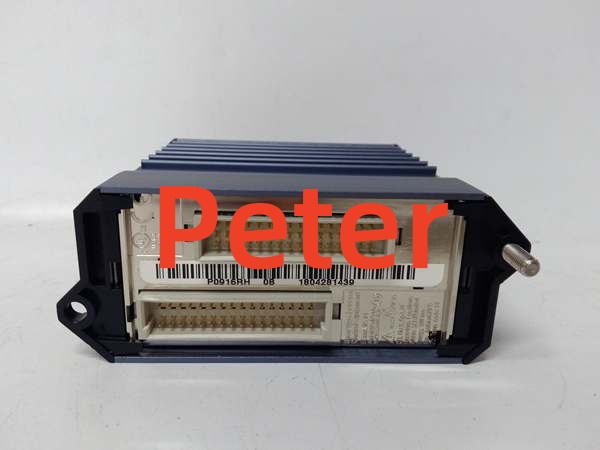
FOXBORO P0916RH
Product Introduction
High-density discrete monitoring in an I/A Series system requires maximizing channel count without sacrificing electrical isolation, and the delivers exactly that. Functioning as a 24-channel discrete input module, this unit provides group-isolated voltage monitoring for dense field wiring applications.
Engineered for demanding process environments, the allows you to monitor up to 24 individual switch states or relay contacts from a single FBM slot. This high-density architecture reduces backplane slot consumption and simplifies field wiring compared to using multiple lower-channel-count modules, making it ideal for complex sequential control and interlocking logic.
Key Selling Points & Differentiators
- High-Density 24-Channel Input: Maximizes I/O density per baseplate slot, reducing panel footprint and backplane slot consumption for dense monitoring applications.
- Group Isolated Architecture: Provides group isolation to protect the DCS from ground loops and electrical noise while maintaining high channel count.
- Verified Functionality: Every undergoes a 24-hour live load test on a dedicated I/A Series test rack before shipping, complete with a signed test report.
- Not Recommended For: Do not use this module for analog signals or dry contact (contact sense) applications. For contact sense inputs, use the FBM207 series.
- Stock Availability: Current inventory is factory-sealed new surplus with traceable lot numbers; typically ships within 48 hours of order confirmation.
- Warranty Backed: Includes a 1-year functional warranty covering manufacturing defects and DOA conditions, with no restocking fees for verified failures.
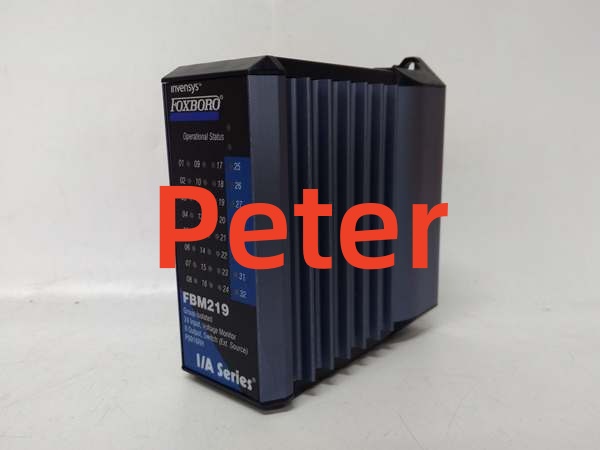
FOXBORO P0916RH
FAQ
Yes. All units in stock have passed our 24-hour live bench test and include a signed test report. We ship same-day for orders placed before 2 PM EST, so you’ll have tracking before end of day.
The is designed for standard I/A Series FBM baseplates, but verify your baseplate revision and node processor firmware first. Some early-generation baseplates may require a specific firmware level to recognize this module. Send us your baseplate part number, and we’ll confirm compatibility within 30 minutes.
The is a 24-channel voltage monitor module with group isolation. The FBM207 series includes variants for contact sense (dry contacts) and AC voltage monitoring. Ensure your field wiring matches the voltage monitor specification of this module.
Do I need to reconfigure the module after installation?
No. The retains its configuration in the I/A Series node processor, not on the module itself. Simply plug it into the same slot, and the system will recognize it automatically. However, always verify channel assignments and debounce/filter settings in your DCS configuration tool after replacement.
What if the module fails within the warranty period?
We offer a no-questions-asked replacement for any verified manufacturing defect. Ship the failed unit back with your RMA number, and we’ll send a replacement within 24 hours of receipt. We also provide a loaner program for critical discrete monitoring loops to minimize downtime.
Can this module handle high-interference environments?
Yes. The features group isolation designed to combat ground loops and electrical noise. However, ensure your field wiring uses properly shielded cable with correct grounding at the baseplate end. We’ve seen false switch trips traced to poor shielding, not module failure.
Is this a refurbished or new surplus unit?
This is New Original (New Surplus) – factory sealed, never installed, with full traceability to the original manufacturing lot. It is not refurbished, repaired, or pulled from a decommissioned system. We provide the original manufacturer’s lot code upon request for your quality records.
Quality Transparency SOP
- Incoming Verification: Source traceability confirmed via lot code; anti-counterfeit visual inspection; serial number cross-referenced with OEM records; accessories verified.
- Live Bench Test: Dedicated I/A Series test rack; power-on self-check; 24-channel voltage threshold test; node communication handshake test; 24-hour continuous load test; signed test report generated.
- Electrical Tests: Insulation resistance verified at 500V megger (>10 MΩ); ground continuity confirmed; channel-to-channel isolation validated.
- Firmware Verification: Firmware version recorded; DIP/jumper configuration backed up and documented.
- Final QC & Packaging: QC sign-off; anti-static seal applied; shock protection installed; QC Passed label affixed with date and inspector ID.
Test photos and video available upon request. We never claim “100% failure-free” – we provide verified, tested units with documented performance.
Technical Risk Avoidance
- Voltage Mismatch: Risk: Module damage or false readings. Prevention: Verify field signals match the voltage monitor specification. Field Note: We’ve seen modules fail because a technician wired AC signals to a DC voltage monitor input. Always verify the field voltage.
- Baseplate Seating: Risk: Intermittent communication or channel dropouts. Prevention: Ensure the module is fully seated and locked onto the baseplate. Field Note: A partially seated FBM caused random discrete channel chatter. Push firmly until the latch clicks.
- Node Processor Compatibility: Risk: Module not recognized. Prevention: Verify the node processor firmware supports the revision. Field Note: Integrators waste hours troubleshooting when the real issue is a firmware gap. Check the revision first.
- Filter/Debounce Configuration: Risk: Noisy switch readings. Prevention: Configure appropriate debounce times in the DCS for mechanical switches. Field Note: A vibrating limit switch caused alarm floods because the debounce was set to zero. Tune the filter.
- ESD Damage: Risk: Silent channel failure. Prevention: Use grounded wrist strap and anti-static mat during handling. Field Note: We’ve tested modules that passed power-on but had dead channels after 48 hours due to ESD. Handle with care.