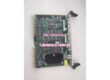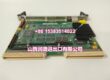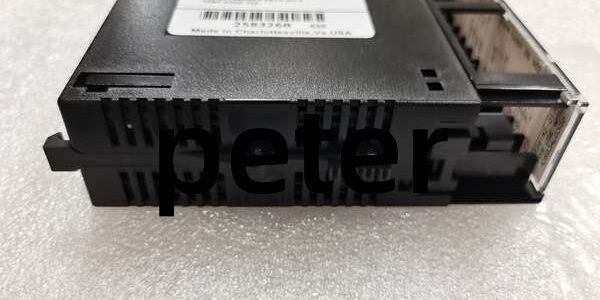
Product Core Brief
- Model:
- Brand: GE Fanuc / GE
- Series: Series 90-30 PLC
- Core Function: 2-channel analog voltage output module, converts digital register values to ±10V analog voltage signals for valve positioners, drives and analog instruments.
- Product Type: Low Density Analog Voltage Output Module
- Key Specs: 13-bit effective resolution | Fixed ±10V range | Hardware jumper for stop-state output selection Note: Discontinued legacy hardware; factory new stock scarce, surplus and refurbished units widely traded. Hot swapping is not supported on Series 90-30 backplanes. Not interchangeable with current output IC693ALG391 or 8-channel IC693ALG392 without wiring changes.
Key Technical Specifications
- Channel Layout: 2 independent analog voltage output channels
- Output Range: Fixed −10 VDC to +10 VDC
- Resolution: 12-bit magnitude plus sign (effective 13-bit, 2.5 mV per LSB)
- Update Rate: 5 ms full module update for both channels
- Maximum Load Current: 5 mA per channel
- Maximum Load Capacitance: 2000 pF
- Accuracy: ±5 mV @ 25°C; temperature offset ≤ ±1 mV from 0°C ~ 60°C
- Backplane Power Draw: 32 mA @5 VDC
- Isolated 24V Load Supply: 120 mA draw (from rack isolated rail or external user supply)
- Isolation Rating: 1500 VAC 1-minute withstand between field circuits and logic backplane
- Configuration Jumper (DEF0): Hold Last State / Force Output to 0V when CPU enters STOP / RESET
- Termination: Plug-in captive screw terminal block
- Status Indicator: Module Power OK LED
- Operating Temperature: 0°C to 0–60°C horizontal cabinet mounting
- Storage Temperature: -40°C ~ +85°C
- Form Factor: Single-width Series 90-30 rack slot
- Compatible Chassis: IC693CHS391, IC693CHS392, IC693CHS397, IC693CHS398
- Supported Programming Software: Logicmaster 90, Proficy Machine Edition
Product Introduction
This unit is a low-density voltage-only analog output module for Series 90-30 control systems. It generates bipolar ±10V signals commonly used for servo positioning, analog valve positioners and analog indicator instruments.
A hardware jumper sets module behavior when the CPU stops. Engineers can select to maintain the last output value or force all outputs to zero volts. Separate terminals allow connecting an external 24V supply to preserve output state independent of rack power. Widely used on smaller machine control retrofit projects requiring limited voltage analog control channels.
QA & Testing SOP (Transparency Building)
- Incoming Inspection: Verify part marking. Inspect backplane edge pins for bending or corrosion; examine terminal connector housing for cracks.
- Live Testing: Mount into validated Series 90-30 rack, apply nominal rack power. Perform full-scale ramp testing on both channels against resistive loads over a continuous 24-hour run cycle.
- Electrical Testing: Use Fluke 115 to monitor backplane 5VDC rail stability. Insulation resistance testing must exceed 10MΩ between field terminals and chassis protective ground.
- Firmware/Config Backup: Record hardware revision. Photograph existing jumper position and terminal wiring layout before disassembly.
- Final QC & Packaging: Place unit inside anti-static shielding. Attach dated QC test tag listing channel voltage calibration test results prior to shipment.
Installation Pitfalls & Guide (Engineer to Engineer)
❗ No Hot Swap Support: Series 90-30 backplanes lack hot-swap bus logic. Live removal disrupts rack communications and risks permanent backplane trace damage. Full rack power shutdown mandatory. ❗ Model Mix-Up Risk: This voltage-only module cannot directly replace IC693ALG391 (2-channel current output) or IC693ALG392 (8-channel mixed voltage/current). Confirm signal type before substitution. ❗ Low Drive Current Limit: Each channel only supports 5mA. Do not connect loads requiring higher current; use signal buffers if needed. ❗ DEF0 Jumper Awareness: Document jumper position before replacement; mismatched jumper setting causes unexpected output behavior on CPU stop. ❗ ESD Dangers: Un-grounded handling damages DAC circuitry. Static faults typically manifest as slow voltage drift after commissioning. ❗ Capacitance Load Boundary: Capacitive loads exceeding 2000pF risk output oscillation and instability.
Replacement Guide:
- Pre-install: Activate lockout-tagout on rack power; back up hardware configuration. Photograph terminal wiring and record DEF0 jumper setting.
- Removal: Disconnect terminal block wiring, unlatch module and slide straight out without twisting backplane connectors.
- Install: Seat new unit fully into vacant slot, lock latches, set DEF0 jumper to match original configuration, re-establish field wiring connections.
- Power-on Test: Restore rack power, confirm Power OK LED illuminates, download saved configuration and verify ±10V output range operates without offset errors.
FAQ (Frequently Asked Questions)
Q: Does this module support hot swapping? A: No. Series 90-30 architecture does not implement hot-swap functionality. Complete rack power shutdown is required before removing or installing the unit.
Q: What is the difference between and IC693ALG391? A: = 2-channel ±10V voltage output. IC693ALG391 = 2-channel 4–20mA / 0–20mA current output. They are mechanically interchangeable but signal type differs; cannot substitute without field wiring modifications.
Q: Can this module generate 4–20mA current signals? A: No. It is dedicated voltage output only. Current loop applications require IC693ALG391 or IC693ALG392.
Q: Can this module be installed inside PACSystem RX3i racks? A: No. Form factor and backplane signaling are exclusive to Series 90-30 chassis. It cannot operate within RX3i systems.
Q: Can both channels run different voltage setpoints simultaneously? A: Yes. Each channel receives independent %AQ register values and can be controlled separately.
Q: Will saved configuration load directly onto a replacement unit? A: I/O configuration imports without modification. Verify DEF0 jumper setting and perform full-scale voltage calibration after replacement.
Q: Does this module support RTD or thermocouple sensor inputs? A: No. This is an output-only module. Temperature measurement requires dedicated analog input modules.