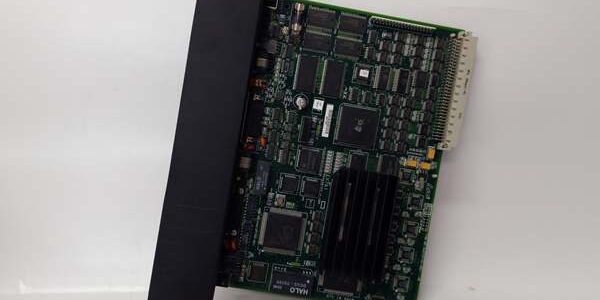
Product Core Brief
- Brand: GE Fanuc / Emerson Automation
- Model: IC697BEM713
- Series: Series 90‑70 PLC
- Core Function: Dual-purpose bus expansion module operating either as a Genius bus master for distributed remote I/O or as the parallel synchronization link between IC697RCM711 modules in hot standby redundant Series 90‑70 CPU architectures
- Type: Single-slot rack-mounted multi-function bus communications processor
- Condition: New Original (New Surplus)
- Status: ⚠️ Discontinued OEM production; limited surplus inventory
- Key Spec Highlights: Single multi-mode bus port, configurable for Genius I/O trunk or redundancy sync link, 1.5 Mbps communication rate, compatible with IC697RCM711 redundancy modules, keyed carrier assembly
Key Technical Specifications
- Operating Modes (software selected, mutually exclusive): · Genius Bus Master for remote Genius I/O drops · Redundancy Parallel Link for IC697RCM711 inter-rack synchronization
- Bus Data Rate: 1.5 Mbps
- Genius Mode Capacity: Up to 30 Genius I/O drops per module; max trunk length 2000 m
- Redundancy Mode Maximum Inter-Rack Distance: 15 m using approved parallel synchronization cable
- Backplane Power Draw: 0.7 A @ +5 VDC
- Front Panel Indicators: Module OK, Bus Active, Bus Fault diagnostic LEDs
- Compatible Hardware: Genius remote I/O assemblies, IC697RCM711 redundancy communications modules
- Configuration Tool: Legacy IC641 programming software
- Operating Temperature: 0 °C to +60 °C
- Ambient Humidity: 5%–95% non‑condensing
- Mechanical Feature: Keyed carrier preventing mismatched module insertion
- Compatible Hardware: Standard Series 90‑70 backplanes and supported Series 90‑70 CPU models
Product Introduction
Many legacy redundant power and process control systems consolidate communications hardware to conserve limited rack slots. GE delivers flexible dual-mode operation, deployable either to drive a field trunk of distributed Genius remote I/O or to form the physical parallel link required between paired IC697RCM711 redundancy modules in hot standby CPU systems.
Only one operating mode can be enabled at a time; the unit cannot run Genius I/O and redundancy synchronization simultaneously. Its standardized single-slot carrier enables direct drop-in replacement during planned maintenance outages, provided programming software mode configuration is validated after installation.
Key Selling Points & Differentiators
- GE supports two distinct critical control functions within one slot, allowing facilities to standardize spare inventory for both Genius I/O and redundant CPU architectures.
- Matches timing and signal specifications required for bumpless hot standby failover when paired with IC697RCM711 redundancy modules in mission-critical installations.
- Every unit undergoes full bench validation on a Series 90‑70 test rack; both Genius bus and redundancy link operation, LED status indicators verified prior to shipment. Signed test documentation available on formal request. Warranty runs 12 months post delivery.
- Maintains full compatibility with the complete installed base of legacy Genius discrete and analog remote I/O hardware.
- Not recommended for RX3i, RX7i or Series 90‑30 racks. Backplane connector and bus protocol are exclusive to Series 90‑70 architecture.
- Common mechanical footprint simplifies spare rotation across sites operating both single and redundant Series 90‑70 control systems.
Quality Transparency SOP
- Incoming Verification: Serial traceability validation, anti-counterfeit visual inspection, bus terminal block hardware cross-check.
- Live Bench Test: Dedicated Series 90‑70 test rack, power-on self-test, independent validation of Genius bus mode and redundancy link mode, continuous 24-hour thermal soak cycling.
- Electrical Tests: 500 V megger insulation resistance testing, backplane continuity validation.
- Hardware Verification: Confirm diagnostic LED array operates per datasheet; no unauthorized component rework performed.
- Final QC & Packaging: Anti-static shielding, shock-dampened transit carton, signed QC Pass label. Test images and logs available on request. No zero-failure performance guarantee.
Technical Risk Avoidance Section
Operating Mode Misconfiguration Risk Risk: Failure to update software mode setting after hardware replacement results in complete loss of either Genius I/O or redundancy synchronization. Prevention: Document module operating mode in control drawings and confirm configuration download after every spare exchange. Field note: Multiple power plant auxiliary control racks experienced loss of automatic CPU failover after technicians installed a replacement unit left in default Genius bus mode.
Cable Mix-Up Risk Risk: Genius field bus cable cannot be interchanged with redundancy parallel sync cable; incorrect cabling triggers persistent bus fault states. Prevention: Label all field wiring to distinguish Genius I/O trunks from inter-rack redundancy links.
Bus Termination Risk Risk: Missing or duplicate terminator resistors create signal reflections and intermittent communication faults for Genius bus deployments. Redundancy sync links use fixed cabling assemblies and do not require field termination resistors. Prevention: Apply termination rules only when operating in Genius bus mode.
ESD Damage Risk Risk: Unprotected handling damages onboard bus transceiver circuits without immediate visible fault indicators. Prevention: Use grounded wrist straps; keep the module sealed inside anti-static packaging until rack insertion.
Critical Summary: Confirm intended operating mode before procurement. This module cannot simultaneously service Genius I/O and CPU redundancy functions, and it is not physically interchangeable with IC697BEM721 or IC697BEM733 without program and wiring changes.