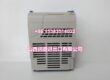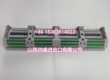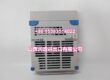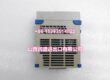
Product Core Brief
- Brand: GE Fanuc / Emerson Automation
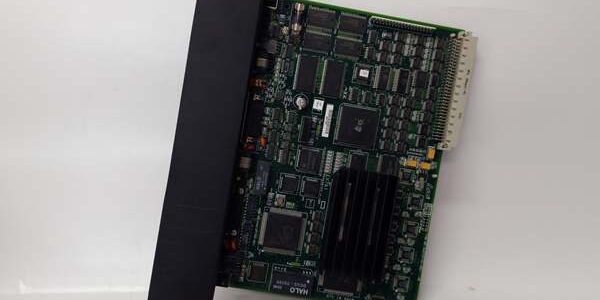
- Model: IC697BEM721
- Series: Series 90‑70 PLC
- Core Function: Dual-channel Genius bus master module facilitating communications between the Series 90‑70 backplane and two independent trunks of distributed remote Genius I/O drops for process and machinery control systems
- Type: Single-slot rack-mounted Genius bus communications processor
- Condition: New Original (New Surplus)
- Status: ⚠️ Discontinued OEM production; limited surplus inventory
- Key Spec Highlights: Two isolated Genius bus ports, each supporting up to 30 I/O drops, 1.5 Mbps bus speed, independent channel diagnostics, shielded twisted-pair field wiring interface
Key Technical Specifications
- Network Interface: Two independent Genius bus master terminal block ports (Channel A / Channel B)
- Bus Data Rate: 1.5 Mbps
- Maximum Supported Nodes: Up to 30 Genius I/O drops per channel, 60 total across both trunks
- Recommended Cable: Approved shielded twisted-pair Genius bus cable
- Maximum Single Trunk Length: 2000 meters (6560 feet)
- Backplane Power Draw: 0.8 A @ +5 VDC
- Front Panel Indicators: Module OK, Channel A Active/Fault, Channel B Active/Fault diagnostic LEDs
- Supported Hardware: Full range of Genius discrete, analog, and specialty remote I/O assemblies
- Configuration Platform: Legacy IC641 programming software
- Operating Temperature: 0 °C to +60 °C
- Ambient Humidity: 5%–95% non‑condensing
- Mechanical Feature: Keyed carrier to prevent mismatched module insertion
- Compatible Hardware: Standard Series 90‑70 backplanes and all supported Series 90‑70 CPU variants
Product Introduction
Large-scale plant control systems often require segmented remote I/O networks to limit fault propagation across field wiring trunks. GE serves as a dual-trunk Genius bus gateway for Series 90‑70 racks, enabling two fully independent remote I/O networks to operate from one slot position within the control rack.
This unit isolates communications faults between Channel A and Channel B; a wiring failure on one trunk does not disrupt operation of the second bus. Separate status LEDs deliver immediate channel-level diagnostics to reduce troubleshooting time during process disruptions. The standardized single-slot carrier enables direct drop-in spare replacement during planned maintenance outages.
Key Selling Points & Differentiators
- GE provides two independent Genius bus channels within a single rack slot, conserving chassis space compared to deploying two separate single-port bus modules.
- Channel segmentation restricts bus faults to one field trunk, maintaining communications for remote I/O drops on the unaffected second network.
- Every unit undergoes full bench validation on a Series 90‑70 test rack; dual-bus initialization, multi-drop simulation and LED functionality verified prior to shipment. Signed test documentation available on formal request. Warranty runs 12 months post delivery.
- Each channel supports the full Genius I/O feature set, matching performance specifications of single-port bus expansion hardware.
- Not recommended for RX3i, RX7i or Series 90‑30 racks. Backplane connector and communication protocol are exclusive to Series 90‑70 architecture.
- Channel-specific fault indicators simplify rapid identification of which field trunk contains wiring or remote drop failures.
Quality Transparency SOP
- Incoming Verification: Serial traceability validation, anti-counterfeit visual inspection, dual channel terminal block hardware cross-check.
- Live Bench Test: Dedicated Series 90‑70 test rack, power-on self-test, independent dual-channel Genius bus multi-drop simulation, fault state testing, continuous 24-hour thermal soak cycling.
- Electrical Tests: 500 V megger insulation resistance testing, backplane continuity validation.
- Hardware Verification: Confirm diagnostic LED array operates per datasheet; no unauthorized component rework performed.
- Final QC & Packaging: Anti-static shielding, shock-dampened transit carton, signed QC Pass label. Test images and logs available on request. No zero-failure performance guarantee.
Technical Risk Avoidance Section
Bus Termination Risk Risk: Missing, misplaced, or duplicate terminator resistors trigger signal reflections, intermittent I/O dropout and persistent bus fault alarms. Prevention: Install exactly one terminator resistor at the farthest Genius drop on each independent trunk. Field note: Multiple power plant auxiliary systems experienced fluctuating analog readings after maintenance crews added extra terminators to both bus channels.
Shield Grounding Risk Risk: Multiple grounding points on bus cable shields create ground loops and common-mode electrical noise that corrupts Genius bus telemetry. Prevention: Implement single-point shield grounding at the control room end for each trunk; avoid grounding at remote field enclosures.
ESD Damage Risk Risk: Unprotected handling damages onboard dual-channel bus transceivers without immediate visible fault indicators. Prevention: Use grounded wrist straps; keep the module sealed inside anti-static packaging until rack insertion.
Node Address Overlap Risk Risk: Duplicate Genius drop addresses on the same channel trigger bus collisions. Addresses are independent between Channel A and Channel B and do not require cross-channel coordination. Prevention: Maintain separate address documentation for each trunk during commissioning and spare hardware changeouts.
Critical Summary: Confirm rack platform and network segmentation requirements before procurement. This dual-channel bus master operates exclusively within Series 90‑70 racks and cannot be substituted with single-port IC697BEM733 hardware without network layout redesign.