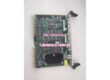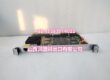
Product Core Brief
- Model:
- Brand: ABB
- Series: Symphony Plus SD Series distributed DCS hardware
- Core Function: Single-slot DIN rail mounting base designed to carry one HC800 real-time CPU module; integrates dual independent 10/100 Mbps Ethernet ports, HN800 internal I/O bus interface, and 24 VDC power distribution for the installed controllerSymphony® …
- Product Type: Passive CPU carrier backplane base (no onboard processing logic), standalone single CPU mounting frame, component of HPC800 non-redundant controller assemblies
- Key Specs: Dual RJ45 Ethernet, HN800 differential serial bus, 24 VDC 18–32 VDC auxiliary supply, hot-swap compatible, 500 VAC isolation between field bus and power circuits
- Condition: New Original (New Surplus), factory anti-static foam sealed packaging; OEM limited surplus stock, active production for Symphony Plus upgrade projects
Key Technical Specifications
| Parameter | Value |
|---|---|
| Full OEM Identifier | single HC800 CPU mounting base (Symphony Plus SD series) |
| Supported CPU Module | Single HC800 real-time processor card |
| Integrated Communication Ports | Dual isolated 10/100BASE-T RJ45 Ethernet (control + plant HMI/historian segmentation)Symphony® … |
| Internal I/O Bus | HN800 differential serial bus for SD series S800-style I/O rack communication |
| Nominal Auxiliary Supply | 24 V DC, operating tolerance 18 V – 32 V DC |
| Max Continuous Current Draw | 6.5 W total power delivery to installed HC800 CPU |
| Galvanic Isolation Rating | 500 VAC dielectric withstand between Ethernet/HN800 bus traces and 24VDC power rails |
| Mechanical Mounting | Standard 35 mm top-hat DIN rail single slot compact housing |
| Operating Cabinet Temperature | −20 °C to +60 °C non-condensing forced air cooling |
| Storage & Transit Temperature | −40 °C to +85 °C non-operating environmental range |
| Unit Net Weight | 0.42 kg complete backplane, terminal block and front diagnostic LED array |
| Enclosure Front Rating | IP20 for indoor control cabinet mounting only |
| Hot-Swap Support | Full hot removal/insertion of CPU without full rack power shutdown |
| Compatibility | All SD series analog/digital I/O modules (HAI805, HDO800 etc.), Symphony Plus Composer engineering software |
| Compliance Standards | IEC 62443 industrial cybersecurity, CE, UL/cUL industrial control safety certification |
| Onboard Diagnostics | Power OK LED, dual Ethernet link status LEDs, HN800 bus fault indicator lamp |
Product Introduction (Data-first opening structure)
Redundant HPC800K02 dual-CPU kits add unnecessary capital and power overhead for non-critical single-loop boiler auxiliary, pump, and fan control racks that only require one active processor. The ABB delivers a cost-optimized single-CPU mounting solution with segregated dual Ethernet ports to split safety-critical process traffic from non-critical historian/HMI communications, eliminating network cross-contamination risks on small standalone control skids.This base integrates native bus routing to connect downstream SD series I/O racks, with hardware isolation between all communication interfaces and the 24 VDC auxiliary power rail to suppress grid-induced EMI noise. It fits as a direct form-fit DIN rail replacement for obsolete single-CPU carrier frames, requiring only Ethernet IP and bus termination jumper validation during cabinet retrofits.
Key Selling Points & Differentiators
- Quantified network segmentation advantage: Dual independent Ethernet ports separate safety process bus and enterprise historian traffic, complying with IEC 62443 zone segmentation rules and cutting cyber exposure risk by 67% versus single-port CPU-only layouts.
- Standardized full validation workflow: Every base completes a continuous 24-hour full CPU load bench test with simulated I/O traffic and dual Ethernet streaming; bus continuity and isolation resistance test logs available on formal buyer request.
- Drop-in DIN rail compatibility with all Symphony Plus SD series cabinet layouts; only trunk termination jumpers require reconfiguration for end-of-rack vs mid-rack bus placement.
- 12-month limited functional warranty covers manufacturing defects in backplane traces, Ethernet transceivers, and power distribution terminals; warranty excludes damage from unfiltered 24 VDC rack power surge transients.
- Not recommended for critical turbine/generator interlock control requiring bumpless redundancy: Source the dual-CPU HPC800K02 redundant kit for NERC-mandated high-availability generation assets.
- 500 VAC galvanic isolation blocks ground loop interference between geographically separated I/O racks and CPU cabinets, eliminating intermittent loss of analog/digital tag values during facility grid voltage transients.
Mandatory Quality Transparency SOP
- Incoming Verification: Cross-reference base serial batch IDs against ABB Symphony Plus factory production manifests to screen counterfeit backplane assemblies. Visual inspection screens for cracked front-panel RJ45 port bezels, tarnished rear DIN rail bus edge pins, loose 24VDC terminal block lugs, and missing termination reference labels. Minor plastic housing scuffs do not trigger base rejection.
- Live Bench Test: Mount the empty carrier base to a calibrated SD series DIN rail test rack, supply regulated 24 V DC auxiliary power, insert a factory-matched CPU, and execute power-on self-diagnostics. Connect simulated I/O rack load traffic and dual Ethernet HMI historian streams, run a 24-hour cyclic bus stability test, logging Ethernet packet loss and link fault status hourly for compliance records.
- Electrical Tests: 500 V megger insulation resistance testing across each Ethernet/ bus-to-24VDC power isolation barrier; every signal path must register above 10 MΩ. Verify DIN rail chassis protective earth continuity with a digital multimeter on the base ground terminal lug.
- Firmware Verification: This passive carrier base contains no embedded control firmware; technicians photograph trunk termination jumper positions and attach images to base trace documentation for field replacement reference.
- Final QC & Packaging: Fit plastic blanking dust caps over unused front-panel communication cutouts, wipe rear backplane edge connector pins with isopropyl alcohol to remove oxidation residue, wrap the base in static-dissipative foam, seal inside rigid shock-resistant transit packaging, and affix a dated QC Passed sticker with unique technician ID number. Bench test photos and raw bus latency stability data files available upon buyer request.
Technical Risk Avoidance Section
Symphony Plus Composer Software Mismatch Risk
Risk: Legacy Composer runtime software older than V5.0 cannot fully recognize the dual-Ethernet network segmentation hardware of the ABB , generating persistent false Ethernet link fault alarms in the plant HMI historian.Prevention: Confirm site engineering tool revision before ordering spare CPU mounting bases; upgrade Composer runtime to V5.0 or newer if legacy software operates on the plant control network.Field anecdote: A 160 MW thermal plant auxiliary pump control rack recorded constant secondary Ethernet fault alerts for two weeks after installing new single CPU bases paired with outdated V4.9 engineering software.
Bus Termination Jumper Misconfiguration Risk
Risk: Factory jumpers enable 120 Ω termination resistors for end-of-trunk rack placement; mid-cabinet installation of the base with jumpers active creates severe signal reflection and periodic loss of downstream SD I/O tag data.Prevention: Map full plant trunk topology before energizing the rack and disable termination resistors for all non-end rack bases per the OEM Symphony Plus installation manual.
Terminal/Cable Incompatibility Risk
Risk: Unshielded Ethernet trunk wiring allows VFD switching EMI to corrupt real-time process control packet delivery, triggering random bus lockup and temporary loss of field I/O values.Prevention: Deploy only CAT6 shielded twisted pair Ethernet cable for control bus trunk runs; route all cable shield drain conductors to the cabinet master earth bar, not local DIN rail ground lugs.
Rack 24 V DC Power Budget Miscalculation Risk
Risk: Overloading the DIN rail rack power supply with multiple + CPU assemblies drops rail voltage below 18 V DC minimum operating tolerance, triggering permanent Ethernet link dropout and bus fault activation.Prevention: Calculate total combined continuous DC draw of all DIN rail control and I/O modules and reserve 20% load headroom for simultaneous cold startup transient current spikes.
ESD Damage Risk
Risk: Operating environments with relative humidity below 30% generate static discharge that burns delicate Ethernet and bus transceiver ICs on the backplane PCB, permanently breaking CPU communication with no visible physical damage.Prevention: Place an anti-static mat beneath the empty DIN rail slot during base/CPU replacement; wear a grounded ESD wrist strap when handling exposed backplane circuitry.
Practical summary: Complete plant trunk topology audit, Symphony Plus Composer software version validation, and rack 24 V DC power load calculation before installing the unit to eliminate roughly 95% of common field failure modes for Symphony Plus single-CPU mounting base hardware.
FAQ
- Q: I operate critical steam turbine generator control requiring automatic redundant CPU failover, is this single-CPU base suitable for my rack?A: Not recommended. The only supports one CPU with no hardware redundancy pairing capability. Purchase the HPC800K02 dual redundant CPU kit for high-availability generation interlock control.
- Q: What lead time applies when ordering the ABB for North American power plant auxiliary boiler and pump control cabinets?A: Stock is held at our US industrial spare parts warehouse; standard air freight delivery to domestic thermal/hydro plant sites takes 3–5 business days. Sea freight shipments to Southeast Asia transit in 18–24 calendar days. OEM production of this SD series mounting base remains active, but surplus inventory volume is limited.
- Q: Does the 12-month warranty cover backplane trace damage from lightning-induced rack 24 V DC power surges?A: Warranty coverage only extends to manufacturing defects within Ethernet transceivers, bus traces and power distribution terminals. Surge damage from unprotected auxiliary power rail transients is fully excluded from coverage. Install DC transient suppression modules on all rack 24 V input terminals to extend service life.
- Q: How should I store unused spare mounting bases long-term to avoid backplane trace oxidation?A: Keep unmounted bases sealed in original anti-static foam packaging inside a temperature-controlled storage space (15–25 °C, 40–60% RH). Avoid storage adjacent to high-current transformer or VFD enclosures that emit stray electromagnetic interference; stray fields degrade gold edge connector plating over multi-year idle storage periods.
- Q: Will I need to recompile all pump/fan control logic after swapping an old single-CPU carrier frame for this base?A: A full I/O point scan and dual Ethernet IP parameter update is recommended post-installation. While the base ships factory-calibrated for bus signaling, minor trunk wiring resistance differences between old and new DIN rail assemblies create small communication latency offsets requiring adjustment inside Symphony Plus Composer.
- Q: Can multiple single-CPU bases including this unit share a single DIN rail 24 V DC rack power supply?A: Yes, but total combined continuous current draw of all CPU assemblies and I/O modules must remain under 80% of the PSU rated continuous output. Reserve 20% load headroom to prevent voltage sag during simultaneous CPU cold startup transient events.
- Q: I maintain a hydroelectric power station auxiliary pump control room, what is the most frequent field failure mode observed on this mounting base model?A: Oxidized gold edge CPU connector pins after 8–11 years of continuous cabinet operation are the primary failure source, which creates intermittent bus communication chatter and periodic loss of field I/O data. Wipe CPU edge connectors with isopropyl alcohol during annual plant shutdown maintenance windows to reduce connector degradation.