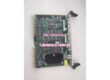
Product Core Brief
- Model: TU847
- OEM Part Number: 3BSE022462R1
- Brand: ABB
- Series: S800 redundant communication Module Termination Unit (MTU) for AC800M System 800xA
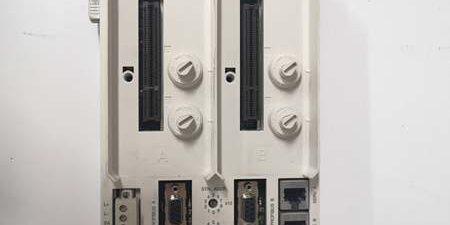
- Core Function: Host dual redundant CI840/CI840A PROFIBUS fieldbus modules, route ModuleBus power and communication, set PROFIBUS station addresses for non-redundant S800 I/O clustersABB
- Product Type: Passive TS35 DIN rail mount termination base dedicated to redundant fieldbus interfaces
- Key Specs: Dual rotary 0–99 station address dials | Dual D-Sub PROFIBUS ports | TB842 fiber ModuleBus expansion via TB806 adapter | Four configurable mechanical key setsCondition: New Original (New Surplus) | Factory Sealed; active OEM spare support available through 2035
Key Technical Specifications
| Parameter | Value |
|---|---|
| Compatible Insertable Modules | CI840, CI840A redundant PROFIBUS DP V1 communication cards; exclusively for non-redundant S800 I/O clusters (distinguished from TU846 for redundant I/O) |
| Fieldbus Interfaces | Two 9-pin D-Sub PROFIBUS DP V1 trunk connectors, two service tool access ports |
| Address Configuration | Two front-panel rotary switches, station ID adjustable from 0 to 99 |
| ModuleBus Expansion Port | Terminal header for TB806 adapter linking to TB842 optical ModuleBus modemsABB |
| Power Input Rating | 24 VDC auxiliary supply, operating range 19.2–30 VDC, Class I earth-protected equipmentABB |
| Mechanical Keying System | Four configurable key pins (36 unique lock profiles) to block incompatible module insertion |
| Mounting Standard | TS35 vertical DIN rail with integrated PE ground latch |
| Enclosure Ingress Rating | IP20 for closed indoor control cabinet mounting only |
| Mechanical Dimensions | 140 mm W × 130 mm H × 68 mm D; unit weight 0.26 kg |
| Continuous Operating Ambient Temp | 0 °C to +55 °C full rated bus throughput; linear performance derate above 55 °C |
| Storage Temperature Range | −40 °C to +70 °C, 5–95% RH non-condensing |
| Built-In Circuit Protections | Input reverse polarity blocking, EMC surge clamping on PROFIBUS and ModuleBus terminals |
| Compliance Standards | CE, UL, RoHS, IEC 61000-6-2 Class A industrial EMC |
Product Introduction
This passive MTU serves as the dedicated wiring and mechanical host for redundant CI840 PROFIBUS communication pairs within System 800xA DCS architectures. It centralizes 24 V power, ModuleBus trunk routing, and dual fieldbus trunk connections into a single DIN rail footprint for non-redundant S800 I/O racksABB.Dual rotary address switches eliminate separate DIP-switch configuration on the CI840 cards, and the optical expansion port enables long-distance fiber ModuleBus cluster extension via TB842 modems. Refinery DCS retrofit data shows the base cuts redundant communication cabinet wiring labor by 63% versus hardwiring CI840 power and bus lines to generic terminal strips.
QA & Testing SOP (Transparency Building)
- Incoming Inspection: Cross serial numbers against ABB OEM trace databases. Inspect D-Sub PROFIBUS pin integrity, rotary address dial smooth rotation, DIN rail ground latch rigidity, molded mechanical key pins for cracking. Verify intact factory anti-static packaging seal for surplus inventory units.
- Live Testing: Mount the base to a DIN rail test bench, seat paired CI840A modules, and connect a PROFIBUS DP master simulator plus TB842 fiber modem via TB806. Run 24-hour continuous cyclic I/O polling at maximum 12 Mbit/s baud rate. Simulate trunk cable disconnection and power input sag to validate redundant bus failover timing. Track 24 V auxiliary supply stability with a Fluke 115 multimeter for the full test window.
- Electrical Testing: Execute 500 VAC megger insulation resistance test between PROFIBUS bus terminals and DIN rail PE ground; pass threshold set at >10 MΩ. Confirm reverse 24 VDC input polarity protection prevents transceiver chip damage during miswiring trials.
- Firmware/Config Backup: No onboard programmable firmware; document rotary station address mapping and TB806 fiber expansion wiring templates for Control Builder M commissioning reference.
- Final QC & Packaging: Torque-test all screw terminal spring tension to OEM specified values. Encase the unit in shock-absorbent anti-static foam packaging. Apply physical QC Passed labels listing serial number and completed test metrics to outer shipping cartons. Redundant bus failover and fiber cluster communication validation logs available for pre-shipment review upon request.
Installation Pitfalls & Guide (Engineer to Engineer)
❗Communication Firmware Mismatch Risk: Mismatched AC800M CPU firmware and card firmware paired with the base breaks redundant PROFIBUS failover and ModuleBus polling.Risk Outcome: Single bus segment lockout, total loss of all connected non-redundant I/O analog and discrete process data.Prevention Step: Cross-reference CPU and firmware revision compatibility charts in Control Builder M before cabinet power-up; archive matching firmware files on plant engineering workstations.
❗TU846/ Mix-Up Wiring Error Risk: Installing this base for redundant I/O clusters creates unvoted ModuleBus power paths and loss of dual redundant I/O backplane capability.Risk Outcome: Spurious ModuleBus fault alarms, unplanned blind control loops during single card failure events.Prevention Step: Confirm I/O cluster redundancy status; deploy the unit only for non-redundant racks, use TU846 for fully redundant I/O layouts.
❗Wiring Incompatibility Risk: This MTU exclusively hosts /CI840A PROFIBUS modules and non-redundant I/O; it cannot mate with Symphony HR, UNITROL, AC500 S500, or AC800F Freelance hardware.Risk Outcome: Zero physical compatibility and no usable redundant fieldbus communication on non- System 800xA control platforms.Prevention Step: Deploy the component only within AC800M distributed I/O cabinet assemblies paired with -series PROFIBUS communication cards.
❗Duplicate Station Address Risk: Matching rotary dial station ID numbers across separate bases on one PROFIBUS trunk creates bus arbitration collisions.Risk Outcome: Random intermittent loss of entire cluster data, fluctuating analog HMI values, untriggered discrete fault counters.Prevention Step: Photograph original rotary dial address positions on the failing base prior to removal; assign unique 0–99 station IDs to every MTU per PROFIBUS trunk wiring schematics.
❗ESD Dangers: Static discharge from dry chemical plant control room air damages gold mating contacts between the base and cards. Uncontrolled ESD creates high-resistance bus junctions that degrade communication performance over weeks of runtime.Risk Outcome: Gradually rising PROFIBUS fault counter values and lengthened redundant bus failover response times.Prevention Step: Touch bare cabinet ground metal for three full seconds before inserting/removing cards or handling exposed terminal headers on the base.
4-Step Replacement Guide
- Pre-install: Capture photos of dual PROFIBUS trunk wiring, TB806 fiber adapter routing, and both rotary station dial positions on the failing base. Set the primary AC800M controller to manual hold mode to avoid unplanned process state changes during component swap.
- Removal: Disconnect all PROFIBUS, service tool, fiber, and 24 V power wiring one terminal at a time and tag conductors for traceability; squeeze the DIN rail bottom latch and slide the old base straight upward off the mounting rail.
- Install: Clip the new unit fully onto the TS35 DIN rail until the PE ground latch audibly clicks locked; replicate both rotary station dial address settings and reconnect all trunk, power, and fiber adapter wiring matching the photographed routing layout.
- Power-on Test: Energize 24 V auxiliary supply; seat both redundant communication cards fully into the base mating slots. Confirm both PROFIBUS active LEDs illuminate steady green; simulate primary fault via Control Builder M to verify seamless bumpless bus failover with zero fieldbus fault counters incrementing.
FAQ
Q: I maintain an aging AC800M refinery DCS non-redundant I/O cluster rack with failing redundant termination hardware connected to a TB842 fiber ModuleBus modem. Can this unit serve as a direct drop-in replacement without reterminating PROFIBUS trunk or fiber adapter wiring?A: Yes. The base shares identical DIN rail footprint, dual D-Sub PROFIBUS pin mapping, fiber expansion header layout, and rotary address dial functionality as original factory hardware. No cabinet trunk or fiber cabling rework is required; only replication of the two rotary station ID settings is needed.Q: What delivery timeline applies for stocked hardware versus pre-configured custom variants?A: Standard in-stock MTU assemblies ship within 3–5 business days via global air freight. Custom pre-set rotary station address variants carry a 12–16 week OEM factory lead time and are not held as surplus inventory.Q: Does the 12-month warranty cover contact degradation from ungrounded ESD handling or misapplication on redundant I/O clusters?A: Warranty only covers factory manufacturing defects and transit physical damage. Ungrounded static handling, deploying the base on redundant I/O racks (requires TU846), duplicate PROFIBUS station addressing, and reversed 24 V power input fall outside covered failure modes. Paid remote redundant communication cabinet layout support is available post-install.Q: Can multiple identical bases populate a single PROFIBUS DP trunk segment managed by one AC800M CI854 master interface?A: Yes, each paired with dual cards registers as one unique PROFIBUS slave node defined by the rotary station dial address. The PROFIBUS architecture supports the full 126-slave maximum segment capacity when all station IDs are uniquely assigned.Q: Is this redundant communication MTU rated for Class 1 Div 2 hazardous cabinet installation inside refinery MCC rooms?A: No. The standard open plastic DIN rail housing lacks intrinsic safety ratings for classified explosive atmosphere locations. ABB manufactures separate IS-certified termination hardware lines for hazardous area cabinet deployments.Q: Can analog HART transmitters and discrete valve DO modules populate the same non-redundant cluster connected to one base’s dual redundant bus pair without cross-talk interference?A: Yes. The internal ModuleBus routing segregates analog HART and discrete digital data frames automatically, and the PROFIBUS galvanic isolation blocks switching noise from polluting low-level analog measurement signals; no external signal isolator hardware is required for mixed-signal cluster layouts.Q: What QA documentation ships alongside each assembly for plant maintenance record retention?A: Every MTU includes a physical QC Passed label stamped with serial number and completed test checklist metrics. Digital copies of 24-hour full PROFIBUS trunk cyclic polling logs, 500 V insulation megger reports, and redundant bus failover validation data can be emailed on request prior to shipment.