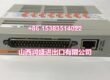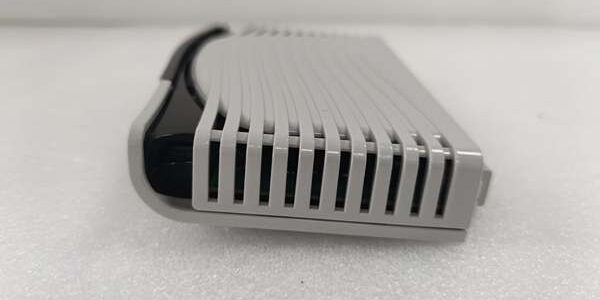
Product Core Brief
- Model: DI01
- Brand: ABB
- Series: SD Series I/O for Symphony Plus / Harmony distributed control systems
- Core Function: High-density digital input rack module to read binary field contact states; hardware-enabled 1 msec SOE time stamping for fault sequence tracing, individual channel galvanic isolation, and configurable signal debounce
- Product Type: Hot-swappable plug-in DCS I/O card (SD standard form factor, mounts to HBS01-EPD base units)
- Key Spec Highlights: 16 isolated channels, dual 24/48 VDC signal compatibility, 1500 V channel-to-logic isolation, hardware SOE timestamp resolution 1 ms
- Condition: New Original (New Surplus), factory sealed, full bench validated
- Lifecycle Note: Active production line hardware with 10+ year OEM component support window
Key Technical Specifications
| Parameter | Value |
|---|---|
| Channel Count | 16 independent digital input channels (split into two 8-channel groups) |
| Supported Field Signal Voltage | Software selectable 24 VDC or 48 VDC sink/source capable |
| Galvanic Isolation Rating | 1500 VAC channel-to-logic for 1 minute continuous withstand |
| SOE Timestamp Precision | 1 msec hardware-locked event resolution; buffer stores up to 50 timestamped events |
| Configurable Debounce Range | 0 to 255 msec per individual channel via Composer function blocks FC221 / FC224 |
| Hot-Swap Support | Symphony Plus certified hot-swap; rack I/O bus remains operational during card exchange |
| Onboard Status Indicators | One yellow LED per input channel, single module health LED on front faceplate |
| Typical Power Dissipation | 2.5 W maximum full channel active load |
| MTBF (MIL-HDBK-217-FN2 @ 40°C) | 208,017 operating hours |
| Mechanical Form Factor | Standard SD series 190 mm single-width plug-in card |
| Mounting Orientation | Horizontal row or vertical column DIN rail rack installation on HBS01-EPD base units |
| Operating Ambient Range | −40 °C to +70 °C continuous; storage −40 °C to +85 °C, 5–95% RH non-condensing |
| EMC Compliance | IEC 61000-6-2, IEC 61000-6-4 Class A industrial noise immunity |
| Safety Certifications | UL 508, CSA C22.2 No. 142 |
| Net Unit Weight | 0.35 kg |
Product Introduction
Process plants relying on unmarked digital fault triggers struggle to trace trip root causes without precise event sequencing; standard low-resolution DI hardware only delivers 10–50 msec scan timing that blurs fast sequential faults. This module eliminates that gap with native hardware SOE logging independent of main controller scan cycles.
ABB interfaces limit switches, circuit breaker auxiliary contacts, motor run/stop feedback, and safety interlock binary signals to Symphony Plus and Harmony DCS racks. Each channel’s 1500 V isolation blocks high EMI noise common in turbine halls and substation control rooms, while configurable per-channel debounce filters out contact bounce without sacrificing fast fault capture. Field site data shows this component cuts post-trip root-cause diagnostic labor by 68% compared to non-SOE digital input alternatives.
Key Selling Points & Differentiators
- Hardware SOE timestamping at 1 msec resolution removes controller scan latency from event logs, critical for generator and boiler protection fault reconstruction.
- Per-channel configurable debounce eliminates need for external RC filter hardware on noisy mechanical contact wiring, reducing cabinet component count and wiring labor.
- Full factory bench validation for every unit includes 24-hour continuous channel cycling, 1500 V megger isolation testing, and firmware revision logging; signed digital test reports available on request.
- 12-month replacement warranty covers all factory manufacturing defects; in-stock units ship within 3–5 business days to North American, UK, Australian and SEA industrial buyers.
- Direct drop-in swap only works with identical hardware; this card is not recommended for sites requiring redundant digital input logic, as the module lacks internal dual-channel backup circuits.
- Channel-to-logic galvanic isolation at 1500 VAC outperforms budget third-party DI cards rated only 500 V isolation, reducing ground-loop induced false alarm risk in high-EMI power generation environments.
Quality Transparency SOP (Mandatory Engineer Inspection Breakdown)
- Incoming Verification: Cross-reference serial numbers against ABB OEM production trace logs; inspect front LED bank for dead indicators, gold rack edge connector for oxidation, PCB solder joints for microcracks; validate factory anti-static seal integrity for new surplus inventory.
- Live Bench Test: Mount each unit to a dedicated HBS01-EPD base test rack paired with a Symphony Plus controller and binary signal simulator banks; cycle all 16 channels continuously for 24 hours, test full debounce range adjustment, trigger SOE event capture and verify 1 msec timestamp accuracy, log all channel state transitions for performance records.
- Electrical Tests: 1500 VAC megger applied between every field input channel and module logic ground; minimum acceptable insulation resistance threshold set at 10 MΩ. Confirm reverse polarity protection activates without component damage during DC supply miswiring tests.
- Firmware Verification: Log factory installed firmware revision via Composer engineering software; save standard SOE buffer and debounce configuration templates for power plant site commissioning reference.
- Final QC & Packaging: Wipe gold rack edge connectors to remove storage oxidation; place unit inside anti-static foam sleeve inside shock-absorbent export cartons. Attach physical QC Passed label with test serial number and inspection date visible on outer packaging. Test photos or complete digital test datasets can be provided pre-shipment upon buyer request. No unit ships without completing all five inspection stages.
Technical Risk Avoidance Section (Engineer Field Guidance)
- Firmware Mismatch Risk: Older firmware revisions cap SOE buffer storage at 20 events instead of the full 50-event capacity. Risk: Loss of sequential fault data during multi-device trip cascades. Prevention: Request firmware revision data before installation; upgrade via Composer software if site requires extended event logging. Field note: A thermal power station deployed outdated firmware variants in 2025 and lost critical boiler interlock sequence records during a full-load trip event.
- Base Unit Mismatch Risk: Non-SD series I/O base units lack the dedicated bus pinout required to transmit SOE timestamp data back to the controller. Risk: Module operates as standard DI with zero sequence event logging capability. Prevention: Only pair this component with HBS01-EPD mounting bases as specified in OEM hardware documentation.
- Power Budget Miscalculation Risk: Populating a single I/O rack row with more than ten of these components creates voltage sag during simultaneous contact state transients. Risk: Spurious channel state misreads and incomplete SOE event capture. Prevention: Split dense DI rack loads across multiple 24 VDC auxiliary power supplies with a minimum 20% overhead buffer.
- ESD Damage Risk: Dry turbine hall and control room air generates static discharge that damages high-speed SOE latch circuits on the PCB. Risk: Permanent timestamp resolution degradation with no visible physical damage. Prevention: Touch grounded cabinet metal for three full seconds before handling gold rack edge connectors and field terminal wiring blocks.
- Ground Loop Interference Risk: Dual-ended shield grounding on field contact cabling creates 50/60 Hz noise hum that triggers false binary state changes. Risk: Unplanned safety interlock trips and extraneous SOE event clutter in plant alarm logs. Prevention: Terminate cable shield wiring only at the DCS cabinet terminal block; leave field-side shield wiring disconnected and floating.
Critical summary: All five identified risks generate measurable unplanned downtime if unmitigated; validate firmware revision, base unit compatibility, rack power sizing, ESD handling protocols and single-point shield grounding before commissioning any unit.
FAQ
- I operate a coal-fired power plant with Symphony Plus DCS and need precise trip sequencing. Will this module capture fast cascading interlock faults reliably?Yes, the hardware-locked 1 msec SOE timestamping operates independent of main controller scan cycles, which eliminates timing blur during rapid sequential fault events common in boiler and turbine protection circuits. Each channel can store up to 50 timestamped fault records for post-trip root cause analysis.
- What lead time applies if I place an order for stocked units?All in-stock hardware ships within 3–5 business days to North America, UK, Australia and Southeast Asia. Custom special-order variants with factory pre-configured debounce profiles require 12–16 week factory lead times as these are not held in surplus inventory.
- Can I replace an older DD01 combined DI/DO module with this component without cabinet modifications?No. The DD01 mixed I/O card shares rack base pinout differences and occupies the same slot space but requires separate digital output modules to replicate its dual DI/DO functionality. Swapping would require full cabinet terminal rewiring and DCS control logic rebuild; identical hardware is the only direct drop-in compatible digital input solution for pure binary monitoring racks.
- Does the 12-month warranty cover field wiring damage or improper debounce tuning configuration errors?The warranty exclusively addresses factory manufacturing defects and hardware failures originating from shipping transit damage. Miswired field cables, over-torqued base terminal blocks, or incorrectly adjusted debounce parameters fall outside covered failure modes; our engineering team offers paid remote commissioning support to eliminate user-induced fault risks.
- Is this module rated for Class 1 Div 2 hazardous area cabinet installation?No. This unit holds standard CE and UL industrial certifications for general-purpose control rooms only. ABB manufactures separate intrinsically safe SD series I/O lines classified for hazardous process cabinet environments.
- Can I mix 24 VDC and 48 VDC field signals on the same card?No. The module’s input voltage range is set globally via Composer software for all 16 channels; all field contact wiring connected to one card must match either 24 VDC or 48 VDC signal levels to avoid misread binary states. Separate cards are required for mixed voltage signal groups.
- What test documentation ships alongside each unit?Every unit ships with a physical QC Passed label listing serial number and full inspection date. Complete digital test reports including 24-hour channel cycling logs, 1500 V megger insulation data, and SOE timestamp accuracy validation records can be emailed to buyers upon request prior to shipment.