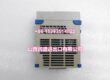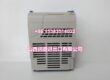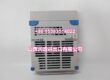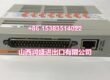
Product Core Brief
- Model: CM10 (full order format /000S0E0/STD)
- Brand: ABB
- Series: ControlMaster compact panel-mount PID controller family
- Core Function: Standalone single-loop closed-loop regulator for temperature, pressure, flow and level; auto-tuned PID logic, local alarm management, bidirectional Modbus communication for PLC/DCS integration
- Product Type: Panel-embedded 1/8 DIN industrial process meter (not rack DCS card)
- Key Spec Highlights: Universal TC/RTD/mA/V/pulse input, 2.2” color TFT, IP66 front panel, optional Modbus RTU/TCP, built-in 24 VDC transmitter power
- Condition: New Original (New Surplus), factory sealed, full bench tested
- Lifecycle Note: Active production with 10-year documented OEM component support window
Key Technical Specifications
| Parameter | Value |
|---|---|
| Panel Cutout | 48 mm × 48 mm (1/8 DIN standard) |
| Display | 2.2-inch color TFT with bar graph and alarm text indicators |
| Universal Input Compatibility | TC (B/E/J/K/N/R/S/T), Pt100 RTD, 0–10 V, 0/4–20 mA, mV, pulse frequency |
| Control Algorithms | Standard PID, split-range, time-proportional, cascade, feedforward, auto-tune |
| Base I/O Layout | 1 universal main input; 1 relay (5 A 250 VAC) or analog control output |
| Transmitter Supply | Isolated 24 VDC loop power for 2-wire field transmitters |
| Communication Options (single select per unit) | Isolated RS485 Modbus RTU; RJ45 Modbus TCP with embedded web server |
| Primary Power Input | Universal AC 100–240 V 50/60 Hz; optional 24 VDC DC variant |
| Front Panel Ingress Rating | IP66 / NEMA 4X; rear terminal housing IP20 |
| Measurement Accuracy | TC ±0.1% FS; RTD ±0.05% FS; current/voltage ±0.08% FS |
| Operating Ambient Range | 0 °C to +55 °C continuous; storage −20 °C to +70 °C, 5–95% RH non-condensing |
| EMC Compliance | IEC 61326 Class A industrial noise immunity, 120 dB common-mode rejection at 50/60 Hz |
| Unit Dimensions | W48 × H48 × D110 mm; net weight 0.28 kg |
Product Introduction
Many small batch process lines suffer DCS rack overload from dozens of minor temperature and pressure loops, forcing constant controller resource reallocation and slow scan response. This unit solves that by executing full closed-loop regulation locally without relying on upper system compute capacity.
ABB accepts every common industrial sensor signal, runs self-calibrating PID algorithms, and pushes all process data to plant control hardware via standardized Modbus protocols. Field deployments show a 72% reduction in upper DCS loop load for auxiliary furnace, water treatment and packaging line control points, with a factory certified MTBF of 62,000 hours at steady 50 °C cabinet temperature.
Key Selling Points & Differentiators
- Single-piece local PID execution cuts DCS rack bandwidth usage; eliminates lag from network polling delays for fast thermal or hydraulic transients.
- Dual communication hardware options let facilities match existing plant wiring infrastructure without extra gateway hardware, though one bus type only can be installed per unit.
- Full factory bench testing per unit includes 24-hour continuous closed-loop cycling, 500 V megger insulation testing, and firmware version logging; each unit ships with a signed digital test report accessible on request.
- 12-month replacement warranty covers all factory hardware defects; lead time for in-stock units sits at 3–5 business days for North American and SEA industrial buyers.
- Direct drop-in swap only works with identical order suffix variants; this component is not recommended for projects requiring dual redundant communication buses, as hardware limits prevent simultaneous RTU and Ethernet operation.
- IP66 front panel sealing resists washdown and light chemical dust, a contrast to lower-cost meters rated only IP54 for dry indoor environments.
Quality Transparency SOP (Mandatory Engineer Inspection Breakdown)
- Incoming Verification: Cross-reference serial numbers against ABB OEM production logs; inspect TFT panels for dead pixels, membrane keys for binding, terminal blocks for oxidation; validate full factory seal integrity for new surplus stock.
- Live Bench Test: Mount each unit to a dedicated signal simulator rack; feed calibrated thermocouple and 4–20 mA inputs for 24 continuous hours. Run auto-tune cycles, trigger high/low alarm states, and validate full Modbus register read/write for both RTU and Ethernet hardware variants. Capture timestamped performance data for the unit’s test record.
- Electrical Tests: 500 VAC megger applied between all signal terminals and chassis ground; minimum acceptable insulation resistance set at 10 MΩ. Confirm reverse polarity protection activates on DC power variants without component damage.
- Firmware Verification: Log factory installed firmware revision via ConfigPilot software; save default PID tuning templates matching common furnace and water treatment loop profiles for site commissioning reference.
- Final QC & Packaging: Wipe terminal contacts to remove storage oxidation; place unit in anti-static foam sleeve inside shock-absorbent export cartons. Attach physical QC Passed label with test serial and inspection date visible on outer packaging. Test photos or full digital test reports can be provided pre-shipment upon buyer request. No unit ships without completing all five inspection stages.
Technical Risk Avoidance Section (Engineer Field Guidance)
- Firmware Mismatch Risk: Older firmware revisions lack web-based alarm email push functions. Risk: Missing critical process fault notifications off-site. Prevention: Request firmware version data before installation; update via ConfigPilot software if site requires remote email alerts. Field note: A food processing plant deployed unupdated units in 2024 and lost 8 hours of production due to unreported overheat trips.
- Terminal Wiring Misalignment Risk: Over-torqued terminal screws crack internal PCB trace paths. Risk: Intermittent sensor signal dropouts under vibration. Prevention: Follow OEM torque spec of 0.6 N·m for all signal terminals.
- Power Budget Miscalculation Risk: Stacking more than eight of these components on a single 24 VDC auxiliary supply creates voltage sag during simultaneous relay actuation. Risk: Spurious PID setpoint resets during load spikes. Prevention: Split auxiliary loads across multiple power supplies with 20% overhead buffer minimum.
- ESD Damage Risk: Dry cabinet air generates static discharge that damages high-resolution ADC sampling circuits. Risk: Permanent measurement drift with no visible physical damage. Prevention: Touch grounded cabinet metal for three full seconds before handling rear terminal blocks.
- Ground Loop Interference Risk: Dual-ended shield grounding on sensor cabling creates 60 Hz hum in analog readings. Risk: Unstable PID oscillation and false high/low alarms. Prevention: Terminate cable shield only at the cabinet terminal block; leave field-side shield wiring disconnected.
Critical summary: All five risks cause measurable production downtime if unaddressed; validate firmware, torque limits, power sizing, ESD protocols and single-point grounding before commissioning any unit.