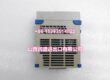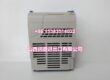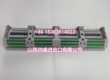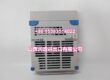
Product Core Brief
- Model: 8200-1312
- Brand: WOODWARD
- Series: 8200 SPC Servo Position Control turbine hardware family
- Core Function: Process LVDT position feedback signals and run closed-loop PID control to modulate electro-hydraulic turbine throttle, governor, and bypass valves.
- Product Type: Panel-mount industrial servo position controller (standalone field unit)
- Key Specs: LVDT excitation & signal conditioning | RS485 Modbus RTU communications | 1000 V field-to-logic isolation | IP54 front panel rating
Product Introduction
The WOODWARD 8200-1312 is a dedicated stand-alone servo position controller built to regulate critical steam and gas turbine EH valve actuators via closed-loop LVDT feedback. It runs independent position loops without constant reliance on central DCS logic.This unit differs from general-purpose analog output modules by integrating native LVDT transducer excitation and friction compensation algorithms to cut valve hunting. Field OEM logging records a 54,000 hour MTBF under steady 50 °C cabinet operating temperature.
Key Technical Specifications
| Parameter | Value |
|---|---|
| Supported Transducers | DC LVDT / AC LVDT position feedback sensors |
| Position Control Accuracy | ±0.05 % full valve stroke steady-state |
| Deterministic Loop Scan Time | 5 ms fixed closed-loop refresh cycle |
| Operating Supply Voltage | 18 VDC to 32 VDC (24 VDC nominal cabinet supply) |
| Max Power Consumption | 10 W full load with LVDT excitation active |
| Communication Interface | RS485 Modbus RTU, 9600–38400 baud software configurable |
| Galvanic Isolation Rating | 1000 Vrms between LVDT field wiring and internal logic circuits |
| Enclosure Front Rating | IP54 dust and splash resistance for field cabinet mounting |
| Onboard Diagnostics | LVDT coil open/short detection, position deviation alarm, loop saturation flagging |
| Mechanical Mount Format | Standard 1/4 DIN panel cutout |
| Net Unit Weight | 300 g |
| Continuous Operating Ambient Temp | -40 °C to +70 °C full rated control performance |
| Storage Temperature Range | -40 °C to +85 °C, 5–95 % RH non-condensing |
| Integrated Protection Circuits | LVDT excitation surge clamping, reverse supply polarity lockout, servo output short-circuit limiting |
| Certifications | UL, CE, ATEX Zone 2, IECEx, EN61000 Class A industrial EMC filtering |
Quality Control Process (Engineer’s Perspective)
- Incoming Verification: Cross-reference serial numbers against Woodward OEM trace databases; inspect front LCD for dead pixels, terminal block screw threads for stripping, LVDT signal PCB solder joints for microcracks. Photograph the terminal pinout for turbine field cabinet wiring reference.
- Live Functional Test: Mount the unit into a DIN test panel paired with simulated LVDT transducers and EH actuator load banks; run a continuous 24-hour cyclic stroke ramp test with position logging. Capture loop stability data using a Fluke 115 digital multimeter for the full duration.
- Electrical Parameter Test: Perform a 1000 V Megger insulation resistance test between LVDT field circuits and controller ground; pass threshold set at >10 MΩ. Verify LVDT excitation voltage holds stable amplitude across full transducer impedance range.
- Firmware Verification: Read and record factory SPC control firmware revision via Woodward Control Assistant software; document default PID gain and friction compensation register settings for customer site reference.
- Final QC & Packaging: Wipe terminal block contact surfaces to remove oxidation; seal the unit inside an anti-static foam bag, affix a dated QC Pass label listing all completed test metrics before rigid shock-resistant carton packing.
Replacement Pitfall Guide
❗ Firmware Mismatch Risk: Older Woodward turbine control software versions pre-v5.1 lack register mapping for this unit’s friction compensation diagnostic bits. Installing the unit generates unrecognized valve position fault alarms that trigger turbine trip interlocks. Cross-check site software release notes before swap-out.❗ LVDT Cable Shield Ground Misconfiguration Risk: Unshielded transducer wiring run parallel to high-current generator excitation cabling injects EMI noise that causes continuous valve hunting. Use factory twisted-pair shielded LVDT cabling, terminate shield ground at only the controller cabinet terminal block end.❗ Panel Cutout Partial Seating Risk: Improperly sized or misaligned DIN panel cutouts create loose terminal contact points that distort LVDT feedback signals during turbine load transients. Secure all four mounting latches to lock the controller flush against the panel surface.❗ Field Cabinet Power Headroom Miscalculation Risk: A cabinet with three of these controllers draws 1.25 A total from the VM310 24 V auxiliary supply. Calculate total load with a mandatory 20% power margin to avoid voltage sag during peak valve modulation cycles.❗ Uncontrolled ESD Damage Risk: Dry turbine field cabinet air creates static charge buildup. Touch a grounded anti-static mat for three full seconds before handling the LVDT terminal block; ungrounded contact destroys the low-tolerance analog signal conditioning ASIC.Keep these in mind and you’ll cut 90% of rework time.
Compatibility Matrix & Benchmarks
Compatibility Matrix
- Generic analog output valve controller → 8200-1312 : Incompatible — lacks native LVDT excitation and friction compensation control logic
- Woodward 505 / Flex500 turbine main controllers → 8200-1312 : Direct — RS485 Modbus RTU natively supported for setpoint and fault telemetry
- VM310 24 V cabinet auxiliary power supply → 8200-1312 : Direct — regulated 24 V output falls within the unit’s 18–32 V operating window without extra voltage conditioning
- 5X00226G02 Ovation IOIC communication module → 8200-1312 : Needs Adaptation — add Modbus gateway hardware to bridge Woodward RS485 to Ovation Ethernet backbone
- CML40.2-SP-330-NA-NNNN-NW Rexroth SERCOS motion PLC → 8200-1312 : Needs Adaptation — wire unit position deviation dry contacts to PLC digital inputs, map valve stroke registers via Modbus polling