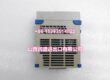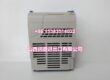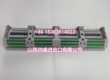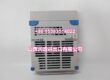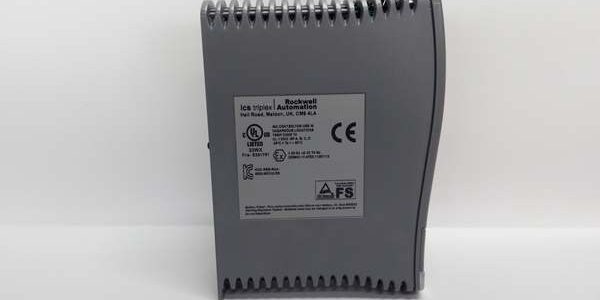
Product Core Brief
- Model: T9110
- Brand: ICS Triplex (Rockwell Automation)
- Series: AADvance TMR Safety Control Series ⚠️ EOL — limited new surplus stock remaining
- Core Function: Execute triplicated safety and process control logic via 2oo3 hardware voting, coordinate all chassis I/O and handle SCADA/HMI communication for SIL3 ESD/FGS systems
- Product Type: Chassis-mount triple modular redundant central processor (CPU) module
- Key Specs: Triple synchronized 400 MHz 32-bit cores | Dual 100Base-T Ethernet + dual serial ports | 5 ms SOE event resolution | Condition: New Original Surplus
Product Introduction
The ICS Triplex serves as the primary safety CPU for AADvance SIS chassis, running three parallel synchronized logic cores with hardware majority voting to eliminate single-point process safety failures. It natively interfaces with all AADvance I/O hardware including T9401 digital input and T9451 digital output modules.This unit upgrades the base T9100 processor with dual independent Ethernet ports and expanded 64 MB bulk flash storage. OEM reliability testing records a 128,000 hour MTBF at steady 40 °C cabinet operating ambient.
Key Technical Specifications
| Parameter | Value |
|---|---|
| Processing Architecture | Triple Modular Redundant (TMR), 2-out-of-3 hardware fault voting |
| Processor Hardware | Three synchronized 400 MHz 32-bit RISC cores, ECC-protected memory |
| Memory Layout | 32 MB SDRAM, 64 MB bulk flash, 512 kB SRAM per triplicated core |
| Max Supported I/O Nodes | Full chassis complement of T94xx analog/digital input/output modules |
| Event Timestamp Resolution | 5 ms global SOE fault and state change logging |
| Communication Interfaces | 2 × 100Base-T Ethernet; 2 × configurable RS232/RS485 serial ports |
| Supported Protocols | Modbus RTU, Modbus TCP, IEC 61131-3 standard programming |
| Chassis Supply Voltage | Dual redundant 18 VDC to 32 VDC nominal 24 VDC rack power |
| Continuous Power Draw | 6 W maximum full logic execution load |
| Hot-Swap Behavior | Retains loaded safety application logic; no full project re-download post replacement |
| Operating Ambient Temp | -25 °C to +60 °C; storage -40 °C to +85 °C |
| Safety Certification | IEC 61508 SIL 3, TÜV AK6, UL/cUL, CE, IP20 cabinet-only mounting |
| Physical Dimensions | 166 mm L × 42 mm W × 118 mm D; net weight 0.43 kg |
| Continuous Self-Diagnostic Coverage | >99% fault detection across all three processor core circuits |
Quality Control Process (Engineer’s Perspective)
- Incoming Verification: Cross serial numbers against Rockwell OEM batch manifests to filter counterfeit aftermarket copies. Visually inspect front panel status LED lenses, dual Ethernet port pins, and rear backplane gold edge contacts for bending or surface scratches.
- Live Functional Test: Insert module into an AADvance test chassis with dual redundant 24 VDC Fluke 115 power supplies, load a sample ESD safety application. Run a 24-hour soak cycle, trigger simulated single-core faults hourly to validate 5 ms SOE timestamp accuracy and faultless 2oo3 voting transition.
- Electrical Parameter Test: Use a 500 V Megger to measure insulation resistance between internal core circuits and chassis ground; pass threshold is >10 MΩ. Verify continuity of both Ethernet and serial communication port isolation barriers.
- Firmware Verification: Read and record CPU firmware revision via AADvance Workbench configuration software. Photograph front-panel communication port DIP switch termination settings for site wiring reference records.
- Final QC & Packaging: Place the full CPU assembly inside a static-dissipative poly bag. Affix a dated QC Pass sticker listing measured insulation resistance and total soak test runtime before palletized warehouse storage.
Replacement Pitfall Guide
❗ Firmware Mismatch Risk: The firmware v8.1+ cannot hot-swap with AADvance chassis running v7.5 or older without full project recompile and I/O parameter revalidation. Unmatched firmware versions trigger persistent core vote mismatch critical safety faults.❗ Ethernet Port Termination Misconfiguration Risk: Factory default DIP switches disable secondary Ethernet port redundancy. Leaving jumpers unmodified in dual redundant SCADA sites creates single-point communication loss during primary network outages.❗ Dual Redundant Power Feed Requirement Risk: This CPU requires two independent chassis 24 VDC supply rails. Removing one power rail drops input voltage below 18 VDC and forces a controlled safety shutdown of all SIS logic execution.❗ AADvance vs Trusted Chassis Incompatibility Risk: The uses AADvance proprietary backplane bus; it cannot slot into older Trusted TMR chassis built for T8110B CPUs without full cabinet hardware rework.❗ ESD Damage Risk: Exposed rear backplane edge pins remain unprotected during hot-swap removal. Use a grounded anti-static mat in low-humidity cabinet spaces; static discharge corrupts ECC RAM and generates random cross-core voting errors.Keep these in mind and you’ll cut 90% of rework time.
Compatibility Matrix & Benchmarks
Compatibility Matrix
- T9401 (16-Ch Digital Input I/O Module) → : Native Compatible — Direct backplane bus communication, no signal adapter hardware required
- T9100 (Base AADvance TMR CPU) → : Needs Adaptation — Chassis slot fit identical, firmware upgrade and secondary Ethernet port configuration mandatory post swap
- T8110B (Trusted Series TMR CPU) → : Incompatible — Different backplane bus architecture, chassis and I/O hardware cannot intermix
Benchmarks
- Full chassis mixed I/O safety logic scan cycle: 140 ms (nominal 24 VDC dual redundant power supply)
- Core failover transition delay: 4.2 ms (simulated single RISC core power fault, OEM bench measurement)
- Continuous power consumption: 5.4 W average under fully loaded chassis with all I/O channels active