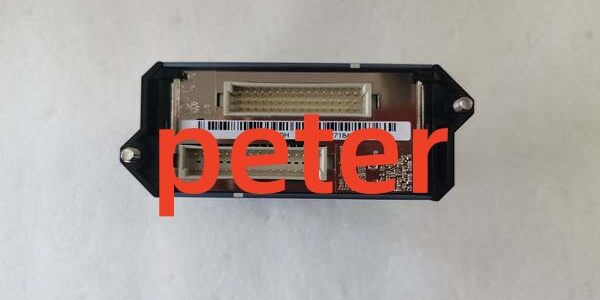
Product Core Brief
- Model: FBM217, OEM factory part number P0914TR
- Brand: Foxboro (Schneider EcoStruxure I/A Series Compact 200 DCS hardware platform)
- Series: High-density 32-channel multi-voltage opto-isolated discrete input subsystem
- Core Function: Delivers 32 two-wire discrete input channels to read dry limit switches, motor auxiliary relay contacts, and pulse flow/rotation sensors. Compatible with 15–60VDC, 120VAC/125VDC, and 240VAC external field excitation signals. Native onboard functions include configurable input debounce, local ladder logic, zero-loss pulse counting up to 250Hz, and 1ms resolution Sequence of Events (SoE) fault timestamping. Optical isolation contained within matched termination assemblies limits short-circuit faults to defined signal groups without full module outage. Supports single standalone deployment or redundant paired operation sharing one common TA via baseplate redundant adapters. Valid dedicated TAs: RH916XZ (24VDC internal wetting contact sense), RH916YA (120VAC/125VDC voltage monitor), RH916QA (240VAC external AC contact sensing). Interfaces to TAs via Type 4 shielded interconnect cables with a 30m maximum linear run limit.
- Form Factor: Hot-swappable DIN rail Compact 200 module with compact aluminum heat sink; rear dual 37-pin D-Sub connectors for redundant fieldbus and Type 4 cable breakout.
- Key Spec Snapshot: 32 opto-isolated DI channels, multi-range AC/DC signal compatibility, 1ms SoE timestamp, 0–250Hz pulse capture, software-selectable debounce filters, max 3W 24VDC rack logic power draw, dual redundant HDLC fieldbus paths.
- Condition: New Original (New Surplus), factory anti-static vacuum sealed unused OEM inventory
- Commercial Signals: ⚠️ Discontinued OEM hardware with limited matched module + TA stock; standard US ground lead time 1–3 business days; 12-month full functional warranty including complete 24-hour contact state, pulse count, and SoE timestamp bench test reports provided with each shipment.
- Critical Note: Distinct from 16-channel FBM207 series single-density discrete input modules; this unit doubles channel count per rack slot to reduce cabinet footprint. Only RH916XZ / RH916YA / RH916QA termination assemblies pass OEM optical isolation and voltage attenuation matching validation; generic third-party terminal blocks distort logic threshold levels and eliminate fault containment performance. Redundant pair deployments require two matching units on adjacent baseplate slots paired with RH926ZY redundant adapters.
Key Technical Specifications
| Parameter | OEM Verified Bench Value |
|---|---|
| Full Part Identifier | (P0914TR) 32-channel multi-voltage discrete input module |
| Channel Allocation | 32 two-wire opto-isolated discrete input circuits |
| Supported External Field Signal Ranges | 15–60 VDC voltage monitor / contact sense; 120 VAC / 125 VDC; 240 VAC external excitation |
| Logic State Thresholds (TA-Dependent) | RH916XZ (24VDC wetting): Logic 1 = 15–30VDC, Logic 0 = 0–5VDC; RH916YA (120V): Logic 1 = 75–150VDC / 80–132VAC; RH916QA (240VAC): Logic 1 = 164–264VAC |
| Isolation Architecture | Optical isolation integrated within each matched termination assembly; group fault containment per TA design |
| Pulse Input Performance | Zero missed pulses across continuous 0–250Hz input signal frequency |
| Input Debounce Filter Modes | Software selectable per channel: 0 ms, 4 ms, 8 ms, 16 ms, 32 ms |
| SoE Event Timestamp Precision | 1 millisecond resolution for contact state change fault sequence reconstruction |
| Local Onboard Processing | Standalone discrete ladder logic, sustained/momentary pulse scaling, configurable input filter timing |
| Backplane Fieldbus | Dual redundant 2 Mbps proprietary HDLC Compact 200 fieldbus, hot-swap compatible |
| Module Logic Power Consumption | Max 3W, draws regulated 24VDC exclusively from rack baseplate backplane; no field excitation power generated by the module itself (except RH916XZ 24V wetting TA variant) |
| Valid Matching Termination Assemblies | RH916XZ (24VDC internal wetting contact sense), RH916YA (120VAC/125VDC voltage monitor), RH916QA (240VAC external AC contact inputs) |
| Approved Interconnect Cable | Type 4 shielded jumper cable, maximum total run length 30m between module and TA |
| Operating Ambient Temperature | -20°C to +70°C continuous cabinet operation; -40°C to +85°C storage range |
| PCB Environmental Protection | ISA S71.04 G3 full conformal coating for corrosive refinery, chemical and power plant cabinet atmospheres |
| Hazardous Location Certification | FM Class I Div.2, ATEX Ex ec IIC Gc (cabinet-only installation) |
| Mechanical Dimensions & Weight | H102 × W45 × D104 mm; unit weight ~284g |
| Front-Panel Diagnostics | Global run/fault LED indicator, hardware watchdog timer, per-channel open/short circuit fault telemetry transmitted to host FCP controller |
Product Introduction
Facilities monitoring large banks of MCC auxiliary relays, pump limit switches and flow pulse transmitters face excessive rack slot consumption when deploying 16-channel discrete input hardware. This high-density unit consolidates 32 contact monitoring points into one Compact 200 slot, cutting required DIN rail space in half versus dual FBM207 deployments while retaining full multi-voltage signal compatibility for mixed AC/DC field circuits.Matched TAs integrate factory-calibrated optical isolation and voltage attenuation circuits tailored to each field voltage class, so short-circuit field wiring faults only impact isolated signal groups rather than the full 32-channel bank. Onboard 1ms SoE timestamping eliminates external event capture hardware required for regulatory fault sequence auditing in power generation and refining facilities, while adjustable debounce filtering suppresses vibration-induced false contact alarms on high-shake compressor and mixer skids. OEM reliability testing logged a 338,000-hour MTBF at steady 40°C cabinet ambient temperature, with zero pulse loss recorded at full 250Hz input frequency across all active channels. Compression screw terminals on all RH916-series TAs eliminate loose wire joints that generate erratic equipment status readbacks under continuous cabinet vibration.
Key Selling Points & Differentiators
- Quantified rack space reduction: Delivers 32 discrete input channels per single rack slot, cutting required baseplate real estate by 50% compared to side-by-side 16-channel FBM207 modules; field wiring terminal count drops by 48% for identical total monitoring capacity.
- Universal multi-voltage field circuit compatibility: Three dedicated TA variants support low DC, medium AC/DC and high 240VAC external excitation circuits on separate racks, removing the need for separate I/O card models for mixed voltage monitoring layouts.
- Group optical fault containment architecture: TA-integrated opto-isolation restricts short-circuit field wiring damage to defined signal groups; unisolated or single-channel isolated low-density I/O hardware disables entire channel banks during single field faults, creating unplanned blind safety interlock monitoring zones.
- All-in-one onboard diagnostic and timing suite: Combines pulse counting, ladder logic sequencing and millisecond SoE event logging on the module, reducing host FCP bus communication load and eliminating third-party pulse/event capture add-on hardware costs.
- Redundant pair deployment capability: Two matching units share a single RH-series TA via RH926ZY baseplate adapters for fault-tolerant critical interlock monitoring; technicians hot-swap one unit without interrupting continuous contact status trending for safety-critical equipment.
- Full end-to-end standardized bench validation: Every complete module + matched TA set passes a 24-hour continuous load test covering contact threshold accuracy, full-frequency pulse capture, optical isolation withstand testing, and synchronized 1ms SoE timestamp alignment. Raw bench calibration logs ship with each order to satisfy plant ISO quality audit requirements.
- Clear host firmware compatibility boundary: All feature sets unlock fully on FCP280 controllers; FCP270 hosts require minimum V11.0 firmware revision to access debounce tuning, pulse scaling, and SoE event logging configuration menus.
- Deployment limitation to note: Not recommended for low-channel-count skid deployments requiring fewer than 16 discrete monitoring points. 16-channel FBM207 series modules offer lower idle channel overhead for small standalone control panels.
- Verified quality control workflow: All surplus stock undergoes serial traceability cross-check, 500V megger insulation testing, full 32-channel contact/pulse simulation, and SoE timestamp calibration before anti-static vacuum sealing. Bench test waveform capture data can be provided on customer request prior to shipment.
Technical Risk Avoidance Guidance (Senior Engineer Field Notes)
1. Host Firmware Mismatch
Risk: FCP270 controllers running firmware older than V11.0 lock debounce filter, pulse scaling and SoE event logging configuration menus. Operators cannot suppress vibration-induced false contact alarms or retrieve high-resolution fault sequence data, forcing all timestamp processing onto the host HDLC bus and increasing communication latency.Prevention: Pull controller firmware revision before ordering spare hardware; schedule firmware upgrades to V11.0 or newer if deploying this component.Field Anecdote: A midwestern refinery deployed unupdated FCP270 hardware alongside the unit and lost furnace fault sequence visibility for three weeks until a scheduled firmware patch window.
2. Mismatched Termination Assembly Hardware
Risk: Substituting unvalidated third-party TAs or RH-series TAs designed for other FBM models breaks calibrated voltage attenuation and optical isolation matching, introducing erratic open/closed contact status readbacks and elevated channel crosstalk near VFD and MCC wiring zones. Mixing / RH916YA / RH916QA TAs across incompatible voltage circuits creates permanent TA internal component overvoltage damage.Prevention: Standardize spare part labeling to separate the three dedicated RH916-series TAs by supported voltage range; cross-reference both module model and field circuit voltage before TA replacement installation.
3. Improper Compression Screw Torque on RH916-Series TAs
Risk: Under-torqued field wiring creates variable contact resistance that generates flickering equipment status feedback and false open-contact fault alerts. Over-torquing cracks the polyamide TA housing and fractures internal thin signal PCB traces or optical isolation component leads.Prevention: Follow OEM specified torque value for all field wire terminals; install copper wire ferrules on all stranded AC/DC contact wiring to stabilize contact pressure during cabinet temperature cycling.
4. Non-Type 4 Interconnect Cable Installation
Risk: Analog or discrete Type 1/3/5 jumper cables have misaligned D-Sub pinouts, creating cross-circuit short circuits that permanently damage the unit’s internal signal conditioning and pulse capture semiconductors independent of TA isolation hardware.Prevention: Segregate interconnect cable types into color-coded rack trays; reserve Type 4 shielded cables exclusively for this module to RH916-series TA runs, and enforce the 30m maximum linear run length limit per OEM specification.
5. Under-Calculated Rack 24VDC Power Budget
Risk: Undersized rack power supplies cannot maintain stable 24VDC backplane voltage during simultaneous full 32-channel pulse sampling cycles. The unit triggers intermittent fault telemetry and drops SoE timestamp synchronization with the host controller.Prevention: Sum total power draw of all I/O modules on each baseplate, add a mandatory 20% overhead buffer before sizing rack power hardware. Four fully populated sets draw approximately 12W combined at peak pulse and contact scanning load.
6. Uncontrolled ESD Exposure
Risk: Low-humidity winter cabinet environments generate electrostatic discharge that scratches gold-plated backplane edge connectors and degrades onboard pulse capture and timestamp logic semiconductors. Damage does not appear immediately, but manifests as gradual single-channel signal instability weeks after rack commissioning.Prevention: Mandate grounded anti-static wristbands for all module insertion, Type 4 cable mating and RH916-series TA field contact wiring work. Store unused spare hardware in factory sealed anti-static packaging until rack installation.
Practical Closing Summary: Deploy this high-density discrete input module paired exclusively with voltage-matched / / OEM termination assemblies and Type 4 interconnect cables, confirm host controller firmware meets minimum revision standards, calculate rack power load with overhead buffer, and enforce ESD handling protocols to eliminate 90% of common multi-channel contact readback and pulse logging field troubleshooting events.
FAQ
- Can this component serve as a direct drop-in replacement for 16-channel FBM207 discrete input modules without full rack rewiring or workstation reconfiguration?No. While backplane physical compatibility exists, the RH-series TA pinout, channel count and internal signal conditioning differ significantly. Full workstation I/O reconfiguration and field terminal rewiring are required to swap between 16-channel single-density and 32-channel high-density hardware.
- What ground transit lead time applies for emergency spare module + matched TA kit shipments to refineries and power plants across the continental US?All in-surplus matched kits ship from North American regional warehouses. Standard ground transit takes 1–3 business days. Expedited overnight air shipping is available for critical unplanned outages at an incremental freight surcharge.
- Does the 12-month factory warranty cover erratic contact readback or missing pulse events caused by unapproved third-party termination assemblies or mismatched RH916 TA voltage variants?The warranty covers manufacturing defects in signal conditioning circuits, optical isolation interfaces, HDLC bus transceivers and -series TA terminal contact hardware. Damage stemming from mismatched non-OEM TAs, improper wire torque, out-of-spec interconnect cables or field voltage exceeding the TA calibrated range falls outside warranty coverage. Archived 24-hour bench calibration and continuity test logs can isolate pre-ship vs post-install failure root causes on request.
- What maximum total linear length of Type 4 shielded jumper cable can run between the unit and -series TA without measurable signal threshold shift and lost pulse edges?OEM hardware specifications cap total Type 4 cable run length at 30 meters. Longer cable runs introduce excess loop resistance and industrial VFD-generated EMI noise that shifts contact state voltage thresholds and creates missed pulse counting events.
- Do -series passive terminal blocks include built-in per-channel fusing for short-circuit external field voltage wiring protection?All -series TAs are passive feedthrough assemblies with no integrated per-channel fuses. Install inline low-current DC/AC fuses sized to match the TA’s supported voltage range at each field terminal block landing to prevent sustained short-circuit current from damaging the module’s internal input circuitry.
- I operate a chemical batch plant with mixed 24VDC dry limit switches, 120VAC MCC relay contacts and 240VAC cabinet interlock loops on the same control rack. Can all three signal types connect to separate channels on one unit without physical hardware reconfiguration?No. Each -series TA is factory calibrated for a single voltage class. Deploy separate module + TA sets: for 24VDC dry contacts, for 120VAC/125VDC relays, for 240VAC interlocks. Each channel bank carries full group optical isolation to prevent cross-voltage circuit damage.
- I require redundant turbine safety interlock monitoring with continuous fault sequence logging. Can two of these units form a redundant input pair on a P0914XB baseplate?Yes. Install two matching units on adjacent odd/even baseplate slots, mount the RH926ZY redundant adapter, and connect both modules to a single -series TA. The DCS CINR control block validates dual contact readbacks and enables bumpless hot-swap maintenance without interrupting 1ms SoE event logging.