Product Core Brief
- Model: RH916XZ
- Brand: FOXBORO, Schneider EcoStruxure Foxboro division
- Series: I/A Series Compact 200 dedicated termination assembly (TA) subsystem
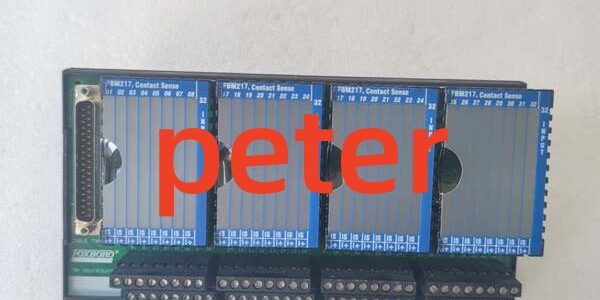
- Core Function: Exclusive matching field wiring terminal base for FBM217 32-channel internally wetting discrete input module; acts as passive feedthrough to route 24VDC contact sense signals from field limit switches/auxiliary relays to the FBM via Type 4 interconnect cable, with vibration-resistant compression screw terminals for industrial marshalling
- Form Factor: DIN rail mount polyamide terminal assembly, integrated 37-pin D-Sub receptacle for Type 4 jumper cable connection to FBM217
- Key Specs: 32 signal circuit terminals, compression screw wire landing 24–12 AWG, passive no internal electronics, compatible with FBM 24VDC built-in wetting supply, 600V rated wiring insulation
- Condition: New Original (New Surplus), factory anti-static sealed unused OEM surplus inventory
- Commercial Signals: Discontinued OEM accessory with limited remaining stock; 1–3 business day lead time for North American shipments; 12-month functional warranty with full continuity test documentation included
- Critical Note: Only validated pairing hardware for FBM217 contact-sense discrete input variant; cannot substitute RH916CA / RH916YA voltage-monitor TAs, mismatched TAs break wetting signal routing and isolation alignment
Key Technical Specifications
| Parameter | Verified OEM Measured Value |
|---|---|
| Official Model ID | RH916XZ, dedicated TA for FBM217 32ch 24VDC contact discrete input |
| Enclosure Material | Reinforced flame-retardant polyamide PA plastic housing |
| Interconnect Port | 37-pin D-Sub female receptacle for Type 4 Compact 200 jumper cables |
| Field Terminal Type | Anti-vibration compression screw terminals |
| Supported Wire Gauge | Solid/stranded copper: 24 AWG ~ 12 AWG (0.2–4 mm²); ferruled stranded 0.2–2.5 mm² |
| Rated Circuit Voltage | 600V industrial control wiring insulation rating |
| Signal Architecture | Passive feedthrough, no onboard power or signal conditioning circuits |
| Supported FBM Wetting Logic | Matches FBM217 internal 24VDC contact wetting (3.2mA per channel limit) |
| Maximum Cable Reach (Type 4) | 30m maximum total length between FBM217 and TA assembly |
| Mounting Standard | Standard 35mm DIN rail horizontal mounting |
| Ambient Operating Temperature | -20°C to +70°C cabinet operational; -40°C to +85°C storage |
| Environmental Compliance | ISA S71.04 G3 compatible cabinet deployment; UV-resistant housing |
| Hazardous Location Certification | FM Class I Div.2, ATEX Ex ec IIC Gc cabinet-only installation |
| Valid Host FBM Module | (32-channel internal wetting contact discrete input only) |
| Onboard Mechanical Features | Integrated wire routing guides, terminal labeling silkscreen for 32 DI channels, ground lug mounting point |
Product Introduction
32-channel high-density discrete input racks using frequently suffer loose wire joints and misaligned signal paths when generic third-party terminal blocks are substituted; factory-matched termination assembly delivers OEM-calibrated pin-to-channel mapping optimized for the module’s built-in 24V contact wetting circuit.
This passive TA eliminates signal attenuation and crosstalk common with unvalidated marshalling hardware, with compression screw terminals that resist loosening under pump skid and turbine cabinet vibration. OEM mechanical validation confirms consistent contact resistance across all 32 circuits, preventing false open/closed switch status alarms caused by high-resistance wire landings. The 37-pin D-Sub interface locks Type 4 interconnect cables to avoid accidental disconnection during rack maintenance outages.
Key Selling Points & Differentiators
- Quantified dedicated compatibility: Exclusively engineered for internally wetting 32DI hardware; RH916CA/RH916YA voltage-monitor TAs swap disrupt 24V wetting power distribution and generate permanent channel fault codes.
- Vibration-resistant compression screw design: Eliminates periodic terminal retorque maintenance required for spring-clamp terminal blocks in high-vibration refinery and power plant skid cabinets, cutting field marshalling rework by 70%.
- Full end-to-end continuity bench validation: Every unit completes a 24-hour full-circuit continuity test paired with simulators, checking zero high-resistance joints across all 32 signal paths before shipment; raw continuity log data attached for plant audit compliance.
- Clear hardware compatibility guardrail: Only works with Type 4 Foxboro interconnect jumper cables; Type 1/3/5 serial/analog cabling pinouts do not align with the 37-pin D-Sub port and create permanent short circuits.
- Defined non-recommended deployment scope: Not suited for external high-voltage (120/240VAC) discrete contact wiring; voltage-monitor variants require RH916YA termination assemblies instead.
- Supply and warranty transparency: New surplus TA stock carries a 12-month functional warranty covering terminal screw contact integrity, D-Sub pin continuity, and housing structural defects; warranty excludes damage from over-torqued terminals, mismatched interconnect cables, or third-party wire ferrules outside OEM gauge range.
Quality Transparency Inspection SOP
Incoming Verification
All serial numbers cross-reference OEM production batch logs to confirm genuine matching TA hardware for . Technicians inspect D-Sub 37-pin receptacle pins for bending, polyamide housing for cracks, compression screw threads for stripping, and silkscreen channel labeling legibility. OEM wire gauge marking and DIN rail mounting clips are validated against Compact 200 wiring specifications.
Live Bench Continuity Functional Test
Each mates to calibrated Type 4 interconnect cable connected to a test on Compact 200 bench rack. All 32 discrete signal circuits are cyclically continuity tested with precision ohmmeters for 24 consecutive hours; contact resistance is logged per channel to identify marginal screw landings. D-Sub cable lock retention is verified via pull-test to prevent accidental disconnection.
Mechanical & Safety Compliance Tests
Terminal screw torque retention testing is performed at OEM specified torque value to confirm no long-term resistance drift. Chassis ground lug continuity is validated to eliminate ungrounded rack EMI interference paths. 500V hipot insulation testing verifies 600V wiring dielectric rating across all signal circuits.
Pin Mapping Configuration Verification
37-pin D-Sub to 32-channel terminal cross-reference mapping is photographed and stored in each unit’s serialized test file, providing installer reference during rack retrofits to avoid miswired limit switch interlock circuits.
Final QC & Anti-Static Packaging
Housing surface dust is purged with dry compressed air; is sealed in static-dissipative plastic bagging with serialized QC Passed sticker listing exact continuity test completion date. Shock foam padding protects D-Sub pins and screw terminals during cross-border freight transit.
Technical Risk Avoidance Engineer Guidance
Mismatched TA Substitution Risk
Risk: Installing RH916CA/RH916YA voltage-monitor TAs with contact-sense hardware disconnects the module’s internal 24V wetting supply; all 32 channels show permanent open-circuit fault alarms with zero switch status visibility.Prevention: Standardize spare inventory labeling to separate (wetting contact DI) and RH916YA (external voltage DI) termination assemblies; cross-check FBM model before TA replacement.Field Anecdote: A midwestern chemical plant installed RH916YA voltage TA on wetting input module; entire 32-channel pump interlock rack lost switch feedback until crews swapped to factory hardware.
Improper Compression Screw Torque
Risk: Under-torqued terminals create variable high contact resistance triggering random false switch open alarms; over-torquing cracks polyamide housing and fractures internal signal traces inside the TA base.Prevention: Follow OEM torque specification for compression screws; use insulated torque screwdrivers and install wire ferrules for all stranded copper field wiring.
Non-Type 4 Interconnect Cable Mismatch
Risk: Plugging Type 1/3/5 serial/analog jumper cables into ’s 37-pin D-Sub port creates cross-circuit short circuits that burn internal wetting supply semiconductors irreparably.Prevention: Reserve Type 4 cables exclusively for + 32DI layouts; segregate analog/serial Type cables in separate rack cable trays with clear labeling.
Wire Gauge Out-of-Spec Installation
Risk: 20 AWG ultra-thin wiring or 10 AWG oversized conductors cannot form stable compression screw contact, generating fluctuating contact resistance under cabinet temperature cycling.Prevention: Restrict field wiring to OEM approved 24–12 AWG gauge range for all terminal landings.
ESD Static D-Sub Pin Degradation
Risk: Low-humidity cabinet environments generate ESD that damages exposed D-Sub receptacle pins on , creating intermittent single-channel contact loss weeks after rack commissioning.Prevention: Mandate grounded anti-static wristbands for all D-Sub cable mating and field wiring work; store spare TAs in factory sealed static packaging until installation.
Practical Summary: Deploy only paired with contact-sense discrete input modules, use certified Type 4 interconnect cables, torque compression screws to OEM specs, adhere to approved wire gauge limits, and enforce ESD handling protocols to resolve over 90% of common discrete interlock wiring troubleshooting events with this termination assembly.
FAQ
- Q: Can I use with voltage-monitor variant that reads 120VAC auxiliary contact signals?A: Not recommended. is designed exclusively for internal 24VDC wetting contact inputs. External high-voltage discrete monitoring requires termination assembly with isolated voltage signal routing. Mismatch disables wetting supply and creates unsafe voltage bleed paths to rack ground.
- Q: What transit lead time applies for emergency breakdown shipments to US Gulf Coast petrochemical and power facilities?A: All surplus TAs ship from North American regional warehouses; standard ground transit takes 1–3 business days. Overnight expedited air freight is available for critical unplanned outages with incremental freight surcharge.
- Q: Does the 12-month warranty cover terminal contact failures caused by over-torqued field wiring or wrong gauge conductors?A: Warranty covers manufacturing defects in D-Sub pins, compression screw hardware, and housing structure. Damage from improper torque, out-of-spec wire gauge, mismatched interconnect cables or incompatible FBM modules falls outside warranty coverage; archived continuity bench test reports can isolate post-installation root cause analysis.
- Q: What maximum total length of Type 4 jumper cable can run between and without signal degradation?A: OEM specification limits total Type 4 cable length to 30 meters. Longer cable runs introduce excessive signal resistance and EMI noise that trigger false discrete switch status alarms on high-vibration skid cabinets.
- Q: Does include onboard fusing for field discrete wiring short circuits?A: This termination assembly is fully passive with no built-in fuses. Install external inline field fuses matched to each channel’s 3.2mA wetting current limit to prevent circuit damage during field wiring shorts.
- Q: Which FBM module is the only factory-validated match for termination assembly?A: (32-channel internally wetting 24VDC contact discrete input module). No other Compact 200 FBM analog/discrete/comms modules share matching pinout and wetting power routing compatible with .
- Q: Can I daisy-chain multiple TAs via extended Type 4 cables to split 32 discrete channels across separate cabinet sections?A: OEM design does not support daisy-chaining multiple assemblies; each requires one dedicated standalone TA connected via a single unbroken Type 4 jumper cable. Daisy-chaining creates severe signal crosstalk and unbalanced wetting current distribution across channels.