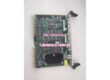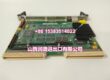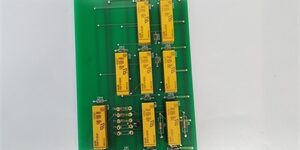
Product Core Brief
- Model: 0100-77037
- Brand: Applied Materials (AMAT)
- Series: Centura High-Power RF Generator Subassembly Line
- Core Function: Delivers stable 13.56MHz RF output power to process chambers, closed-loop regulation maintains set wattage despite variable plasma load impedance during wafer etch and deposition cycles
- Product Type: Water-cooled solid-state RF power generator module
- Key Specs: Fixed 13.56MHz frequency | 2000W maximum continuous RF output | Deionized water liquid cooling | Analog + serial process control interface
- Note: New Original OEM spare; paired AMAT RF match assemblies sold separately
Key Technical Specifications
- Operating Frequency: 13.56 MHz ISM RF band, fixed internal oscillator
- Rated Continuous RF Power: 2000 W
- Output Regulation Mode: Closed-loop forward power control, ±0.5W stability tolerance
- Cooling Medium: Thermally controlled deionized cooling water; 18–24°C inlet temp range
- RF Output Port: 7/16 DIN high-power coaxial connector
- Control Signals: 0–10V analog setpoint/feedback + RS232 serial tool communication
- Over-Trip Protection: Over-reflected power, over-temperature, over-current, interlock fault shutdown
- Enclosure Rating: IP30 sealed cleanroom cabinet, low-outgassing internal components
- Operating Ambient: Class 1 cleanroom 18–26°C, 30–70% non-condensing humidity
- Safety Standards: SEMI S2, CE industrial EMC compliance
- Unit Weight: 7.8 kg
- Outer Dimensions: 282 mm W × 345 mm H × 190 mm D
Product Introduction
This high-power RF generator serves as the primary plasma energy source for AMAT Centura high-throughput dielectric etch and CVD process chambers. Its tight power regulation eliminates wafer thickness non-uniformity caused by plasma impedance shifts during multi-wafer batch runs.Liquid cooling sustains full 2000W continuous output without thermal power derating, while multi-layer fault interlocks cut unplanned tool downtime by triggering controlled shutdowns before semiconductor hardware damage occurs.
QA & Testing SOP (Transparency Building)
- Incoming Inspection: Cross-reference AMAT OEM serial database to validate genuine cleanroom hardware; inspect RF coaxial port pins, water cooling line fittings, and control terminal blocks for deformation or corrosion.
- Live Testing: Couple the unit to calibrated 13.56MHz dummy load; supply facility DI cooling water and 480VAC input power via Fluke calibrated source; run 24-hour cyclic 85% power load testing, log forward/reflected power drift hourly.
- RF Electrical Testing: Network analyzer sweep across 10–15MHz; pass condition reflected power <0.3% at target operating frequency.
- Firmware/Config Backup: Record factory PID power loop tuning parameters stored in onboard flash memory; photograph analog and serial control wiring pinout for replacement matching.
- Final QC & Packaging: Purge internal cooling passages with dry nitrogen to remove residual moisture; seal within double anti-static vacuum packaging; attach printed test tag with serial trace and RF stability test data.
Installation Pitfalls & Guide (Engineer to Engineer)
❗ Mismatched Cooling Water Quality: Tap water or low-resistivity cooling fluid causes internal electrolytic corrosion of copper heat exchangers, triggering over-temperature trips within 30 production days. Only use 18MΩ·cm DI facility water.❗ Incorrect RF Connector Torque: Under-torqued 7/16 DIN ports create impedance mismatches and high reflected power; over-torquing fractures internal PTFE insulation leading to permanent RF leakage. Follow OEM 14 N·m torque specification strictly.❗ Parallel High-Voltage Routing: Running AC input power cables alongside low-voltage analog control wiring induces signal noise, creating random power setpoint jumps that distort wafer process results. Separate cable runs by minimum 15 cm vertical gap.❗ Ignored Pre-Service Interlock Check: Failing to jumper safety interlock terminals during bench testing locks RF output at zero power; missing interlock wiring after replacement causes tool startup failures.❗ Unmitigated RF Safety Risk: Live RF circuit exposure creates high-frequency burn hazards; wear RF-rated insulated gloves and grounded anti-static wristbands before opening cabinet panels under power.
4-Step Replacement Guide
- Pre-install: Full tool AC input, cooling water, and RF generator lockout/tagout; photograph RF coax routing, analog serial control pinouts, and cooling water plumbing connections for exact replication.
- Removal: Isolate and drain cooling water lines; disconnect 480VAC main power harness and RF coaxial cable; unbolt four rack mounting fasteners and extract the module from the chamber rack.
- Install: Secure new unit to rack using OEM torque values; reconnect DI cooling water lines with new OEM sealing O-rings; reattach AC power, control wiring and RF coax per photographed layout, torque RF port to 14 N·m.
- Power-on Test: Restore facility cooling water and AC supply; execute auto power calibration routine; verify reflected power remains below 0.3% across full process power range before wafer production release.
FAQ (Frequently Asked Questions)
Q: Can this unit sustain continuous 2000W full-power operation over 24-hour production shifts?A: Yes, only with properly temperature-controlled 18–24°C DI cooling water. Inlet water above 26°C triggers thermal derating and automatic power reduction.Q: Does this generator support hot-swapping while the Centura cluster tool remains energized?A: No. Live AC power and RF disconnection generates dangerous voltage transients, damages internal power semiconductors, and presents severe RF burn hazards. Complete lockout/tagout is mandatory.Q: What causes repeated over-reflected power faults after swapping the generator?A: Common root causes include mis-torqued RF coax connectors, degraded RF match internal capacitors, or heavily coated chamber showerheads shifting plasma load outside the tuning range.Q: Are third-party generic RF generators drop-in compatible with this OEM unit?A: Mechanical dimensions may fit, but proprietary serial communication and power control algorithms do not integrate with AMAT Centura tool controllers, leading to uncorrectable process uniformity defects.Q: What preventive maintenance interval applies to the internal cooling heat exchanger?A: OEM recommends annual DI water system flushing and filter replacement; facilities with poor water purity require bi-annual heat exchanger cleaning to avoid thermal trip faults.Q: Can this RF source operate with non-AMAT third-party vacuum process chambers?A: Physically compatible via standard 50Ω RF ports, but proprietary analog interlock and serial communication protocols only natively interface with AMAT Centura platform control systems.Q: What warranty coverage applies to surplus OEM spare generator units?A: Standard 12-month functional warranty covers oscillator, power amplifier and control circuit manufacturing defects; damage from low-quality cooling water, improper RF connector torque, or live RF service mishandling is fully excluded from coverage.