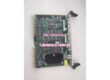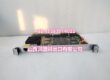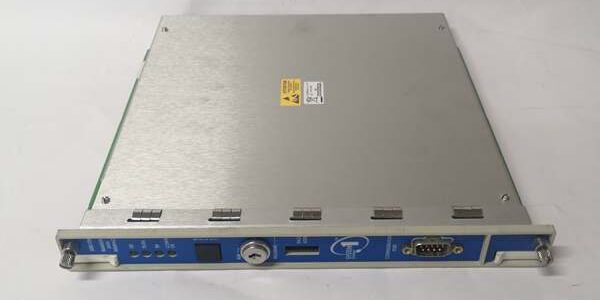
Product Core Brief
- Model: 3500/22M 138607-01
- Brand: Bently Nevada (Baker Hughes)
- Series: 3500 Machinery Protection TSI Rack System
- Core Function: Legacy rack master TDI that aggregates all monitor data, captures post-fault vibration waveforms, and bridges the rack to System1 / plant DCS
- Product Type: Single-slot hot-swappable transient data interface, OEM discontinued, replaced by 288055-01
- Key Specs: 10/100 RJ45 + USB-B front ports | 64kHz max waveform sampling | 10.2W max power draw
- Note: Discontinued OEM production; only refurbished and limited new surplus inventory available.
Key Technical Specifications
- Mandatory installation slot: Rack Slot 1, adjacent to rack power supplies
- Power input: 24VDC rack backplane, maximum 10.2W continuous draw
- Front communication ports: Autosensing 10/100BASE-TX RJ45 Ethernet, USB-B local service port
- Transient sampling speed: Up to 64kHz per active measurement channel
- Onboard storage: Smaller non-volatile flash than the successor model, limited waveform snapshot capacity
- Isolation rating: 1500VAC galvanic separation between front I/O and rack backplane bus
- Operating temperature range: -30°C to +65°C standard; conformal coated variant -40°C to +85°C
- Supported protocols: EGD, Modbus TCP, SNTP time sync, proprietary 3500 backplane bus
- Physical form factor: Standard single 3500 rack slot, weight 0.82kg
- Certifications: API 670, CE EMC, UL Class I Div 2, ATEX Zone 2
- Safety design: All monitor hardwired relay trip circuits operate independent of this unit; module failure cannot block emergency machinery shutdowns
Product Introduction
This legacy rack master TDI acts as the central data hub for older 3500 machinery monitoring chassis, combining rack backplane control and mid-speed transient waveform capture in one slot component. It polls vibration, overspeed, and temperature monitor cards to push steady-state trending data to plant DCS historians.Its core field limitation is reduced onboard flash memory. High-channel compressor racks frequently hit storage limits and overwrite critical post-trip vibration snapshots; newer replacement hardware doubles waveform storage capacity to eliminate this constraint.
QA & Testing SOP (Transparency Building)
- Incoming Inspection: Cross-reference serial numbers against OEM discontinued production logs to reject counterfeit hardware. Complete physical audit of PCB traces, front port pins, and locking key switch; document all cosmetic wear with high-resolution photos.
- Live Power-On Testing: Mount the device into a calibrated test 3500 rack powered by a Fluke 115 supply. Maintain continuous 24-hour load test with full rack channel simulation to validate steady power draw and Ethernet link stability.
- Electrical Isolation Testing: Use a megohmmeter to verify >10MΩ insulation resistance between Ethernet signal lines and rack ground; confirm zero leakage current across isolated circuit boundaries.
- Firmware & Config Backup: Flash the last compatible OEM firmware revision, record version number, and back up a blank rack configuration file to offline storage. Capture LED state behavior during full rack scan cycles for baseline comparison.
- Final QC & Packaging: Perform a manual waveform capture trigger test to confirm flash memory writes data correctly. Place the unit in anti-static foam, attach a serialized QC tag with test timestamp, and seal in ESD shielding bags for shipment.
Installation Pitfalls & Guide (Engineer to Engineer)
❗ Firmware Rev Mismatch Risk: Mismatched rack monitor firmware triggers permanent CONFIG fault LED states and blocks backplane data polling. Export the existing rack firmware revision set before swapping the module; never load mixed-revision firmware stacks.❗ Storage Overwrite Risk: High-density turbine/compressor racks fill limited onboard flash quickly; older fault waveforms get auto-deleted to make space for new trigger events, erasing critical root-cause diagnostic data.❗ Dual-Ended Ground Violation Risk: Running Ethernet cable shield ground at both the rack and plant switch creates ground loop current that corrupts EGD data frames, triggering intermittent full rack tag dropout during VFD startup transients.❗ ESD Damage Risk: Ungrounded field tools discharge static through front USB/Ethernet ports, destroying internal CPU circuits; PCB repair costs exceed $1,700 OEM labor for obsolete hardware.❗ Cross-Model Swap Failure Risk: This unit cannot be directly replaced with the newer 288055-01 without a full rack firmware upgrade; un-upgraded racks throw constant backplane handshake faults post swap.
4-Step Replacement Guide
- Pre-install: Ground yourself via wrist strap, photograph front LED status of the old unit, export full rack configuration and record active firmware versions. Document total rack channel count to plan for flash storage limits.
- Removal: Unlock front key switch, pull the module extraction levers to release backplane contact pins, slide the unit straight out of Slot 1 without twisting the PCB edge connector.
- Install: Slide the new unit fully into Slot 1, squeeze extraction levers to lock backplane contacts, rotate the front key switch to the unlocked operational position.
- Power-on Test: Restore rack power, upload the saved rack configuration file, trigger a test Alert alarm on a vibration channel to confirm waveform storage and continuous DCS tag readback. Review flash storage usage to avoid data overwrite risks.
FAQ (Frequently Asked Questions)
Q: Can this unit hot-swap while the 3500 rack remains energized?A: Yes, the hardware supports live hot-swap without full rack power loss. All monitor safety relay circuits remain active during swap, so machinery emergency shutdown logic stays intact.
Q: Is this hardware cross-compatible with the newer 288055-01 TDI?A: Partial compatibility only. Installing the successor without a full rack firmware upgrade generates persistent backplane communication faults. If swapping between the two assemblies, you must flash unified rack firmware matching the replacement hardware’s OEM release.
Q: What warranty coverage applies to refurbished surplus stock?A: Refurbished inventory carries a 12-month functional warranty covering internal PCB communication and storage circuits; cosmetic surface scratches and wear marks are excluded. No factory-new OEM stock is available for this discontinued part number.
Q: Will power cycling erase stored transient fault waveforms?A: No. All waveform snapshots write to non-volatile onboard flash memory; power cycles do not delete stored fault event data, though high channel counts risk auto-overwrite of older records.
Q: Does this unit require an optional channel disk for dynamic waveform capture?A: Static steady-state trending operates without the disk. High-speed dynamic waveform capture for fault diagnostics requires the OEM channel enabling disk accessory installed on the PCB.Q: Can I operate the device without connecting the front Ethernet port to a plant control network?A: Yes. Local USB-B connection to a field laptop supports all configuration upload/download and waveform export functions without active LAN wiring. Real-time DCS trending will be disabled until Ethernet connectivity is restored.Q: Does this unit control machinery safety shutdown protection logic?A: It does not. All overspeed, vibration, and temperature relay trip circuits run independently on each monitor card. Faults on the device cannot disable hardwired emergency shutdown interlock functionality.