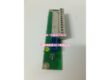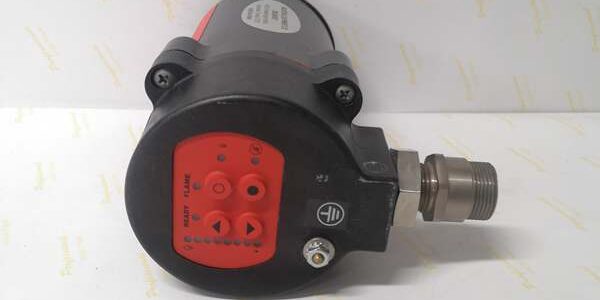
Component Snapshot At-a-Glance
- Model: Fireye 85UVF1A-1QD (Phoenix Series 2 UV integrated flame scanner, A = enhanced firmware, QD = 8-pin quick-disconnect connector)
- Alt. P/N: 85UVF1-1QD (base non-A firmware variant); 85IRF1A-1QD (infrared flame sensor, different optical cell); 85UVF1A-2QD (fiber optic lens version)
- Product Series: Fireye Phoenix Series 2 microprocessor-based integrated flame scanner
- Hardware Type: Cast aluminum NEMA 4X standalone scanner housing, front lens sight port, pushbutton programming keypad, 8-pin QD rear wiring connector, 1” NPT mounting flange with 3/8” NPT purge air tap
- Key Feature: Solid-state UV optical cell, auto-learn flame flicker threshold algorithm, onboard flame/fault relays, built-in RS485 Modbus RTU, no external flame amplifier required
- Primary Field Use: Continuously monitor UV flame flicker on gas, low-NOx, duct, and waste gas burners; signal flame loss to burner management systems to trigger ESD fuel shutoff and prevent unburned gas accumulation.
Hard-Numbers: Technical Specifications
- Protocol Support: Modbus RTU over RS485, proprietary InSight software local configuration
- Port Count: 8-pin quick-disconnect electrical port, 1” NPT sight tube mount, 3/8” NPT purge air inlet
- Baud/Data Rate: Modbus selectable 9600 / 19200 / 38400 baud; internal flame scan cycle 10ms
- Operating Temperature: Ambient -40°C to +65°C; internal scanner max +82°C; storage -40°C to +85°C
- Isolation Rating: 1500Vrms opto-isolation for 4–20mA analog and Modbus communications
- Power Draw: Max 1.5W, 200mA nominal draw at 24VDC
- Main Input Power: 12–30VDC industrial control battery, nominal 24VDC
- Optical Spectrum: UV 295–340nm solid-state sensor, rejects hot refractory background radiation
- Relay Ratings: Flame SPST NO (2A @ 230VAC resistive); Fault SPST NC (2A max)
- Analog Output: Isolated 4–20mA proportional to flame signal strength
- Purge Air Requirement: Minimum 4 SCFM clean dry cooling air; high-dust fuels require up to 15 SCFM
- EMC Compliance: IEC 61000-6-2 industrial substation surge and VFD noise immunity
- Enclosure Rating: NEMA 4X / IP66 weatherproof cast aluminum housing
- Physical Weight: 2.69kg fully assembled scanner unit
The Real-World Problem It Solves
Older split flame setups require separate UV sensor head and remote flame amplifier cards, eating multiple cabinet slots and adding extra wiring terminations that corrode in refinery and boiler high-humidity environments.Uncalibrated fixed-threshold UV scanners false trip on hot furnace refractory glow or adjacent burner background flames; auto-learn onboard logic locks target flame flicker signatures to eliminate nuisance burner trips.Where you’ll typically find it:
- Utility power plant gas-fired boiler and duct low-NOx burner BMS safety circuits
- Refinery process heaters, thermal oxidizers, waste gas incinerator combustion control racks
- Pulp & paper mill recovery boiler and auxiliary gas burner flame safety monitoringThis all-in-one UV scanner eliminates external amplifier hardware, self-calibrates flame detection thresholds in-field, and quick-disconnect wiring cuts burner downtime during scanner replacement.
Hardware Architecture & Under-the-Hood Logic
This unit carries an onboard 32-bit flame processing MCU with dedicated UV signal conditioning circuit; all flame threshold calculation, self-diagnostics, relay drive and Modbus communication runs locally inside the scanner housing, no external signal processing hardware needed.
- 24VDC control power feeds internal EMI filter and isolated DC-DC regulator to power UV optical cell amplifier, MCU, relay coils and front panel LED indicators.
- UV quartz lens passes only combustion UV flicker wavelengths; internal analog filter strips steady hot-wall background radiation to avoid false flame detection.
- Pushbutton initiated auto-learn cycle samples live flame flicker frequency and amplitude, stores custom flame-on / flame-off threshold values to non-volatile memory.
- MCU continuously compares live UV signal against stored flame profile; if flicker amplitude drops below threshold for 100ms, flame relay de-energizes and fault flag activates for BMS ESD interlock.
- Isolated 4–20mA analog output mirrors real-time flame strength for DCS trending; RS485 Modbus exports fault codes, signal strength and run hours to central control HMI.
- Front panel multi-color LED bank shows power, flame present, fault status and programming mode for field troubleshooting without laptop software.
Field Service Pitfalls: What Rookies Get Wrong
Swapping 85IRF Infrared Or Non-A Base 85UVF1-1QD Scanners In Place Of 85UVF1A-1QD
New techs grab alternate Phoenix spares without matching full part number. IR models cannot detect gas burner UV emissions; base non-A firmware lacks advanced background flame suppression logic, leading to constant false flame loss trips during furnace heat-up cycles.Field Rule: Only deploy 85UVF1A-1QD for gas / low-NOx burner UV monitoring; segregate IR and non-A revision scanners in separate labeled spare bins.
Running Purge Air Supply Dirty Or Below Minimum 4 SCFM Flow
Junior crews bypass the cooling air tap or feed unfiltered shop air to the scanner lens. Soot and dust coat the quartz lens within weeks, attenuating UV signal and triggering unplanned burner shutdowns mid-run.Quick Fix: Install inline air filter and flow regulator on the 3/8” purge air line; verify minimum 4 SCFM airflow before locking scanner sight tube mounting hardware.
Single-Point Grounding Mistake On QD Modbus Cable Shield
Wiring crews ground the 8-conductor shield at both scanner and BMS cabinet ends. Dual ground points create ground loop voltage offsets that scramble Modbus flame trend data and trigger intermittent fault relay chatter.Field Rule: Terminate cable shield only at the burner management cabinet terminal block; leave scanner-side shield unterminated and insulated to break ground loop paths.
Commercial Availability & Pricing Note
Please note: The listed price is for reference only and is not binding. Final pricing and terms are subject to negotiation based on current market conditions and availability.