Component Snapshot At-a-Glance
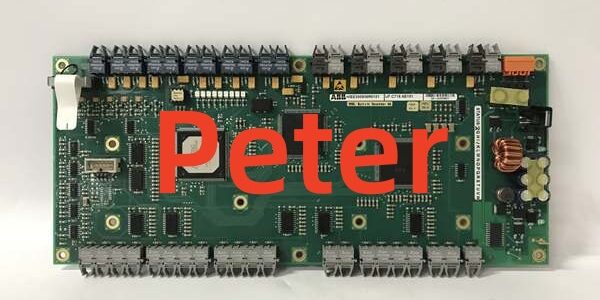
- Model: ABB UFC718AE101
- Alt. P/N: HIEE300936R0101
- Product Series: ABB UFC700 Control Family
- Hardware Type: Rack-mounted mixed signal I/O and communication interface board
- Key Feature: Galvanically isolated I/O with dual industrial bus support
- Primary Field Use: Interfaces field sensors and actuators to ABB DCS and PLC platforms via standard fieldbuses.
Hard-Numbers: Technical Specifications
- Protocol Support: Modbus RTU, CANopen
- Port Count: 8 analog input, 4 analog output, 16 digital I/O, 1 × RS-485, 1 × CAN bus
- Baud/Data Rate: RS-485 up to 115.2 kbps, CANopen up to 1 Mbps
- Operating Temperature: -20°C to +60°C, non-condensing environment
- Isolation Rating: 1500 VAC channel-to-backplane isolation
- Power Draw: 24 VDC ±10%, 0.21 A typical, 5 W total power consumption
- Analog Signal Range: 4–20 mA, 0–10 VDC selectable
- Digital I/O Rating: 24 VDC logic level, opto-coupler isolated
- Memory: 512 KB ROM, 256 KB RAM for program and runtime data
- Enclosure Rating: IP20 for internal cabinet installation
The Real-World Problem It Solves
Separate analog, digital and communication cards create extra rack slots and more wiring points. Mixed signal noise causes unstable readings and intermittent bus faults across large control systems.
Where you’ll typically find it:
- Fossil power plant boiler and turbine auxiliary control racks
- Chemical and petrochemical process units with distributed field I/O
- Industrial manufacturing lines using ABB UFC700 and AC series controllers
This single-slot board consolidates multiple I/O types and fieldbuses to reduce cabinet footprint and wiring errors.
Hardware Architecture & Under-the-Hood Logic
This board uses an onboard dedicated microcontroller and fully isolated signal stages. It operates as a bus slave and does not function as a standalone main controller.
- 24 VDC input feeds internal isolated DC-DC converters to power logic and I/O circuits.
- Field analog signals pass through filter networks and isolation barriers before reaching 16-bit ADC hardware.
- Digital inputs route through opto-couplers to block common-mode noise from field wiring.
- Main microcontroller scans all I/O points at regular intervals and processes raw signal data.
- Processed data is packaged and transmitted over RS-485 or CAN bus to the host controller.
- Output commands from the host convert via DAC and driver circuits to drive field actuators.
- Onboard non-volatile memory stores board configuration and bus node addresses through power cycles.
- Front panel LEDs display power status, bus activity and channel fault conditions.
Field Service Pitfalls: What Rookies Get Wrong
Incorrect Analog Range Jumper SettingsTechnicians leave jumpers set for 0–10 VDC when connecting 4–20 mA transmitters. Signal levels read incorrectly or show full-scale lockup.
- Field Rule: Set hardware jumpers to match field device signal type before applying power.
Missing Bus Termination on CAN and RS-485Users omit 120 Ω termination resistors on long bus runs. Signal reflections lead to corrupted data and random communication timeouts.
- Quick Fix: Install termination resistors only at the two farthest physical nodes on each bus segment.
Running Signal Cables Parallel to Power WiringNew technicians route I/O and bus cables alongside high-current AC power lines. Induced electrical noise creates drifting analog values and bus errors.
- Field Rule: Separate low-voltage signal cables from AC power cables by a minimum of 30 cm; use shielded twisted pair for all fieldbus wiring.
Commercial Availability & Pricing Note
Please note: The listed price is for reference only and is not binding. Final pricing and terms are subject to negotiation based on current market conditions and availability.