Component Snapshot At-a-Glance
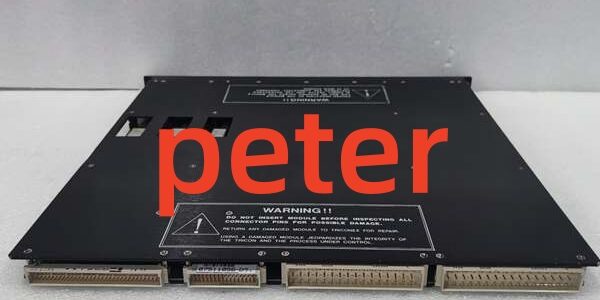
- Model: Triconex 3501E
- Alt. P/N: 3501T; low voltage counterparts = 3504E, 3505E, 3564
- Product Series: Tricon 3000 TMR I/O Family, compatible with CX, EX, RX racks
- Hardware Type: 32-channel 115VAC/DC isolated digital input module, hot swappable
- Key Feature: 2500VDC full channel-to-channel isolation and comprehensive per-channel diagnostics
- Primary Field Use: Monitor 115VAC/DC safety contacts and switches within SIL3-rated protection systems.
Hard-Numbers: Technical Specifications
- Protocol Support: Proprietary Tricon TriBus backplane bus only, no external fieldbus or Ethernet
- Port Count: 32 fully isolated non-commoned input channels
- Voltage Threshold: ON ≥70V, OFF ≤40V for AC; ON ≥80V, OFF ≤50V for DC
- Operating Voltage: 90V to 155V AC/DC
- Input Current: 3mA to 5mA per channel at 115VAC
- Isolation Rating: 2500VDC field-to-backplane and channel-to-channel galvanic isolation
- Operating Temperature: -40°C to +70°C continuous operation; -40°C to +85°C storage
- Power Draw: 10W maximum at 5VDC backplane input, 1.0A nominal current
- Response Time: Less than 18ms maximum across all channels
- Diagnostics: Per-channel open circuit, short circuit and stuck state detection
- Certifications: IEC61508 SIL3, UL, CE, ATEX, Class I Div 2
The Real-World Problem It Solves
Standard low-voltage input modules require external intermediate relays to interface with 115V field circuits, adding extra hardware, wiring points and potential failure modes. Modules without full channel isolation let faults on one circuit bleed over to adjacent channels in high-voltage environments.Where you’ll typically find it:
- Refinery ESD panels monitoring 115VAC emergency stop buttons and valve limit switches
- Power plant turbine protection cabinets for 115VDC trip contacts and auxiliary interlocks
- Offshore fire and gas systems collecting signals from high-voltage manual call points and detectorsThis module connects directly to 115VAC/DC field devices and contains faults to individual channels to improve overall system reliability.
Hardware Architecture & Under-the-Hood Logic
This module uses three separate TMR logic assemblies and individual optocouplers for every channel. Each input path has dedicated conditioning and diagnostic circuitry with no shared components between channels.
- Incoming 115VAC/DC field signals pass through current limiting resistors to individual optocouplers.
- Optocouplers provide 2500VDC isolation and convert high-voltage signals to logic level for the TMR circuitry.
- All three TMR legs sample each channel simultaneously; a 2-out-of-3 vote confirms valid input state.
- Onboard diagnostics continuously check for open lines, short circuits and permanently stuck signals.
- Hot-swap circuitry maintains normal rack operation during replacement; all inputs default to safe OFF state.
Field Service Pitfalls: What Rookies Get Wrong
Mixing AC and DC Signal Threshold SettingsTechnicians use AC threshold values for DC circuits or vice versa. This creates intermittent state changes and false fault alarms.
- Field Rule: Apply 70V/40V thresholds for AC circuits only. Use 80V/50V thresholds for all DC wiring.
Creating Shared Return Paths Between ChannelsWorkers tie return lines across multiple channels to simplify wiring. This breaks channel isolation and introduces dangerous high-voltage cross-conduction.
- Quick Fix: Run fully separate positive and negative conductors for every channel. Never connect returns together.
Neglecting Periodic Stuck State TestingTeams clear stuck signal alarms without physical inspection. Welded contacts or frozen switches remain undetected and create hidden safety risks.
- Field Rule: Perform physical state checks on any channel triggering stuck state alarms. Schedule routine testing every 30 days.
Commercial Availability & Pricing Note
Please note: The listed price is for reference only and is not binding. Final pricing and terms are subject to negotiation based on current market conditions and availability.