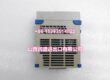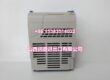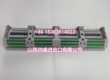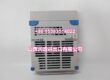
Quick Sizing & Sourcing Snapshot
- Manufacturer: GE Fanuc (Emerson Automation Solutions)
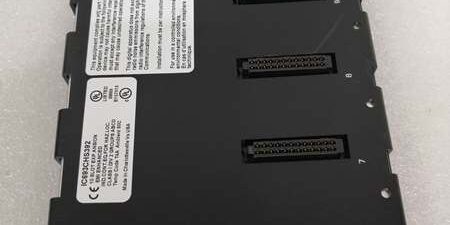
- Part Number: IC693CHS392
- System Platform: Series 90-30 PLC
- Hardware Type: 10-Slot Expansion I/O Rack (Chassis Only — No Power Supply, No CPU Slot)
- Architectural Role: Provides the mechanical frame and VME-based backplane for up to 10 IC693/IC694 I/O modules, connected to a CPU rack via an Expansion Transmitter (IC693ETM001) or Genius Bus Interface (IC693BEM331 + BIU in some distributed cases, but typically ETM for local expansion).
- Key Specifications: 10 I/O Slots, No CPU Slot, No Built-In P/S Slot (Requires Remote 24V DC for Backplane or Powered from CPU Rack via Exp Cable), Parallel Expansion Bus.
System Architecture & Operational Principle
The is a passive expansion chassis operating at Purdue Level 1/2, intended to extend the I/O capacity of a Series 90-30 CPU rack (IC693CHS391/CHS391) beyond its 5 or 10 local I/O slots.
Upstream, it connects to the CPU rack via a 26-pin D-shell Expansion Cable (CAB005/CAB010 etc.) from an IC693ETM001 (Expansion Transmitter) module plugged into the CPU rack’s Expansion Slot (usually Slot 0 or designated Exp Slot in larger CPU racks). The ETM001 regenerates the backplane bus signals and sends them ~15m max to the first expansion rack.
Internal Backplane, the CHS392 distributes the +5V DC Backplane Power (sourced from the CPU rack’s Power Supply through the ETM001) and the Expansion Bus Signals (Address/Data/Control) to all 10 slots. It does nothave a Power Supply slot — the backplane is energized from the CPU rack via the expansion cable.
Downstream, it hosts up to 10 I/O modules (IC693MDLxxx, IC694MDLxxx, IC693ALGxxx, etc.). The CPU treats these slots as a contiguous extension of its I/O address map (e.g., Rack 1 = CPU rack local, Rack 2 = first CHS392 expansion). The CHS392 can be daisy-chained (up to 7 expansion racks total in a 90-30 system) using the second expansion port on the ETM001 or a subsequent ERM (Expansion Receiver IC693ERM001 in some configs, though 90-30 typically uses ETM001→CHS392→CAB→CHS392…).
Core Technical Specifications
| Parameter | Value |
|---|---|
| Slot Count | 10 I/O Slots (Slots 1-10, numbered left-to-right) |
| CPU / P/S Slot | None (Expansion Only) |
| Backplane Bus | Series 90-30 Parallel Expansion Bus (Derived from CPU Rack) |
| Backplane Power | +5V DC (Sourced via Expansion Cable from CPU Rack P/S, typ. 1.5-2A draw depending on modules) |
| Expansion Capacity | Up to 7 Expansion Racks (Total including this one, daisy-chained) |
| Max Expansion Cable Len | 15m (50 ft) total daisy-chain; 1m recommended for single-point connection |
| Mounting | Panel Mount (4 corner holes) or DIN Rail Clip (optional bracket) |
| Terminal Block | Required on each I/O module (IC693TBB003 or IC694TBB032 depending on module family) |
| Indicators | None on chassis (Power/Status indicated by modules themselves) |
| Material | Heavy-Gauge Steel / Aluminum (Standard 90-30 rack width) |
| Dimensions (HxWxD) | Approx. 11.1″ x 19.0″ x 7.5″ (283 x 483 x 190 mm) |
| Operating Temp | 0°C to +60°C |
Customer Value & Operational Benefits
Distributed I/O Without Network Overhead
The CHS392 lets you place 10 I/O modules (e.g., 160 discrete points or 20 analog channels) up to 50 feet (15m) from the CPU rack using a simple 26-pin ribbon cable — no Ethernet switch, no IP addressing, no Genius Bus configuration. Ideal for adjacent MCC sections or auxiliary skids within 50 ft of the main panel. You avoid the cost/complexity of a Genius BIU station or RX3i ETM001+Ethernet for short-distance expansion.
Native 90-30 Addressing (Transparent to CPU)
The CPU sees the expansion rack slots as a direct extension of its I/O table (Rack ID set via DIP or auto-detect). Your ladder logic references %I001xx/ %Q001xxfor the expansion rack exactly as if it were local. No “mapping” or “data blocks” like with Profibus/Genius. This simplifies commissioning and training — the maintenance team doesn’t need to understand bus protocols to troubleshoot a bad input.
High-Density in Minimal Footprint
10 slots in a single chassis. You can mix high-density (32-pt) and analog cards freely. For a pump house needing 64 DI, 32 DO, and 8 AI — that’s 3 cards in one instead of 3 separate small enclosures with remote I/O heads. Reduces enclosure count, wiring homeruns, and spare parts diversity.